

Otsuka Museum Of Art Travel Guide
Visiting the Otsuka Museum of Art in Naruto, Tokushima? Find ticket prices, opening hours, top highlights, and how to get there for your 2026 visit.
On this page
The Otsuka Museum of Art in Naruto City, Tokushima, is one of Japan's most extraordinary cultural destinations. Opened in 1998, it displays over 1,000 full-scale ceramic reproductions of world masterpieces, from the Sistine Chapel ceiling to Monet's Water Lilies. Unlike any conventional gallery, every work here is fired onto durable ceramic panels that can be touched, photographed freely, and admired up close.
The exhibition space spans roughly 30,000 square metres across four floors, making it one of Japan's largest permanent collections. Visitors can move through art spanning ancient Egyptian murals, Renaissance giants, and 20th-century impressionists all in a single day. For anyone building a Shikoku trip, the Otsuka Museum deserves at least a full day alongside Tokushima's top attractions.
Why the Otsuka Museum of Art Stands Apart
Good to know
Plan your visit to Tokushima with these useful official and local resources:
Most art museums keep originals behind glass, restrict photography, and prohibit any contact with the works. The Otsuka Museum inverts that model entirely by displaying ceramic reproductions made with advanced firing technology developed by the Otsuka Group. Each panel faithfully matches the original artwork's exact dimensions, colours, and surface texture.
Because ceramic does not fade the way canvas does, these reproductions are designed to last over 2,000 years. That permanence allows certain works to be displayed outdoors, including Monet's Large Water Lilies, shown in natural light as the artist intended. Visitors are encouraged to examine the brushwork up close and touch the panels gently, something no originals-holding museum would permit.
This ceramic technology began as an effort to add value to Naruto's white sand, which was once shipped away as building material. The Otsuka Group spent years developing large-format ceramic boards before redirecting that research toward art reproduction. Every reproduction is produced with formal permission from the originating museums and churches, with art historians verifying colour accuracy throughout the process.
Built inside a carved-out mountain within the Seto Inland Sea National Park, the museum adheres to strict landscape-preservation rules. That unusual construction gives the building a grand, cave-like quality as you move between exhibition zones on escalators. Even the architecture becomes part of the experience, with natural light filtering into certain galleries through skylights cut into the hillside.
Masterpiece Highlights You Should Not Skip
With over 1,000 works spread across four floors, the museum can feel overwhelming on a first visit. The brochure available at the entrance suggests a curated route targeting the most iconic pieces, which is a sensible starting point. Below are the exhibits that consistently draw the strongest reactions from visitors.
One experience that genuinely cannot be replicated elsewhere is the side-by-side display of The Last Supper in its pre-restoration and post-restoration states. Milan's original at Santa Maria delle Grazie shows only the restored version, making this before-and-after comparison unique to the Otsuka Museum. Standing at ground level facing a life-size recreation of this painting is itself a memorable moment.
The floor layout follows a broad chronological order that rewards following from the basement upward. The B2 floor focuses on ancient and classical works, while upper floors move progressively toward the Renaissance and modern art. Following the museum's own route from the basement upward is the clearest way to trace art history across a single visit.
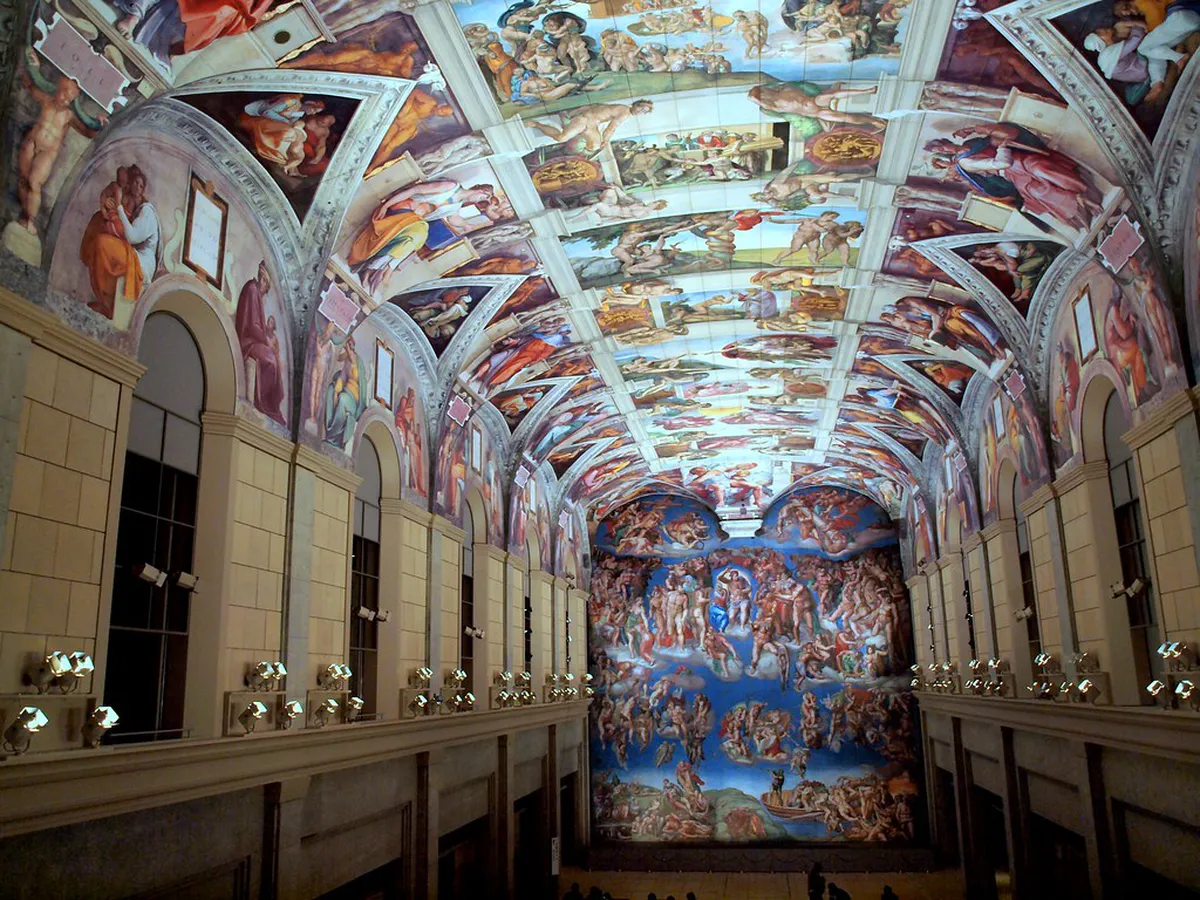
- Sistine Chapel Ceiling Recreation
- The entire ceiling and altar wall are reproduced at full scale inside a purpose-built room.
- Visitors can lie on cushioned platforms and look straight up, just as Michelangelo's contemporaries once did.
- This is one of the only places outside Rome where the full chapel experience is possible.
- Van Gogh's Sunflowers — All Seven Versions
- All seven versions of Sunflowers are displayed together, including the one destroyed in World War II.
- Seeing the series side by side reveals how Van Gogh varied colour and composition across each painting.
- The lost version exists nowhere else in the world in any form.
- Monet's Large Water Lilies Outdoors
- The ceramic panels are mounted in an outdoor garden exposed to natural Tokushima light.
- This is the closest you can get to how Monet conceived the Orangerie installation in Paris.
- The garden setting is also one of the best photography spots in the entire museum.
- Environmental Exhibitions of Ancient Sites
- Entire church interiors and ancient Greek and Egyptian spaces are reconstructed at room scale.
- The museum uses the ceramic medium to recreate contexts that are inaccessible or in fragile condition.
- Walking through a recreation of the Pompeii frescos is a genuinely immersive history experience.
- Vermeer's Girl with a Pearl Earring
- The reproduction captures the distinctive glowing luminosity of the original at eye level without any barriers.
- Standing this close to such a well-known face is an unusual and affecting experience.
- Most visitors pause here longer than expected and spend time taking in the fine surface detail.
Tickets, Hours, and Practical Info
Adult admission to the Otsuka Museum of Art runs around 3,300 yen, with reduced rates for university students and children. The museum is generally open from 9:30 AM to 5:00 PM, with last admission at 4:00 PM and closures on most Mondays. Confirm current schedules and any temporary closures on The Otsuka Museum of Art official website before finalizing your travel plans.
Photography is freely permitted throughout the museum, though flash is not allowed anywhere in the building. Many works can be touched gently, and staff will signal clearly if a particular piece is off-limits. A free shuttle bus runs from the main parking area to the museum entrance, saving visitors a long walk on arrival.
Several dining options sit inside the building, including Vincent Café on the first floor, styled around Van Gogh's bedroom paintings. Honomaru, the larger on-site restaurant, is a convenient lunch option though visitor reviews on the food quality are mixed. Bringing a small snack and using the rest areas for breaks helps pace a long five-to-seven-hour visit.
How to Get to the Otsuka Museum of Art
The museum sits at 65-1 Fukuike, Naruto-cho, Naruto City, Tokushima Prefecture, near the Naruto Strait on the island of Shikoku. From Tokushima Station, direct buses reach the museum in roughly 60 to 70 minutes and run multiple times daily. Check the complete guide to getting to Tokushima if you are planning your journey from Tokyo, Osaka, or another major hub.
Visitors from the Kansai region have the easiest access, with direct express buses running from Osaka and Kyoto to the museum stop. The journey from central Osaka takes around 90 minutes, making a day trip from Kobe or Osaka entirely feasible. From Takamatsu Airport on Shikoku, a direct express bus reaches the museum in roughly 50 minutes.
Located near the Naruto Bridge, the museum makes a natural stop for anyone crossing from Awaji Island on the Kobe side of Japan. A road trip from Kansai to Shikoku can easily include the museum alongside a visit to the Naruto Bridge and Uzu no Michi walkway. No train line runs directly to the museum, so bus or car are the two practical options for the final approach.
Making the Most of Your Day in Naruto
Most visitors spend five to seven hours inside the museum, which makes it a genuine full-day commitment. Arriving when the doors open at 9:30 AM gives you the quietest first hour and the best light in the outdoor Monet garden. Plan to follow the museum's suggested highlight route if time is tight, then branch into personal interests as space allows.
Naruto City has one more unmissable draw beyond the museum: the famous tidal whirlpools in the Naruto Strait. The Naruto whirlpools are strongest around high and low tide, so checking the schedule before you visit is essential for the most dramatic display. A sightseeing boat cruise and the glass-floored Uzu no Michi walkway offer two different views of the same phenomenon.
Spring and autumn bring comfortable temperatures and manageable visitor numbers, making them the most pleasant seasons for a Naruto day trip. Summer can be hot and humid, though the museum's interior is fully air-conditioned and the outdoor garden looks lush in July and August. For broader timing advice, the Best Time To Visit Tokushima Travel Guide guide covers seasonal events and crowd patterns across the prefecture.
Frequently Asked Questions
How long does the Otsuka Museum of Art take to visit?
Most visitors spend between four and seven hours at the Otsuka Museum of Art. The exhibition spans roughly 30,000 square metres across four floors, and seeing the essential works at a comfortable pace takes a full day. Using the museum's printed highlight route helps if your time is limited to three or four hours.
Can you take photos at the Otsuka Museum of Art?
Photography is allowed throughout the museum and most visitors take extensive photos without restriction. Flash is not permitted anywhere in the building. Because the works are ceramic reproductions rather than fragile originals, the museum is unusually relaxed about close-up photography and posing alongside the artworks.
How much are Otsuka Museum of Art tickets?
Standard adult admission runs around 3,300 yen, with reduced rates for university students, high school students, and children. Booking ahead through the official online ticketing platform gives a small discount and lets you skip the entrance queue on busy days. Always verify current pricing on the official site before your visit.
Is the Otsuka Museum of Art worth visiting?
For travellers interested in art history, the museum is widely considered one of the most rewarding cultural stops in Shikoku. The ability to see full-scale recreations of the Sistine Chapel, all seven Van Gogh Sunflowers, and The Last Supper in a single visit is genuinely difficult to replicate anywhere else in Japan.
Can you combine the Otsuka Museum with the Naruto whirlpools?
Yes, both attractions sit within Naruto City and are easily combined in one day. Most visitors start with the museum in the morning and catch a whirlpool boat cruise in the afternoon when tides are strongest. Checking the tidal schedule in advance ensures you arrive at the strait during the most dramatic viewing window.
The Otsuka Museum of Art is a place that rewards curiosity over speed. Arriving with an open morning gives you time to wander between eras and continents at your own rhythm. Whether you linger in the Pompeii rooms or stand before the Sistine Chapel ceiling, the experience is unlike anything else in Japan.
Naruto City pairs the museum beautifully with the whirlpools, making the area a natural anchor for any Shikoku trip. Consult a full Tokushima itinerary to build the rest of your visit around this remarkable destination. Few museums anywhere let you touch the works, photograph freely, and move at your own pace through 3,000 years of human creativity.
Free guide: Japan's Hidden Gems
12 under-the-radar places beyond Tokyo & Kyoto — with the best season to visit each and a local tip you won't find in the guidebooks.
You might also like


Continue reading
More guides you'll find useful


