Sapporo Subway Pass 2026: Donichika vs One-Day, What to Know
Compare the weekday One-Day Card and weekend-only Donichika Card: where to buy, when each pass breaks even, and which Sapporo sights it covers.
On this page
The Sapporo Municipal Subway runs three lines across the city and is the fastest way to reach almost every major sight. Two unlimited-ride day passes exist: the Donichika Card for weekends and holidays, and the One-Day Card for weekdays. Knowing which one to buy, when it breaks even, and what it does not cover will save you money and avoid surprises at the ticket gate. This guide covers every practical detail for 2026.
Donichika Card and One-Day Card: 2026 Prices
The Donichika Card (土日祝カード) is valid on Saturdays, Sundays, and Japanese public holidays. In 2026 it costs 520 yen for adults and 260 yen for children (ages 6–11). It covers unlimited rides on all three subway lines for one calendar day. This is the pass most visitors will use because most sightseeing days fall on weekends.
The One-Day Card (一日乗車券) is the weekday equivalent and costs 830 yen for adults and 420 yen for children. The higher price reflects full weekday pricing rather than a promotional discount. If you are spending a weekday in the city specifically to sightsee — not in transit to another destination — this card still pays for itself quickly. Both passes are paper magnetic-strip tickets, not IC cards, and are inserted into the fare gate rather than tapped.
Children under six ride free. There is no senior discount or tourist-specific pricing on either pass. The Donichika name comes from "Doyobi" (Saturday) and "Nichiyobi" (Sunday), so you can easily remember which days it applies.
Break-Even Math: When the Pass Saves You Money
Single subway fares in Sapporo range from 210 yen (one zone, short hop) to 380 yen (the longest cross-city journey). A typical tourist route — hotel near Sapporo Station, then Odori, Susukino, Maruyama-koen, and back — involves roughly four to six fare transactions per day. At 210–290 yen per leg, that adds up to 840–1,740 yen without a pass.
For the Donichika Card at 520 yen, you break even after just two medium-distance trips (e.g., Sapporo Station to Odori at 210 yen + Odori to Maruyama-koen at 250 yen = 460 yen, nearly even on the second ride). Any third trip is pure saving. For the weekday One-Day Card at 830 yen, you need three or more rides of at least 210 yen each, or two longer rides of 380 yen, to come out ahead.
If you are only making one or two short hops — say, hotel to dinner and back — the IC card wins on cost. But most visitors doing a full day of our Sapporo attractions guide will cross the break-even point before lunchtime.
Where and How to Buy the Pass
Both passes are sold at the ticket vending machines inside every subway station according to the Sapporo City Transportation Bureau guidelines. Select the English language option using the button in the upper-right corner of the screen. On a Saturday, Sunday, or holiday the Donichika Card option appears automatically as a highlighted button. On weekdays only the One-Day Card option is shown. Machines accept 1,000-yen notes, 500-yen coins, and 100-yen coins; they do not accept credit cards or IC cards as payment for paper day passes.
Passes can only be purchased on the day of use — you cannot buy them in advance. The machine prints a standard-size paper ticket with a magnetic strip. Insert it into the fare gate the same way you would a single-journey ticket; the gate reads it and returns it on exit. Keep it for the entire day and insert it each time you pass through a gate. Staff at station counters (the staffed booths beside the fare gates) can also sell the passes if the machines are busy.
You do not need to register the pass or link it to any app. Losing the ticket is equivalent to losing a single-use paper ticket — there is no replacement issued. Keep it in a card sleeve or a flat wallet pocket rather than loose in a bag.
Validity Rules and the Calendar-Day Cutoff
Both passes are valid until the last train of the calendar day on which they were purchased — not for 24 hours from the time of purchase. This is a meaningful distinction for late-night travelers. If you buy a pass at 22:00 on Saturday and plan to ride the last train at 23:30, that is valid. But if you were hoping to use it through midnight into Sunday morning, it will be rejected at the gate after the service day ends.
The last subway trains in Sapporo typically depart the terminal stations around 24:00 (midnight). The exact final departure varies slightly by line and direction, so check the timetable posted at the platform or on the official Sapporo City Transportation Bureau website. For most sightseers this is not a concern, but night-out visitors in Susukino should keep the cutoff in mind before spending on a pass for just one late-evening trip.
What the Pass Does Not Cover
The Sapporo subway day passes (both Donichika and One-Day Card) are valid on the three Municipal Subway lines only: Namboku (green), Tozai (orange), and Toho (blue). They do not cover the Sapporo City Tram (路面電車 / Streetcar), which runs a loop around the Susukino and Odori area above ground. Tram fares are a flat 200 yen per ride and require a separate IC card tap or cash payment.
The passes also do not cover JR Hokkaido trains, including the JR Sapporo–Chitose Airport Line. If you are arriving at or departing from New Chitose Airport on the same day you hold a pass, you still pay the airport rail fare separately. Similarly, city buses and Hokkaido Chuo Bus routes are not included. The passes are strictly subway-only.
This matters most when visiting Moerenuma Park (requires a bus or taxi from Kanjo-dori Higashi Station) or Hokkaido Open Ski Area (JR + bus). Do not plan your day assuming the pass covers surface transit — it never does. For a full overview of Getting Around Sapporo: 10 Essential Transport Tips by bus and tram, see the dedicated guide.
IC Cards: SAPICA, Suica, and When to Use Them Instead
The local Sapporo IC card is called SAPICA (サピカ). It is accepted on all three subway lines, the City Tram, and most city buses. SAPICA earns a 10% bonus-point cashback on subway rides — a meaningful saving if you visit Sapporo frequently or stay for a week or more. Suica, PASMO, Kitaca, and other national IC cards are also accepted on the subway for standard fares but do not earn SAPICA bonus points.
IC cards make the most sense when you are taking only one or two subway trips, or when you need to combine subway with tram or bus on the same journey. You tap in and tap out; the exact fare is deducted automatically. There is no need to calculate zones or buy a separate ticket. The SAPICA card requires a 500-yen deposit and is sold at subway station service counters. The deposit is fully refunded when you return the card.
One practical note: national IC cards (Suica/PASMO) loaded on a smartphone via Apple Pay or Google Pay work at Sapporo subway gates without any issues. This is the lowest-friction option for short stays where you do not need the unlimited-ride pass. Keep in mind that neither Suica nor PASMO earns the SAPICA bonus points — only the physical SAPICA card does.
Three Subway Lines and Key Stations for Sightseers
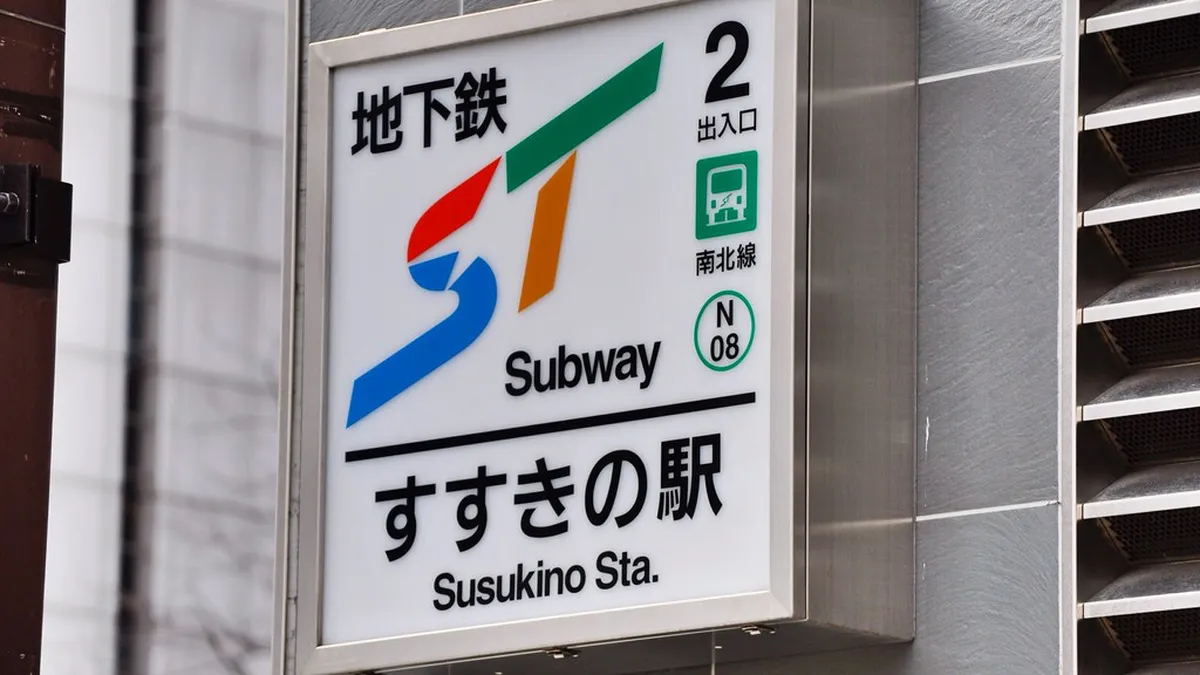
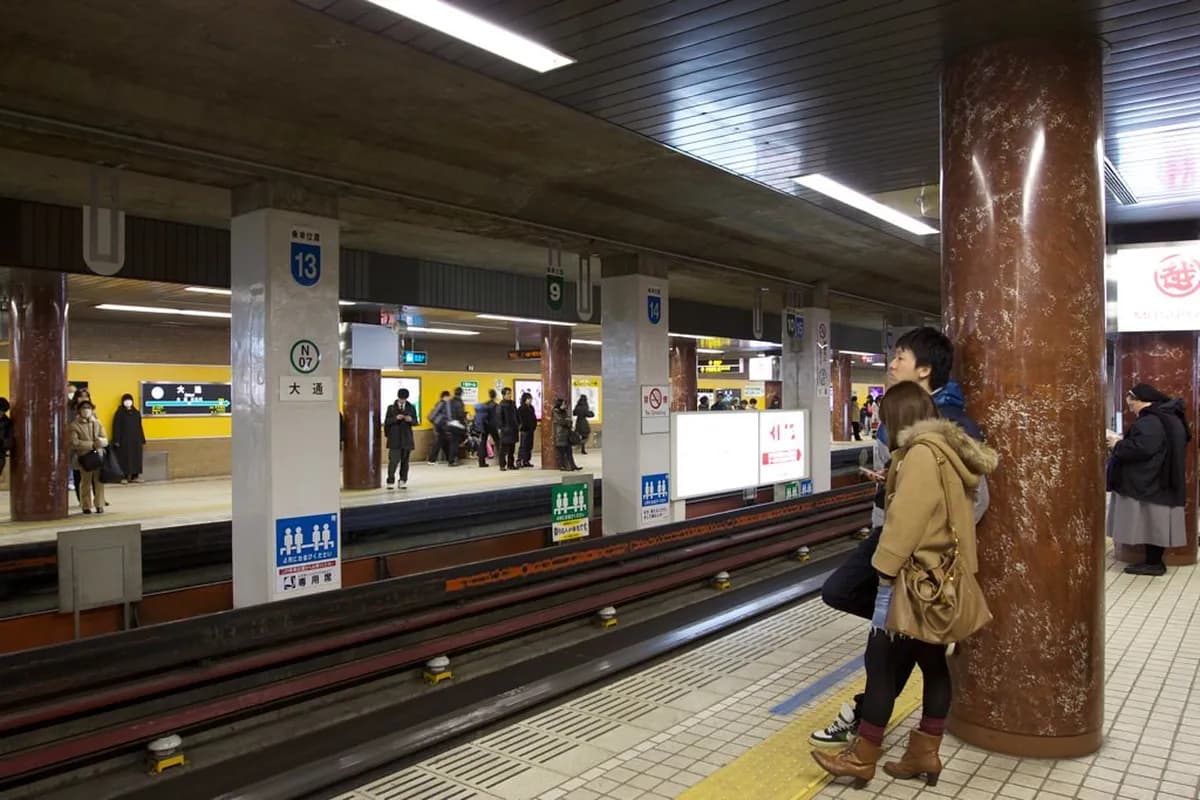
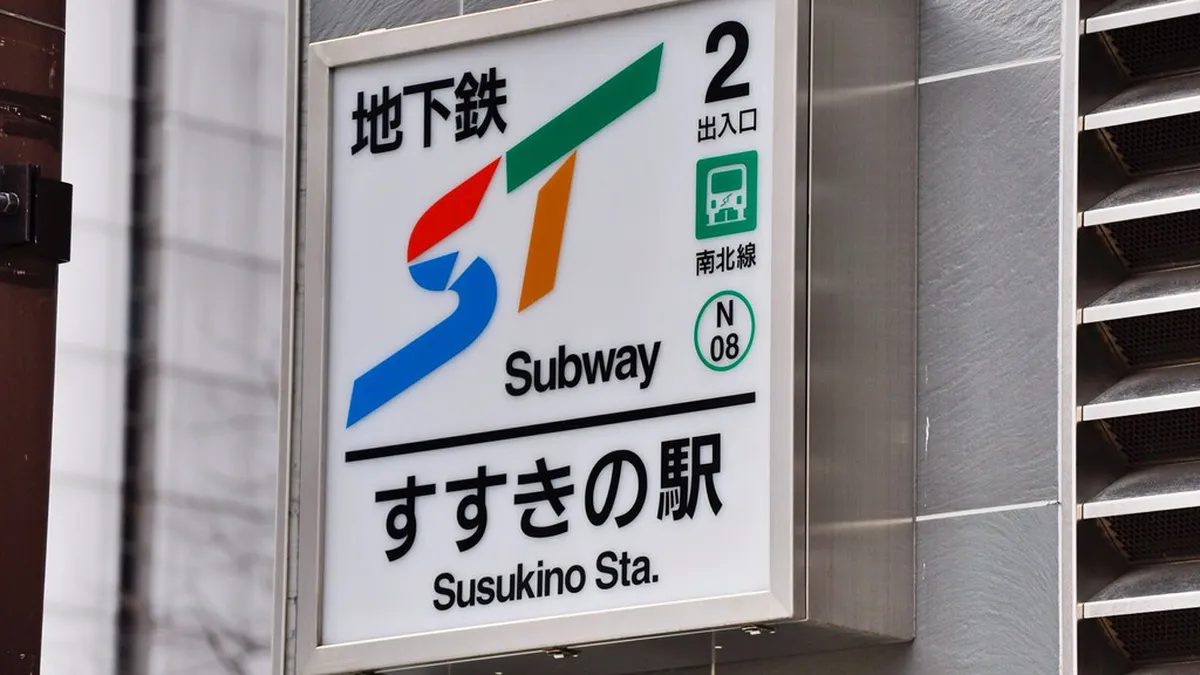
The Namboku Line (green, N) runs north–south and is the backbone of tourist travel. Sapporo Station (N06) connects to JR trains and the underground Chi-Ka-Ho walkway. Odori (N08) is the central interchange and the starting point for the Odori Park and TV Tower. Susukino (N09) is the nightlife hub, one stop south. The northern terminus麻生 (Asabu) and southern terminus 真駒内 (Makomanai) are primarily residential.
The Tozai Line (orange, T) runs east–west. Maruyama-koen (T06) gives access to Maruyama Park, the zoo, and Hokkaido Shrine. Nishi 11-chome (T09) puts you near the Botanical Garden. Odori (T09) is again the main hub in the middle of the line. The eastern end at Shin-Sapporo (T19) is a major suburban interchange with JR but holds little for tourists.
The Toho Line (blue, H) is a shorter north–south line serving eastern Sapporo. Sapporo Beer Museum sits a ten-minute walk from Higashi-Kuyakusho-mae (H02). Kanjo-dori Higashi (H04) is the bus transfer point for Moerenuma Park. Most visitors use the Toho Line less frequently than the other two, but the Sapporo Beer Museum stop alone can justify a pass if you combine it with two or three Namboku rides. For a broader look at the city's sights, the complete Sapporo's top attractions guide covers every neighborhood.
The Late-Night Purchase Window Most Guides Miss
Vending machines in Sapporo subway stations open for business when the first train departs (around 06:00) and keep selling tickets until shortly before the last train. However, the Donichika Card stops being available for sale roughly 30 minutes before the last scheduled train on that day's service — the exact cut-off varies by station. If you arrive at a station after 23:00 intending to buy a Donichika pass for a single late trip, you may find only single-journey tickets on the machine menu.
In practice this rarely costs money — if you are buying a pass at 23:00 you will realistically make only one more trip before service ends, which means single fare is cheaper anyway. The scenario where it matters is an early-evening purchase decision: if you start your evening at 17:00 on a Sunday and plan four or five stops through Susukino until 22:00, the 520-yen Donichika Card clearly wins. Do the math before your first ride, not after.
This edge also applies to travelers arriving late on a Sunday night from the airport (JR to Sapporo Station, then one subway hop to the hotel). In that case skip the day pass entirely; the airport JR fare is separate regardless, and one subway ride costs 210–250 yen — well under the 520-yen pass threshold.
Combining the Pass with Tourist Attractions
Several Sapporo attractions offer small discounts when you show a subway day pass at the entrance. The Sapporo Beer Museum (free general admission, paid premium tour at 800 yen) and some private museums near Tozai Line stations participate in informal discount schemes — confirm on-site as these arrangements change yearly. Always carry the pass visible rather than tucking it away after entry through the station gate.
A practical full-day loop using the Donichika Card: start at Odori for the TV Tower and Odori Park (Namboku or Tozai from your hotel), switch to Tozai for Maruyama-koen and Hokkaido Shrine, return to Odori for lunch in the underground mall, then take Toho to the Beer Museum in the afternoon, and finish with dinner in Susukino (Namboku, one stop south of Odori). That sequence involves six to eight gate passes and costs 1,260–2,200 yen without a pass versus 520 yen with the Donichika Card. The saving is 740–1,680 yen on a single Saturday. For itinerary help, the our Sapporo itinerary guide guide maps these stops in sequence.
Frequently Asked Questions
Is the Sapporo subway day pass worth it for one day?
Yes, the pass is worth it if you plan to take at least three subway trips in a single day. On weekdays, you need to spend over 830 yen to see savings. However, the 520 yen weekend pass pays for itself after just two short rides between major stations.
Where can I buy the Donichika weekend pass?
You can buy the Donichika pass at any subway station vending machine on Saturdays, Sundays, and public holidays. Look for the 'Donichika' button on the touch screen after selecting the English menu. These machines accept cash and most major Japanese IC cards for payment. Learn more about station locations here.
Can I use my Suica card on the Sapporo subway?
Yes, you can use Suica, PASMO, and other major Japanese IC cards to pay for individual subway fares. While these cards are convenient, they do not offer the same unlimited travel benefits as a day pass. You will still need to buy a separate paper ticket for the day pass.
Does the JR Pass cover the Sapporo subway lines?
No, the Japan Rail Pass and other JR-specific passes do not cover the Sapporo Municipal Subway. The subway is operated by the city government rather than Japan Railways. You will need to purchase a separate subway pass or use an IC card for these lines.
The Donichika Card at 520 yen is one of the best-value transit passes in Japan for weekend sightseers. The weekday One-Day Card at 830 yen takes a bit more planning to break even but still pays off on a full day of sightseeing. Know your lines, buy the pass when your first station machine opens, keep the paper ticket for every gate, and check the City Tram fare separately for the Susukino loop. With those four rules in hand, the Sapporo subway is straightforward and genuinely affordable.
Free: The Sapporo Essentials guide
Top things to do, where to stay, a perfect day plan, getting around, and the best time to go — a Sapporo mini-guide you can take offline.
You might also like


Continue reading
More guides you'll find useful