Sapporo Shopping Guide: 8 Best Spots and Tips
Discover the best shopping in Sapporo with our 2026 guide. From the historic Tanukikoji arcade to luxury department stores and hidden underground malls.
On this page
Sapporo is one of Japan's most rewarding cities for shopping, combining Hokkaido's world-class food products with the convenience of a modern urban grid. The city's main commercial districts are compact enough to cover on foot or via the subway in a single day. You can move between covered arcades, underground malls, fresh markets, and department-store food halls without getting cold, even in midwinter. This guide maps the essential stops so you can plan a focused, practical shopping route for 2026.
The four anchor districts — Sapporo Station, Odori, Tanukikoji, and Susukino — all sit within 1.5 km of each other along a straight north-south corridor. The underground walkway connects them, which means you rarely need to surface in bad weather. Markets like Nijo and the Curb Market sit just east of Tanukikoji and are best visited in the morning. Understanding which district serves which need saves time and prevents backtracking.
Tanukikoji Shopping Street
Tanukikoji is Sapporo's oldest covered arcade and still the most atmospheric place to browse. The street runs for seven blocks between Nishi 1-chome and Nishi 7-chome, sheltered from rain and snow under a continuous roof. You can check the Official Tanukikoji Site for seasonal events and new store openings throughout 2026. The eastern end near Block 1 is dense with tourist-focused souvenir shops, while Blocks 5 and 6 are more local in character with hardware stores, small restaurants, and old-fashioned sweet shops.
Don Quijote occupies several floors near Block 3 and stays open 24 hours, making it useful for late-night snack or cosmetics runs. Tax-free counters are available at the larger retailers provided you carry your physical passport. The arcade connects at its eastern end to the Odori subway station area, so it works well as a walking link between districts. Evening is particularly lively as shoppers transition to the restaurant strip running behind the south side of the arcade.
For souvenirs, Block 4 has the highest density of Hokkaido-specific gift shops selling carved wooden bears, dried scallops, and flavoured miso. These shops are more reliably stocked than airport stores and prices are equivalent or slightly lower. Most stalls here accept major credit cards and IC cards, though a few of the oldest independent shops are still cash-only.
Sapporo Station and Stellar Place
JR Sapporo Station is the single most efficient shopping stop in the city. Stellar Place occupies floors 6 and 7 above the station concourse and carries around 120 fashion and lifestyle tenants including UNIQLO, Muji, and a broad range of Japanese contemporary labels. The Daimaru department store attaches directly from the south exit and adds several hundred more boutiques across nine floors, with a basement food hall that rivals anything in Tokyo. Travelers already Getting Around Sapporo: 10 Essential Transport Tips by train will pass through here naturally and can slot in an hour of shopping without adding transit time.
The key stop for serious souvenir hunters is the Hokkaido Dosanko Plaza on the station's first floor, near the East Exit. This prefectural showcase carries products sourced from all 179 municipalities across Hokkaido — Yoichi red wine, Tokachi butter, dried kombu from Rishiri Island, and single-origin chocolate from Obihiro. Most of these items are not available at airport duty-free or generic souvenir shops, and the selection rotates with the seasons. It is the one stop that justifies arriving at the station even if you don't need the train.
Bic Camera near the South Exit covers electronics and cameras on multiple floors, with tourist discount coupons available at the information desk. Large coin lockers at the station's central concourse handle up to a 45-litre backpack and cost ¥400–¥600 per day. Most stores in the station complex open at 10:00 and close between 20:00 and 21:00.
Odori Area: Department Stores and the Underground Corridor
Odori is the formal commercial heart of Sapporo, anchored by Marui Imai and Sapporo Mitsukoshi on the west side of the TV Tower. Marui Imai is the oldest surviving department store in Hokkaido and carries exclusive lines from local food producers alongside international fashion floors. Its basement food hall sells premium gift-packaged versions of regional specialties — matured cheese from Betsukai, craft miso from Furano — that make it worth the detour from the station. top things to do in Sapporo near Odori also include the TV Tower and Odori Park, which turns into a market venue during the Autumn Fest and White Illumination in late November.
Sapporo Parco stands at the Odori intersection and targets a younger demographic with Japanese streetwear brands, import cosmetics, and a strong selection of art-book and design-goods retailers on the upper floors. Check Sapporo Parco for pop-up events before your visit — the rotating tenant programme brings limited-edition collaborations from Tokyo brands several times a year. Tax-refund counters are on the 7th floor.
The underground Aurora Town runs beneath Odori from the subway station exit and connects east toward the TV Tower before looping back toward Tanukikoji. It holds around 60 shops focused on accessories, sweets, and casual fashion. Opening hours are typically 10:00–21:00. This corridor is particularly useful in February and March when temperatures on the surface drop below -10°C.
Susukino: Late-Night Shopping and Drugstores
Susukino is primarily known as Sapporo's entertainment district, but it holds a dense cluster of practical shopping options that stay open late. The Susukino Lafine building and nearby standalone retailers carry fashion, shoes, and accessories at prices aimed at locals rather than tourists. Pole Town underground arcade runs 400 metres directly from Odori Station to Susukino Station, passing through a compact mall of fashion boutiques and food vendors that operates until 21:00.
The main draw for most visitors is the concentration of large-format drugstores — Matsumoto Kiyoshi, Sundrug, and Tsuruha are all within a few hundred metres of the subway exit. These carry full ranges of Japanese skincare, over-the-counter medicines, and snacks at prices competitive with duty-free, and all operate tax-free counters for purchases over ¥5,000. Stock on cosmetics like Hada Labo, Skin Aqua, and ROHTO products is more consistent here than at airport retailers, which frequently run out of popular sizes.
If you are visiting Sapporo in winter, Susukino also holds several outdoor equipment dealers that stock mid-season clearance on Montbell and Goldwin gear from late February onward. The Sapporo winter guide season runs from December through March, and clearance windows tend to fall in late February and early March when ski season winds down.
Nijo Market
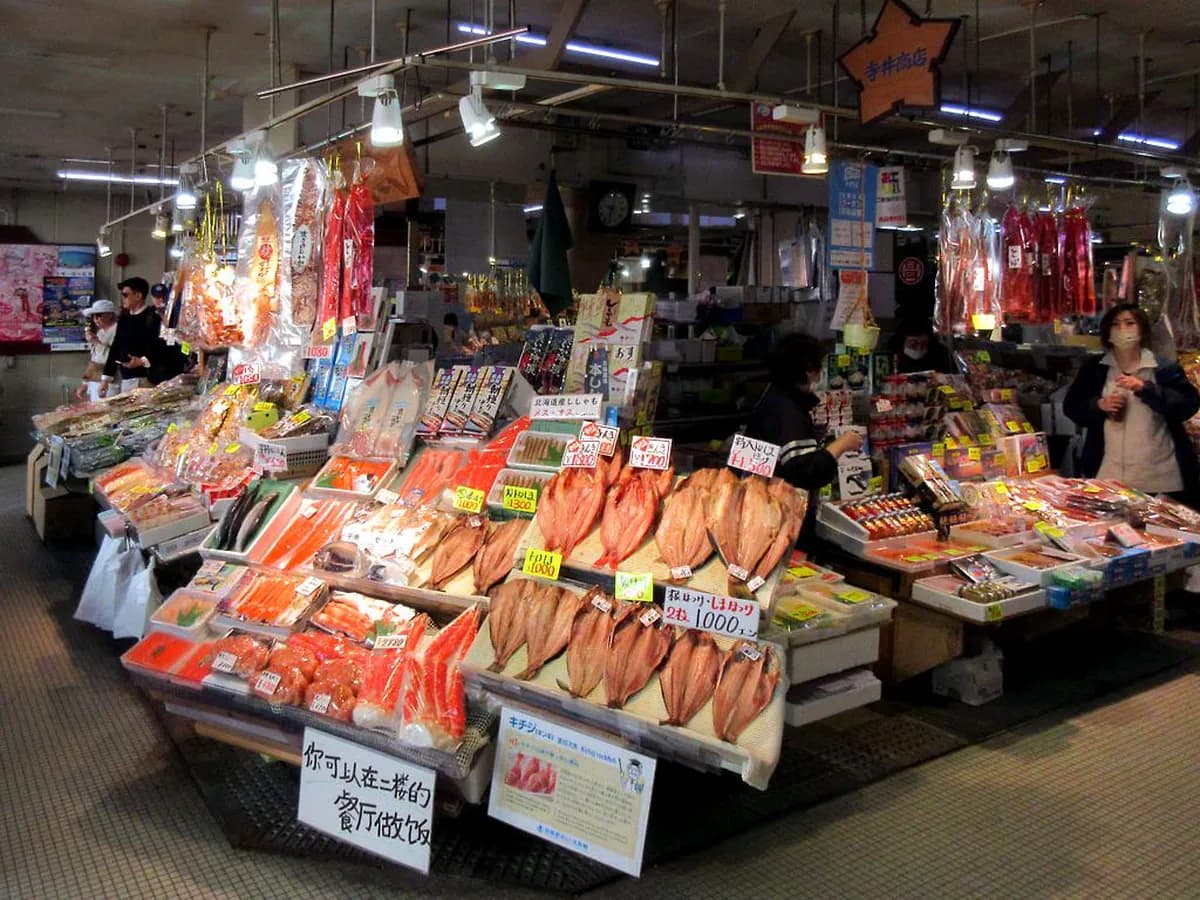
Nijo Market sits two blocks east of Odori and is the city's main fresh seafood and produce market open to the public. Arrive before 09:00 for the widest selection and to avoid tour groups that arrive mid-morning. King crab, hairy crab, sea urchin, and salmon roe are the signature products, with vendors offering crab at the counter cooked to order for around ¥1,500–¥3,500 depending on size and season. The best restaurants in Sapporo for kaisen-don (seafood rice bowls) cluster around the market's perimeter and open from 07:00.
Produce vendors sell Hokkaido's most prized agricultural goods — Yubari melon in summer (¥2,000–¥8,000 per melon depending on grade), early-harvest sweet corn from late July, and white asparagus in May. Most vendors provide vacuum-sealing for transport, and some offer refrigerated domestic shipping to Japanese addresses. International shipping is limited but a few stalls have partnered with courier services. Bring cash; roughly a third of the vendors do not accept cards.
The market operates daily from approximately 07:00 to 17:00, with some fresh-fish stalls closing as early as 14:00 once stock sells out. Closed periods coincide with New Year holidays (roughly 1–3 January). The indoor section stays heated in winter, so cold weather is not a deterrent.
Sapporo Curb Market
The Jogenji-dori Curb Market (ジョウゲンジドオリ公設市場) runs one block south of Nijo Market and operates as a covered arcade of wholesale-style stalls selling dried goods, pickles, fermented products, and kitchen supplies. It is far less visited by tourists than Nijo but is one of the best places in the city to find aged Hokkaido miso, locally packed dried konbu in bulk, and fermented fish products like hokke (Atka mackerel) at prices closer to what residents pay. The vendors here are accustomed to the walk-in public and most will portion-split larger bags on request.
This market is a particularly good source for pantry souvenirs that travel well. Sealed miso blocks, vacuum-packed dried scallops (hotate), and konbu sheets are all stable at room temperature for months and pass airport security without issue. A few stalls also sell Hokkaido sake and shochu direct from regional distilleries, which is noticeably cheaper here than in department stores. Hours run approximately 08:00–17:00 on weekdays, with shorter Saturday hours and Sunday closures at most stalls.
Sapporo Factory
Sapporo Factory occupies the site of Japan's first beer brewery and remains one of the more relaxed shopping environments in the city. The centrepiece is a massive glass atrium that lets in natural light year-round, creating a greenhouse feel that contrasts with the functional underground malls. The tenant mix skews toward lifestyle and outdoor gear — Snow Peak, The North Face, and Montbell all have flagship or concession space here. It is the best stop in the city for serious winter clothing, particularly midlayer fleeces and waterproof shells at full retail.
History buffs will find a small exhibition on the original Sapporo Brewery built in 1876, preserved in the red-brick annex at the back of the complex. The complex also holds a large cinema and several family-oriented dining options, making it a good choice if you are shopping with children or want a slower afternoon pace. After browsing, the Sapporo Beer Garden sits a short walk away for an obvious evening pairing. Access is from the Kita-18-jo Higashi subway station on the Toho Line, roughly 10 minutes from central Odori.
Hokkaido Souvenir Brands to Know
Several Hokkaido confectionery brands have flagship stores in Sapporo that are worth locating for freshness, packaging, and selection reasons. Shiroi Koibito by Ishiya is the most famous — the chocolate-filled langue de chat is sold at every gift shop in the city, but the freshest stock is at Ishiya's dedicated stores near Sapporo Station and in the station complex itself. Limited-edition tins and seasonal flavours (including matcha and strawberry variants) sell out quickly and are not reliably restocked at airports.
Rokkatei's Sapporo Main Store near Odori serves as a proper cafe as well as a retail shop, and it is worth visiting for the butter sand cookies and white chocolate-dipped crackers in a sit-down setting. LeTAO, headquartered in Otaru but with a Sapporo outlet, is the go-to for double-layer cheesecake in gift boxes that require refrigeration — most counters will pack with ice for up to 4 hours of transit. Six Star Chocolate and Marusei Butter Sandwich from Rokkatei are both consistently cited as top-ranked Hokkaido snacks in Japanese travel polls and make reliable gifts for people who have received Shiroi Koibito before.
Check the Sapporo itinerary for suggested timing if you plan to visit multiple confectionery shops in one day — clustering them around Odori and the station keeps walking time under 20 minutes total.
Practical Tips for Shopping in Sapporo
Tax-free shopping requires your physical passport at the time of purchase, not a copy or phone photo. The minimum spend per transaction is ¥5,000 for consumables (food, cosmetics, drinks) and ¥5,000 for general goods (clothing, electronics) at most major retailers in 2026. Refunds are processed immediately at point of sale or at a centralised counter — Daimaru and Marui Imai both have ground-floor tax refund desks that handle multi-store receipts for the same building. Goods must not be opened before departure from Japan.
Standard mall hours are 10:00–20:00 for fashion retailers and 11:00–21:00 for restaurant floors. Don Quijote Tanukikoji runs 24 hours. Nijo Market and the Curb Market open between 07:00 and 08:00 and close mid-afternoon, so plan fresh market visits in the morning before shifting to the covered malls. 8 Best Areas Where to Stay in Sapporo matters for shopping logistics: hotels within 5 minutes of Odori or Sapporo Station let you drop purchases mid-day rather than carrying bags all afternoon.
Large coin lockers are available at JR Sapporo Station (¥400–¥700 depending on size, IC card payment) and at Odori subway station. The Mitsui Outlet Park in Kitahiroshima requires a 25-minute bus ride from Sapporo Station but offers significant discounts on international sportswear brands — check the Mitsui Outlet Park Sapporo website for bus timetables and coupon downloads before departing the city centre.
Use our Sapporo attractions hub to plan your whole visit. For related Sapporo guides, see our Sapporo Neighborhoods & Districts and Areas Where to Stay in Sapporo.
Frequently Asked Questions
What are the best things to buy in Sapporo?
The best things to buy include Hokkaido dairy products, Shiroi Koibito cookies, and fresh seafood from Nijo Market. You should also look for high-quality lavender products and local crafts. Many travelers enjoy finding unique Japanese stationery and cosmetics at shops like Loft or Tokyu Hands. Check our blog for more gift ideas.
Is shopping in Sapporo cheaper than Tokyo?
Shopping for local Hokkaido food and produce is generally cheaper in Sapporo than in Tokyo. However, prices for international fashion brands and electronics are usually consistent across Japan. You can find excellent deals at the Mitsui Outlet Park located just outside the city center. Tax-free benefits apply equally in both cities for international tourists.
Where can I find tax-free shops in Sapporo?
Tax-free shops are concentrated in the Sapporo Station malls, Tanukikoji Shopping Street, and major department stores like Daimaru. Look for the official red and white tax-free sticker on store entrances. You must present your physical passport at the time of purchase to receive the discount. Most large malls have a centralized tax refund counter for convenience.
What time do shops close in Sapporo?
Most department stores and malls in Sapporo close between 8:00 PM and 9:00 PM. Smaller boutiques and some shops in Tanukikoji may close earlier around 7:00 PM. However, drugstores and discount retailers like Don Quijote often stay open much later or even 24 hours. Always check official websites for specific holiday hours or seasonal changes.
Sapporo's shopping districts are tightly clustered and easy to combine in one day. The underground corridor from Sapporo Station through Odori to Susukino keeps you comfortable whatever the season. Morning starts at Nijo Market or the Curb Market for fresh and pantry goods, then a sweep through Tanukikoji, Odori's department stores, and the station complex covers most other categories. Plan souvenir shopping last so you are not carrying bags all day.
Free: The Sapporo Essentials guide
Top things to do, where to stay, a perfect day plan, getting around, and the best time to go — a Sapporo mini-guide you can take offline.
You might also like

Continue reading
More guides you'll find useful