Comico Art Museum Yufuin: Kengo Kuma's Charred-Cedar Gem
Kengo Kuma's charred-cedar museum beneath Mount Yufu: what to see at Comico Art Museum Yufuin, how it fits a 2-day Yufuin itinerary, and visit tips.
On this page
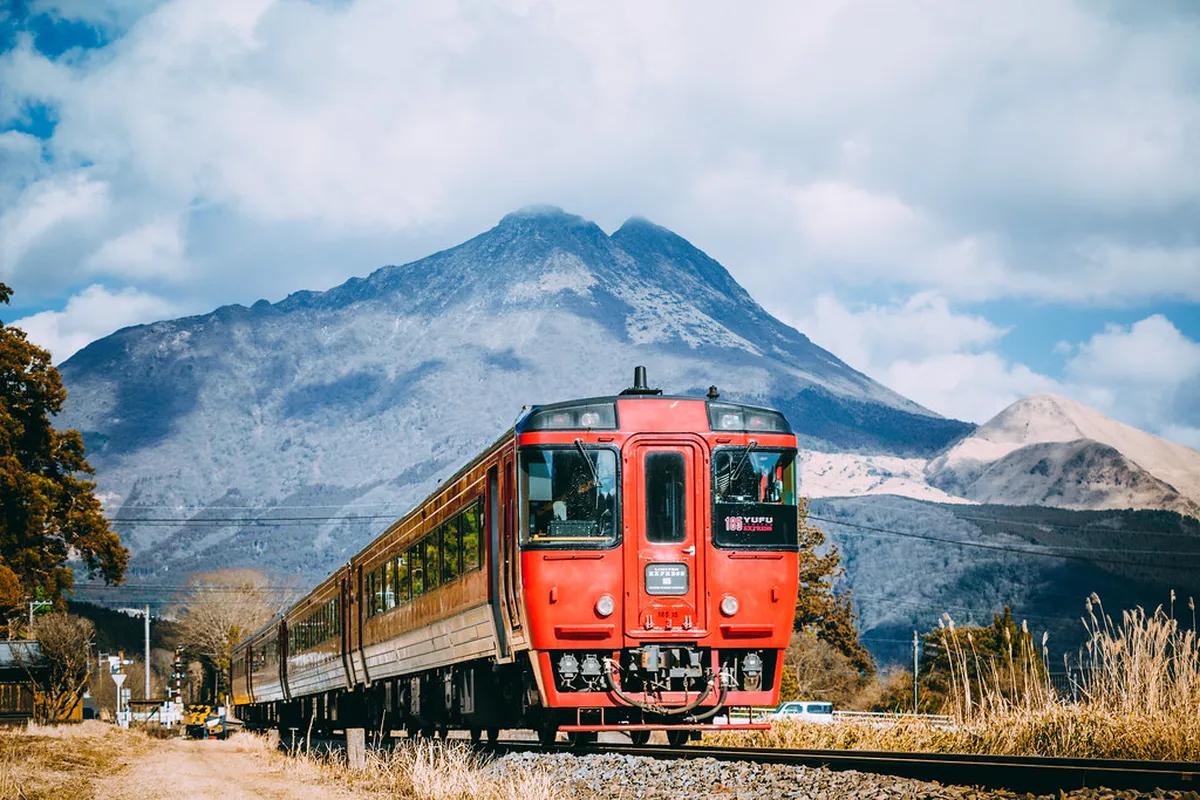
The Comico Art Museum Yufuin stands as one of the most architecturally distinctive destinations in Kyushu, sitting quietly in the hot spring town of Yufuin with Mount Yufu rising behind it.
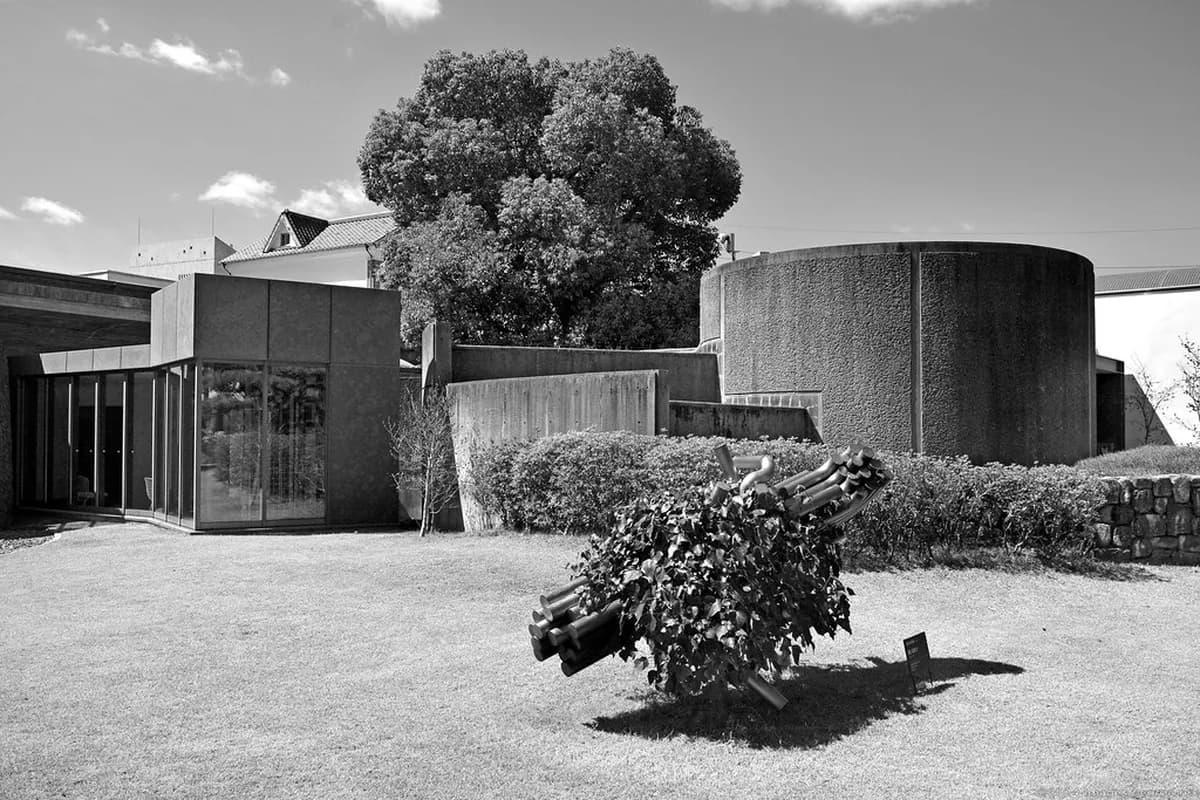
Designed by Kengo Kuma and opened in 2017, the building is clad in yakisugi — charred cedar — that darkens the facades so completely the structure reads almost as shadow against the mountain.
If you are building a The Perfect 2-Day Yufuin Itinerary: 10 Essential Stops, the museum fits naturally into a morning slot; the timed-entry system keeps crowds thin, and the experience is genuinely unhurried.
This guide covers the collection, the 2022 Annex expansion, the architecture concept, the Art House stay option, ticketing, and practical logistics for 2026 visits.
Must-See Works in the Comico Collection
The museum was commissioned by NHN Japan Corporation — the company behind Comico, one of Japan's largest digital comics platforms — as a space for permanent and rotating contemporary art. The permanent collection centers on two artists: Kohei Nawa and Mariko Mori.
Kohei Nawa's PixCell-Deer is the work most visitors photograph. The taxidermied deer is encased in thousands of transparent spheres of varying sizes, each acting as a lens that refracts light differently depending on where you stand. Nawa's practice treats organic forms as data surfaces, and the deer makes that concept immediately legible.
Mariko Mori's Eternal takes a different register — a luminous circular form that shifts colour slowly across the spectrum. Mori draws on Buddhist cosmology and particle physics simultaneously, and the piece rewards time spent with it rather than a quick glance.
In 2022 the museum opened its Annex, expanding the exhibition floor significantly. The new structure rises at a gentle angle toward the sky, adding wall space for larger-scale installations and deepening the dialogue between interior light and the landscape outside. Check the official site for which additional works are on rotation during your visit.
Architecture: The Village Concept and Yakisugi Cladding
Kengo Kuma organised the museum as four low-rise blocks arranged to recall a traditional Japanese village — MURA. Rather than a single imposing cultural institution, the ensemble reads as a cluster of small structures, which sits respectfully within Yufuin's domestic street scale. The official project documentation details the spatial strategy: shallow pools frame mountain views, and timber finishes contrast the minimalist galleries.
At mid-height, thin eaves divide each block horizontally, emphasising how flat and horizontal the volumes are rather than how tall. The layout of courtyards and covered thresholds frames views of Yufu mountain at specific moments as you move between spaces — the building is essentially a curated sequence of mountain glimpses.
The yakisugi cladding is both practical and conceptual. Carbonising cedar eliminates the need for paint or sealant, lets the wood age naturally for decades, and produces a near-black surface that absorbs into the surroundings rather than competing with them. On the museum facades, perpendicular boards interrupt the flat panels to give the walls rhythm; on the Art House, the yamato-bari technique overlaps boards of different widths in a subtly randomised pattern. Japan's national tourism site highlights the architectural integration: the museum sits within forested mountains, with views of Mount Yufu framed by every interior threshold.
The museum's logo, designed by Kenya Hara — the creative director responsible for MUJI's visual identity — is a single minimalist square cut from solid stainless steel. Hara's design philosophy treats reduction as communication, and the logo functions the same way the building does: it signals without announcing itself.
Outdoor Spaces: Rooftop Garden and Sculpture Grounds
The rooftop water garden is among the most photographed spots in Yufuin. On a clear morning, the still surface mirrors the twin peaks of Mount Yufu almost perfectly, and because the garden sits above the roofline of surrounding buildings, the view is unobstructed.
Sculptures placed in the open-air courtyards shift appearance significantly with light and season. Early morning delivers sharp shadows that define edges; afternoon flattens them. Visiting in autumn adds the cedar and maple colours of the surrounding hillside as a backdrop.
The museum is a five-minute walk from Lake Kinrin. Many visitors combine both in the same morning — the lake loop takes around twenty minutes and the museum visit around ninety. The Yufuin Floral Village is also within easy walking distance along the main Yunotsubo Kaido shopping street.
Who the Museum Suits — and Who It Does Not
The museum is adults and older children only in practice. The gallery atmosphere is intentionally quiet and the works are not interactive; small children are generally not permitted inside to preserve that environment. If you are travelling with young kids, the lake and outdoor walking routes in Yufuin are better choices for that part of your day.
For students, valid ID at the door earns a meaningful discount off the standard adult rate. Visitors with disabilities receive reduced admission, and the building is step-free at ground level. The timed-entry format also means the pace is never overwhelming — the museum limits guests per slot so you are never jostling in front of a work.
Budget-wise, the museum represents reasonable value for the experience. Standard adult admission in 2026 is approximately 1,700 yen for access to both the main gallery and the Annex. No meal or café is on site, so factor in a nearby lunch stop; the main Yunotsubo street has several good options within a ten-minute walk.
Booking and Visiting: What to Know Before You Go
The museum operates on a mandatory pre-booking system. Walk-in tickets are not sold at the door; if you arrive without a reservation, you will be turned away regardless of availability. Book your time slot at camy.oita.jp well ahead of your trip — popular dates in spring and autumn fill several weeks in advance. The official Oita tourism guide provides visitor hours, current pricing, and accessibility information for the museum.
Time slots are typically structured in one-hour windows. Arrive at least ten minutes early to complete check-in. Staff will brief you on the gallery route and photography rules before you enter. Photography is generally permitted in most areas but check the current policy on the official site as it can vary by exhibition.
Opening hours run roughly 09:30 to 17:30, with last entry around 16:30, but confirm exact times on the official site before your visit as seasonal hours apply. The museum is closed on certain weekdays — typically Tuesdays or Wednesdays depending on the month. Plan your wider Yufuin Onsen Travel Guide day around the museum slot rather than the other way around, since the onsen schedule is more flexible.
From Yufuin Station, the museum is roughly a 15-minute walk northeast along the Yunotsubo Kaido. Taxis are available at the station if you prefer. There is no dedicated parking on site, so arriving by car is not recommended.
Advance online booking is required for all visits — the museum strictly limits guests per hour. Book your time slot at camy.oita.jp and arrive at least ten minutes before your scheduled entry to complete check-in.
Comico Art House Yufuin: Staying Inside the Project
The Comico Art House Yufuin is a separate, adults-only accommodation designed by Kengo Kuma as part of the same complex. Originally built as private guesthouses for company staff, the Art House now accepts public bookings and offers one of Yufuin's most architecturally coherent stay experiences.
Guests stay in a private standalone villa with two bedrooms (king beds), tatami flooring, a full private bathroom, washing machine, refrigerator, and flat-screen TV. Every room opens onto a private garden. There is no on-site restaurant — the Art House positions itself as a quiet retreat rather than a hotel service operation. Yufuin's cafés and restaurants are a short walk away.
The most practically significant benefit for Art House guests is private onsen access. Each villa has its own open-air and indoor hot spring baths filled with Yufuin's soft mineral water. You can soak any time, in complete privacy. This also resolves the tattoo question entirely: because the baths are private, there are no tattoo restrictions. Guests who would face barriers at a shared public onsen have no such issue here.
Art House guests also receive special after-hours access to the museum galleries — meaning you can walk through the Nawa and Mori works in silence, without other visitors. For serious art travellers, that alone justifies the premium over a standard ryokan rate.
Ryokan Alternatives Near the Museum
If the Art House is outside your budget or fully booked, several high-quality ryokans sit within ten to fifteen minutes on foot. For a full overview of options across price points, see our guide on best ryokans in Yufuin and the broader breakdown of 12 Best Places Where to Stay in Yufuin.
Luxury ryokans in the area typically include private or semi-private baths, multi-course kaiseki dinners featuring Oita wagyu beef, and shuttle service from the train station. Budget-conscious travellers will find simpler guesthouses along the Yunotsubo Kaido that offer shared onsen facilities and Japanese-style rooms at significantly lower nightly rates.
One practical consideration: ryokans in Yufuin frequently have tattoo policies for shared baths. If this applies to your group, confirm the policy before booking or opt for a property with private bath rooms. The Art House avoids this issue entirely, as noted above.
Ticket Prices and How to Book in 2026
Standard adult admission covering the main gallery and Annex is approximately 1,700 yen in 2026. Student tickets (high school and university, valid ID required) are discounted. Visitors with disabilities and accompanying caregivers receive a reduced rate — confirm the current schedule on the official site as pricing is subject to review.
Booking is handled entirely online at camy.oita.jp. Select your date, choose a time slot, and pay by credit card during the reservation process. No tickets are sold at the door. Keep a digital copy of your confirmation on your phone — you will need to show it at the check-in desk.
For peak periods (golden week, late October to mid-November autumn foliage season, and August school holidays), book at minimum two to three weeks in advance. Slots during the 10:00–12:00 window on clear days fill fastest because the rooftop garden photographs best in morning light.
Walk-ins are not accepted — you cannot purchase tickets at the door. If you arrive without a pre-booked reservation, you will be turned away. Secure your slot well in advance, especially during peak seasons when time slots fill up quickly.
Onsen, Wellness, and the Tattoo Question
Yufuin's onsen culture is central to the town, and the Comico complex sits squarely within it. The Art House villas each include a private open-air and indoor hot spring bath using the same mineral-rich waters that flow beneath the town. The chemical composition of Yufuin's water is sodium bicarbonate-type, which has a notably soft, skin-smooth feel compared to heavier sulphuric springs.
For museum-only visitors who want an onsen experience on the same day, several public bathhouses and ryokan day-use facilities operate within a five-minute walk. Conditions vary by property; some have private bath rental by the hour, which sidesteps shared-bath tattoo restrictions entirely. Ask at your accommodation for the nearest day-use option that suits your group.
The wellness dimension of a Comico visit is not only the water. The museum itself is designed as a slow-movement space — timed entry, quiet galleries, courtyards that invite pausing. Many visitors describe the combination of the art, the architecture, and the mountain air as the most restorative part of their Yufuin trip.
Frequently Asked Questions
Which comico art museum yufuin options fit first-time visitors?
First-time visitors should choose the standard gallery tour which includes access to both the main building and the new Annex. This provides a complete overview of the Kengo Kuma architecture and the primary artworks. For more travel tips, check our travel blog for updated guides.
How much time should you plan for comico art museum yufuin?
You should plan for approximately sixty to ninety minutes to fully explore the galleries and the rooftop garden. This allows enough time to appreciate the art without feeling rushed through the minimalist spaces. Most visitors find this duration perfect for a morning or afternoon activity.
What should travelers avoid when planning comico art museum yufuin?
Travelers should avoid arriving without a pre-booked reservation as the museum strictly limits the number of guests per hour. You should also avoid bringing large bags or loud children, as the museum maintains a very quiet atmosphere. Following these rules ensures a better experience for everyone.
Is comico art museum yufuin worth including on a short itinerary?
Yes, the museum is highly recommended even for short trips because of its central location near the main walking street. It offers a unique cultural contrast to the traditional shops and hot springs found elsewhere in town. The architectural beauty alone makes it a worthwhile stop for any visitor.
Are there any discounts available for the museum entry?
Discounts are available for university and high school students who can provide a valid student identification card. There are also reduced rates for visitors with disabilities and their caregivers at the ticket counter. Booking online in advance is the most reliable way to secure the standard entry rate.
The Comico Art Museum Yufuin is worth the planning effort it requires. The mandatory booking, the no-walk-in policy, the quiet pace — all of it conspires to make the experience feel curated rather than crowded.
Whether you come for the Nawa and Mori works, the Kengo Kuma architecture, or the rooftop mountain reflections, the museum delivers something that the hot spring town's other attractions do not: serious contemporary art in a space designed to hold it properly.
Book your slot early at camy.oita.jp, arrive on time, and let the morning light do the rest.
Free guide: Japan's Hidden Gems
12 under-the-radar places beyond Tokyo & Kyoto — with the best season to visit each and a local tip you won't find in the guidebooks.
You might also like

Continue reading
More guides you'll find useful