9 Best Places to Stay in Northern Okinawa (2026)
Discover where to stay in Northern Okinawa, from Motobu beaches to Yanbaru forests. Includes hotel picks, tattoo policies, and 2026 travel tips.
On this page
Northern Okinawa rewards travelers who make the effort to get there. The region runs from Nago city up to Cape Hedo — roughly 60 km of coastline, ancient forest, and Ryukyu village life that feels nothing like the resort corridor further south. We last updated this guide in June 2026 to reflect current hotel pricing and bus schedules.
Choosing a base in the north is not straightforward. The area is large and public transport is sparse, so picking the wrong town means long drives to everything you actually want to see. This guide breaks down the six most useful areas, explains the trade-offs honestly, and covers practical details like tattoo policies, booking lead times, and the one bus route that makes car-free travel possible.
If you are coming from the capital, you can read about staying in Naha first and then use this guide to plan your northern leg. Most visitors find a split stay works far better than anchoring in one area for the whole trip.
Best Areas to Stay in Northern Okinawa at a Glance
The table below summarizes the key trade-offs. "Car necessity" is rated essential if you genuinely cannot see the area's main draws without private transport, and optional where the Yanbaru Express Bus or local taxis fill the gap reasonably well.
| Area | Best For | Price Range / Night | Car Necessity |
|---|---|---|---|
| Nago | Road-trip base, budget travelers | ¥8,000–¥18,000 | Essential |
| Motobu | Families, Churaumi Aquarium | ¥7,000–¥35,000 | Essential |
| Nakijin & Kouri Island | Couples, romantic escapes | ¥12,000–¥80,000 | Essential |
| Kunigami & Yanbaru | Hikers, birdwatchers, nature lovers | ¥9,000–¥20,000 | Essential |
| Onna | Luxury beach resorts | ¥25,000–¥100,000+ | Recommended |
| Ogimi | Culture, longevity villages, slow travel | ¥10,000–¥18,000 | Essential |
All prices are 2026 peak-season estimates. Off-season (November to February) rates can drop 30–50% in Nago and Motobu. Onna luxury properties discount less aggressively — expect 15–20% off at most outside of school holidays.
Nago: The Strategic Gateway to the North
Nago is the largest town in northern Okinawa and the most practical base for anyone planning to cover the region by car. The city sits at the geographic midpoint of the north, meaning you can reach Churaumi Aquarium in 20 minutes, Kouri Island in 30, and Cape Hedo in about 70. This central position is Nago's biggest asset.
The trade-off is atmosphere. Nago is a working town with supermarkets, izakayas, and a central shopping street — not a beach resort. The waterfront near Nago Castle ruins offers pleasant evening walks, but you will not find a white-sand beach within walking distance of the city-center hotels. Standard business hotels here run ¥8,000–¥18,000 per night, and parking is almost always free or cheap.
Food options in Nago deserve more credit than most guides give them. The local Orion Beer factory on Route 449 does free tours with tasting (book online; slots fill fast in July and August). The morning market near the bus terminal opens at 06:00 and sells some of the freshest pork and sea-grape produce on the island. These small pleasures make Nago feel like Okinawa rather than a resort bubble.
Nago is not right for travelers who want a beachfront resort experience or who dislike driving. But if you have a car and a full week, it is the most logistically sensible base in the north, and it gives you access to every other area on this list within an hour.
Motobu: Best for Families and Churaumi Aquarium
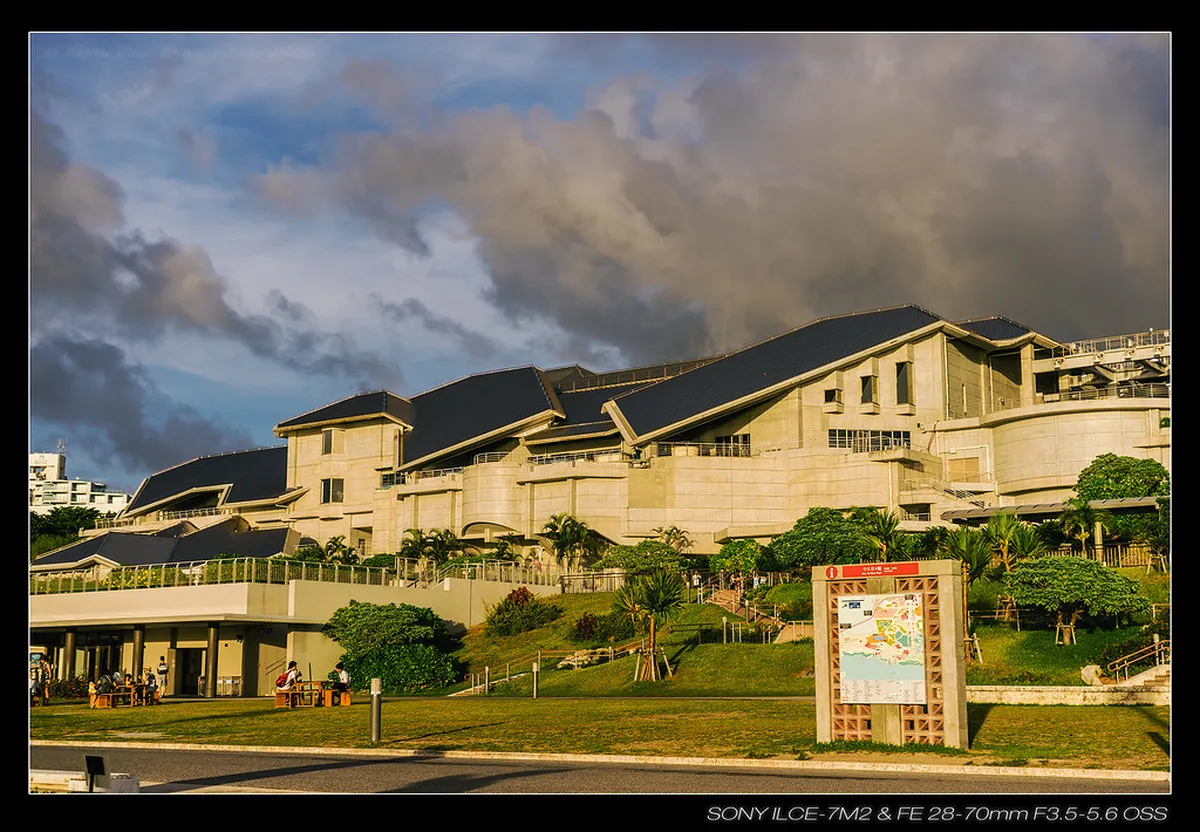
Motobu sits on a broad peninsula northwest of Nago and is the most family-friendly area in the north. The Churaumi Aquarium inside Ocean Expo Park is 10–15 minutes away by car, and Emerald Beach in the same park complex is one of the calmest, cleanest beaches on the island — ideal for children and non-swimmers. Entrance to the beach is free; aquarium tickets are ¥2,180 for adults and ¥1,440 for high schoolers in 2026.
The Hotel Orion Motobu Resort & Spa is the flagship property here, sitting directly on the coast with multiple pools and a spa. Rates start around ¥35,000 per night in peak season. More affordable options include the Okinawa Motobu Guest House, a well-reviewed property from around ¥7,000 per night. Self-catering apartments are widely available and work well for families who prefer to cook after a long day at the aquarium.
One timing note: the aquarium car park fills by 09:30 on summer weekends. Staying in Motobu means you can walk or cycle to Ocean Expo Park and beat the buses entirely. The parking advantage alone justifies the slight premium over Nago-based accommodation during peak season.
The Churaumi Aquarium car park fills by 09:30 on summer weekends. Staying in Motobu lets you walk or cycle to Ocean Expo Park and skip the peak-hours rush entirely, saving valuable time on busy days.
Tattoo policy at Orion Motobu: the resort requires guests with visible tattoos to cover them with rash guards or waterproof stickers in the pool and spa areas. This is standard for upscale Okinawa resorts. If you have large, hard-to-cover tattoos, contact the property directly before booking — a few smaller guest houses in Motobu have no such restriction.
Nakijin and Kouri Island: Romantic Escapes and Remote Beaches
Nakijin village moves at a genuinely slow pace. The main draw is Nakijin Castle, a 14th-century Ryukyu fortress whose walls glow orange at sunset and attract far fewer crowds than the more famous Shuri Castle in Naha. Local inns around Nakijin typically charge ¥12,000–¥25,000 per night and often include breakfast with local produce.
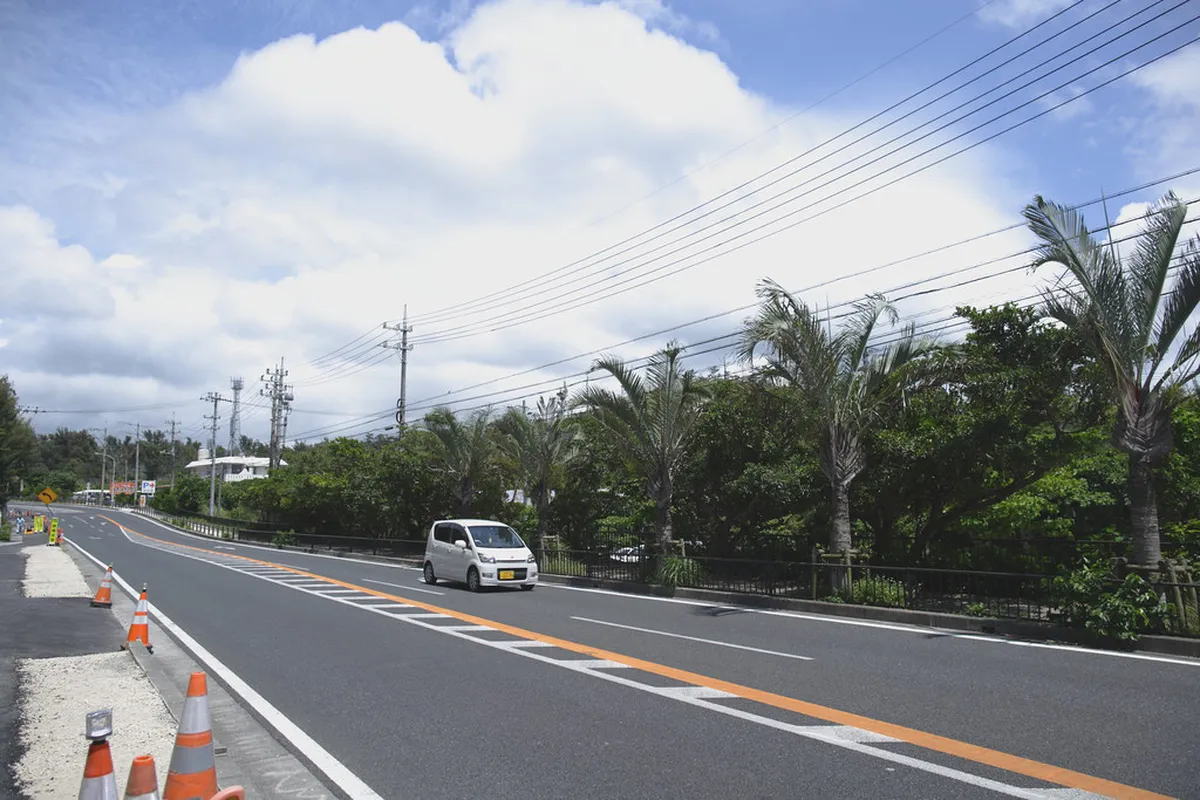
Kouri Island is connected to the Motobu Peninsula by a 2 km bridge that is one of the most scenic drives in Japan. The island itself is tiny — you can circle it in 30 minutes by car — but the water clarity is exceptional. Boutique villas on Kouri command ¥40,000–¥80,000 per night, and they sell out months in advance for peak season. The Yukurina Resort Okinawa nearby on the Motobu side offers a more reasonable alternative with similar coastal access.
Visit the Heart Rocks at Kouri's northern tip before 08:00. Tour buses arrive from around 10:00, and the small car park becomes chaotic. Early mornings are also the best time for swimming off the rocks, when the water is glassy and the light is ideal for photos.
Nakijin is 15 minutes from Motobu by car and 40 minutes from Nago. It does not make sense as a standalone base for longer trips, but two nights here between a Nago stay and a flight home provides a genuinely quiet close to an Okinawa trip.
Kunigami and Yanbaru: For Nature Lovers and Forest Adventures
Kunigami village is the gateway to Yanbaru National Park, the UNESCO-listed subtropical forest that covers the northern tip of the main island. This is the wildest part of Okinawa — dense canopy, mountain streams, and endemic wildlife including the Okinawa Rail (Yambaru kuina), a flightless bird found nowhere else on earth. Most guest houses here run ¥9,000–¥20,000 per night and have limited English but warm hospitality.
The Okinawa Rail is flightless and endemic to Yanbaru forest — found nowhere else on earth. Early morning hikes after rainfall offer the best chance to spot this rare bird, but tread quietly on marked trails to avoid disturbing wildlife.
The forest trails are best walked in the early morning after rainfall, when bird activity peaks and the light filters beautifully through the canopy. The Daisekirinzan trail complex near Cape Hedo (¥820 entry, open 09:00–17:30) is the most accessible starting point — a 1 km loop through bizarre limestone karst formations with clear interpretive signage in English. Serious hikers should ask accommodation staff about the longer Pineapple Trail and Yona River course, which are marked only in Japanese but manageable with offline maps.
The drive from Nago to Kunigami takes about 50 minutes on Route 58. The road north of Oku narrows significantly and has limited passing places — this is the section where the confidence built on the Naha-to-Nago expressway run pays off. Fuel up in Nago; there are no petrol stations north of Higashi.
There are almost no hotels north of Kunigami. Cape Hedo, the northernmost point of the main island, is a day-trip destination rather than an overnight base. If you want to spend more time in deep Yanbaru, book two nights in Kunigami and plan one full day of hiking and one for birdwatching along the mangrove road near Okuma.
Onna: Luxury Resorts on the Northern Border
Onna sits at the southern edge of what most travelers consider "the north," straddling the border between the central resort corridor and Nago. It is home to the highest concentration of large beachfront resorts on Okinawa's main island, including the renowned Halekulani Okinawa and the architecturally distinctive Hotel Nikko Alivila with its Spanish-colonial facade and direct access to Nirai Beach.
Onna is best chosen when your priority is the beach itself — turquoise water, resort pools, and slow mornings with breakfast included. Rates range from ¥25,000 for mid-range properties to well over ¥100,000 per night at top-tier resorts during Golden Week. Not every hotel in Onna is genuinely beachfront; check the satellite map before booking and filter specifically for sea-view rooms or direct beach access.
From Onna, northern attractions are reachable by car: Nago is 30 minutes, Churaumi Aquarium is 50 minutes, and the Yanbaru trailheads are 80–100 minutes. This makes Onna a workable base for day trips north if you prefer a polished resort environment over Nago's local-town feel. The trade-off is that you will clock significant driving time on every excursion day.
How to Split Your Stay in Okinawa
The most efficient strategy for a 7-night trip is three nights in the south followed by four in the north. Spend your first nights in Naha or Onna, pick up your rental car on day three, and head north via mid-island stops like Cape Manzamo or Ryukyu Mura. Arrive in Nago or Motobu by afternoon and use those four remaining nights to radiate outward each day.
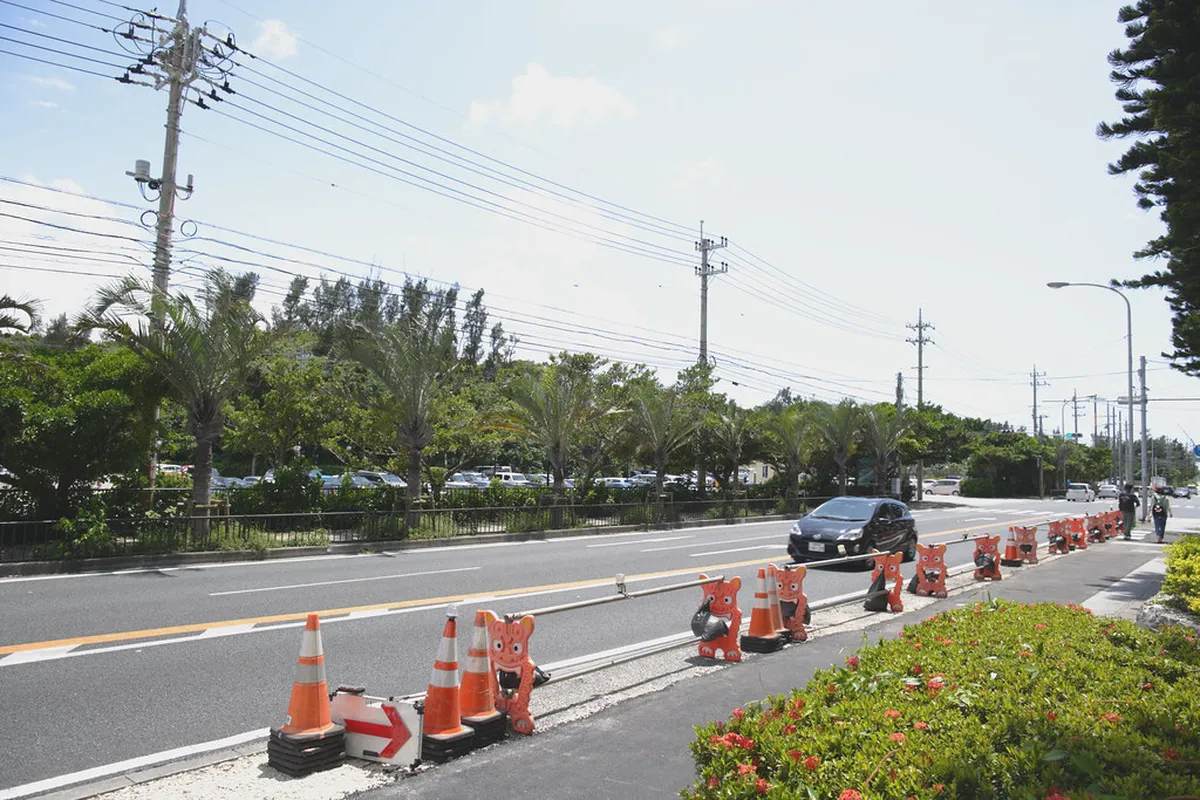
The 90-minute drive from Naha to Nago on the Okinawa Expressway (Highway 58 to Expressway 58, toll approximately ¥1,100) serves as an essential left-side driving warm-up. The expressway is wide, well-signed in English, and flows at 80–100 km/h — straightforward conditions that build confidence before you encounter the narrower coastal roads above Nago. Do not skip this mental warm-up by taking a taxi north; driving yourself from the start matters.
If you have only five nights, skip Nakijin and split between Onna (two nights) and Motobu (three nights). This covers the aquarium, Kouri Island, and several excellent beaches without overloading the itinerary. For a ten-night trip, add two nights in Kunigami at the end so you can properly explore the Yanbaru forest. You can read a full day-by-day schedule in our Okinawa area guide.
When moving between bases on a transition day, plan one or two stops on route rather than driving straight through. The Nago pineapple park (Route 449, open 09:00–18:00) and the roadside sea-grape farm stands north of Yomitan make natural pauses that turn a travel day into part of the trip itself.
Visiting Northern Okinawa Without a Car
Most guides tell you to rent a car and leave it there. That is correct advice for seeing the full north, but a car-free option does exist for travelers who genuinely cannot or prefer not to drive. Yanbaru Express Bus Route 111 runs from Naha Bus Terminal to Nago via Onna, taking approximately 2 hours and costing around ¥2,000 one-way. Buses run roughly hourly between 07:00 and 19:00. From Nago, Motobu Kankou Bus Route 65 and 66 connect the city to Churaumi Aquarium and Emerald Beach.
The honest limitation is frequency. Buses north of Nago run two or three times daily on some routes, which means your day's activities are dictated by departure times rather than your own pace. Kouri Island, Kunigami, and the Yanbaru trailheads are essentially unreachable by public transport. Taxis exist in Nago but the fares to remote beaches are high — ¥3,000–¥5,000 each way to Sesoko Island, for example.
A practical compromise for car-averse travelers is to base in Nago, use buses for Motobu and the aquarium, and join a half-day organized tour for Kouri Island or Yanbaru. Several local operators offer small-group tours departing from Nago that cover these highlights in a single day. Check the Nago tourism office (Nago City Hall, Route 58, open 08:30–17:15 weekdays) for current listings.
Practical Tips for Booking Northern Okinawa Hotels
Book 4–6 months ahead for Motobu and Kouri Island during Golden Week (late April to early May) and Obon (mid-August). These are the two windows when domestic Japanese travel peaks and the best-value guest houses sell out completely within hours of availability going live. The top-tier resorts in Onna and Orion Motobu hold back allocations and raise rates sharply during these periods — book those even earlier. Outside of these windows, two to four weeks' lead time is usually sufficient in Nago and Kunigami.
Tattoo policies are a real practical concern at northern resorts and onsen facilities. Large resorts like Orion Motobu typically require waterproof stickers or rash guards over visible ink in pool and spa areas. Smaller guest houses and ocean-access properties generally have no such rules. If this affects you, search specifically for "tattoo-friendly" properties on Booking.com or send a direct inquiry before committing — a short email in Japanese (available via translation apps) gets a faster and more reliable answer than English alone.
Confirm your rental car before finalizing hotel choice. Car shortages in Okinawa during July and August are well-documented, and some travelers have found themselves stranded at hotels with no nearby activities when their booked vehicle was unavailable. Pre-pay a non-refundable reservation at a major agency (Toyota Rent-a-Car or Nippon Rent-A-Car both have Nago branches) several months out. Without a vehicle, you are relying entirely on the limited bus network described above.
Finally, check whether your hotel offers free parking. In Nago, most accommodation includes it. In Motobu and Onna, parking charges at larger resorts can add ¥1,000–¥2,000 per day to your bill — a cost that adds up quickly on a week-long stay. You can also read our guide to the Naha transport guide for the southern leg of your trip where the dynamics are completely different.
Frequently Asked Questions
Do I need a car to explore Northern Okinawa?
Yes, a rental car is essential for most travelers in the north. While the Yanbaru Express Bus connects Naha to the Aquarium, reaching the best beaches and forest trails is nearly impossible without private transport.
Are hotels in Northern Okinawa expensive?
Prices vary significantly by area and season. You can find simple guest houses for $50 per night, while luxury beachfront resorts in Onna or Kouri Island often exceed $400 during the summer peak.
What is the best area for families in the north?
The Motobu Peninsula is the top choice for families. It offers easy access to the Churaumi Aquarium, calm swimming beaches, and many spacious vacation rentals with kitchens for self-catering.
Staying in Northern Okinawa offers a profound connection to the island's natural heritage and Ryukyu roots. Whether you choose the logistical ease of Nago or the luxury of Onna, the north provides an unforgettable escape. Remember to book your rental car early to ensure you can reach every hidden corner of the Yanbaru forest.
We hope this guide helps you find the perfect base for your 2026 adventure in the Land of the Immortals. Safe travels as you navigate the scenic coastal roads and quiet villages of this beautiful region.
For the full city overview, see our Naha attractions guide. For more on planning your trip, explore which area of Okinawa to stay in and the Onna accommodation guide.
Northern Okinawa is part of planning a wider trip — start with our Okinawa things-to-do guide for the full picture.
Free: The Naha Essentials guide
Top things to do, where to stay, a perfect day plan, getting around, and the best time to go — a Naha mini-guide you can take offline.
You might also like


Continue reading
More guides you'll find useful