Yokohama Day Trip From Kamakura: The Ultimate 1-Day Itinerary
Plan the perfect Yokohama day trip from Kamakura. Includes transport tips, a full 1-day itinerary from temples to Chinatown, and expert local advice.
On this page
A Kamakura day trip itinerary often ends at the station — but the smartest travelers keep going. Kamakura and Yokohama sit just 25 minutes apart by train, and together they form the most dramatic one-day contrast in all of Kanagawa Prefecture. You start the morning in a medieval temple town built by samurai warriors. You end the night looking at a neon-lit harbor skyline from the tallest tower in western Japan. That transition is the point.
This guide covers the complete logistics: which train to take, when to leave each stop, what to eat in Chinatown, and exactly when to be standing on the Landmark Tower observation deck for the best light. The 2026 entry fees and train fares are included throughout. Read through once, then follow the schedule without second-guessing it.
Two Cities, Same Prefecture: Proximity Explained
Kamakura and Yokohama are both in Kanagawa Prefecture, separated by roughly 25 kilometers. If either city were in the United States, they would simply be two neighborhoods of the same sprawling metro — the way Santa Monica and Downtown Los Angeles share a county without sharing a character. In Japan, the distinction matters far more. Kamakura is the preserved former capital of a feudal warrior state. Yokohama is Japan's second-largest city and the country's primary international port, opened to foreign trade in 1859 after 250 years of near-total isolation.
The cultural gap between them is almost comically large for such a short train ride. Kamakura gives you Zen silence, bamboo groves, and bronze Buddhas dating from the 13th century. Yokohama gives you China Town, the Cup Noodles Museum, a 273-meter observation tower, and the largest Ferris wheel in Japan's history. Visiting both in one day is not a stretch — it is the entire point of being in this corner of Kanagawa.
The key question travelers ask is whether both cities can fit comfortably in twelve hours without feeling rushed. The answer is yes, provided you start early and keep Kamakura to a half-day. The itinerary below is designed around a 09:00 start and leaves room for an unhurried Chinatown lunch and a sunset at the tower.
Transport Guide: Getting from Kamakura to Yokohama Station
The JR Yokosuka Line is the most direct connection between the two cities. Trains depart Kamakura Station roughly every 10 to 15 minutes and arrive at Yokohama Station in approximately 25 minutes. A one-way ticket costs ¥340 in 2026. The Shonan-Shinjuku Line also stops at Kamakura and reaches Yokohama in about the same time for the same fare — use whichever departs first from the platform. Both are covered by IC cards (Suica or Pasmo), which saves you the queue at the ticket machine. If you are arriving from Tokyo, the JR Yokosuka Line runs all the way from Tokyo Station to Kamakura in roughly one hour and costs ¥920, so you can tap in once and ride the full route without changing trains. Check the Kamakura transportation guide for full platform details and IC card tips.
Luggage strategy is worth thinking through before you leave. Kamakura Station has coin lockers at the east exit in three sizes: small (¥300–400), medium (¥500–600), and large (¥700–800) per use. These fill up quickly on weekends and Japanese public holidays, so store your bags before 09:30 if you plan to use them. Yokohama Station has larger luggage storage at the Central Ticket Gate concourse, but the best lockers there also sell out by midday during peak season. The cleaner approach is to leave everything heavy in Kamakura before your morning temple visits and pick it up on your way to the train, then travel light into Yokohama.
Once you arrive at Yokohama Station, the main sights cluster into two walkable zones. Chinatown and Yamashita Park are about a 15-minute walk east through the Motomachi shopping district, or one stop on the Minato Mirai Line (¥220) to Motomachi-Chukagai Station. Minato Mirai is a 20-minute walk south from the station along the harbor, or one stop to Minato Mirai Station. Keep your IC card loaded for these short hops — they are much faster at the gates than hunting for coins.
IC cards (Suica or Pasmo) work on the Minato Mirai Line inside Yokohama but JR paper tickets do not. Load at least ¥2,000 before leaving Kamakura to avoid queuing at the station.
Morning in Kamakura: Hokokuji Bamboo Forest and Tsurugaoka Hachimangu
Arrive at Hokokuji Temple by 09:00. This is the single most important timing decision of the day. The bamboo grove at Hokokuji is only 1.8 hectares, and by 10:30 the paths are dense with tour groups. At 09:00 you will likely share the grove with fewer than a dozen people. The entrance fee is ¥400 per adult in 2026. The grove is open daily from 09:00 to 16:00. Inside, the temple's small matcha tea house overlooks the bamboo from a wooden platform — the service runs 09:00 to 15:30 and a bowl of tea costs ¥600 including a traditional sweet. It is genuinely one of the better breakfasts you can have in Japan.
From Hokokuji, take the local bus back toward central Kamakura (bus 23 or 24 from the stop near the temple; fare ¥220 with IC) and stop at Tsurugaoka Hachimangu, the most important Shinto shrine in Kamakura. The shrine sits at the top of a long ceremonial approach called Wakamiya Oji and dominates the geographic center of the city. Entry to the shrine grounds is free. The main hall is at the top of a broad stone staircase where a famous thousand-year-old ginkgo tree once stood — it collapsed in 2010 but its stump has begun to re-sprout. Allow 30 to 40 minutes here. The shrine opens daily at 06:00.
By 11:00 you should be back at Kamakura Station. Grab your stored luggage if you left any, buy your Yokohama ticket at the machine or tap your IC card, and board the next JR Yokosuka Line train. You will arrive in Yokohama by 11:30, giving you a comfortable afternoon window in the port city before the sunset hour.
Hokokuji opens at 09:00 and fills with tour groups by 10:30. Arriving by 09:00 guarantees a quiet bamboo grove experience; the matcha tea service (¥600) at the tea house is one of the best breakfasts in Japan.
Lunch in Yokohama Chinatown: What to Eat and Where to Walk
Yokohama Chinatown is the largest Chinatown in Japan and one of the largest in Asia, covering roughly ten city blocks and housing more than 600 restaurants and shops. The main entrance gate (Zenrinmon) is a five-minute walk from Motomachi-Chukagai Station. Most restaurants open at 11:00 and the lunch crowd peaks between 12:30 and 14:00. Arriving just after 11:30 gives you first pick of tables at the better sit-down spots.
For a quick walk-and-eat lunch, head to Chukagai-Odori, the main street running through the center of Chinatown. The steamed bun (nikuman) stalls here are the defining street food of Yokohama Chinatown — expect pork, shrimp, or black sesame fillings for ¥300 to ¥500 each. The stalls near the Yamashita-cho intersection tend to have the freshest batches around noon because they are farthest from the tourist entrance and resupply more frequently. For a sit-down meal, look for Cantonese banquet restaurants on the side streets one block north of the main gate — the menus are typically bilingual and the dim sum carts circulate until 14:00 on weekdays.
After lunch, walk the ten minutes south through Motomachi to Yamashita Park. This is a long waterfront promenade built on earthquake rubble after the 1923 Great Kanto Earthquake and now lined with rose beds and a retired ocean liner (Hikawa Maru, open for tours at ¥300). The harbor views here are worth 20 minutes of easy walking before you make your way to Minato Mirai.
Afternoon in Yokohama: Sankeien Garden and Yamashita Park
If you have energy and daylight to spare after Chinatown, Sankeien Garden is a 30-minute bus ride south of Yokohama Station (bus 8 or 148 from the east exit, fare ¥240). This traditional landscape garden was built in 1906 by silk merchant Hara Tomitaro and covers 17.5 hectares. It contains 10 historic buildings relocated from Kyoto and Kamakura, including a three-story pagoda from 1457. Admission is ¥900 per adult in 2026. The garden is open daily from 09:00 to 17:00. During the spring cherry blossom season (late March to early April) and autumn leaves season (mid-November), Sankeien becomes one of the most photographed gardens in Japan.
The practical tradeoff is timing. Sankeien takes at least two hours to appreciate properly, and adding it means skipping either an extended Chinatown visit or the full sunset window at Landmark Tower. On a standard day trip from Kamakura, most travelers skip Sankeien and return on a separate Yokohama-only day. If Sankeien is your priority, consider reversing the itinerary: Sankeien first in the afternoon, Chinatown for dinner, and the Landmark Tower at night.
Yamashita Park remains worth the short detour regardless. The promenade is free and always open. It connects naturally to the Minato Mirai waterfront walk and gives you a ground-level sense of the harbor before you see it from above at the tower.
Evening at Yokohama: Landmark Tower and the Sunset Timing
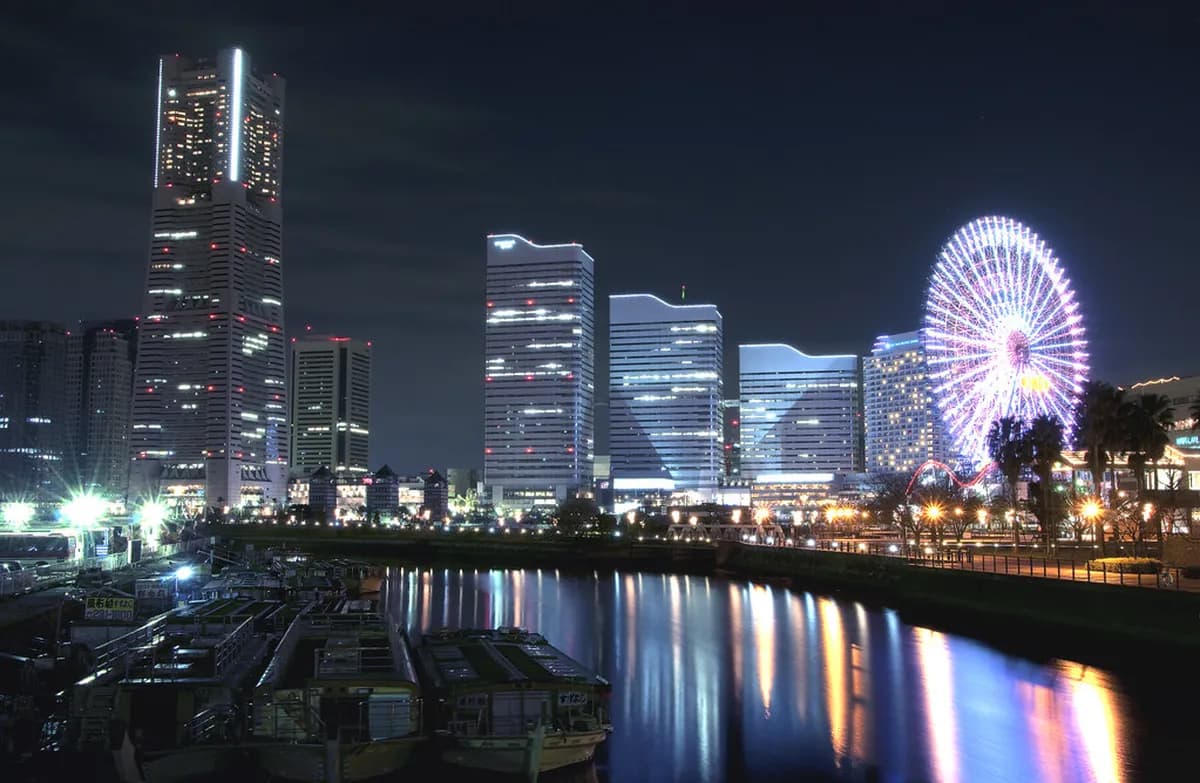
Yokohama Landmark Tower stands 296 meters tall and its Sky Garden observation deck sits at 273 meters on the 69th floor. The deck is open Sunday through Thursday from 10:00 to 21:30 and Friday and Saturday from 10:00 to 22:30. Admission is ¥1,000 per adult in 2026. The elevator is the second fastest in Japan and takes 40 seconds from ground level. Walk-ins are accepted but holiday evenings can have 20-minute queues at the ticket counter — buying online saves time.
The specific window that no one writes about clearly is the 17:00 to 19:00 slot. In summer (June to August) the sun sets over the bay between 18:30 and 19:00. Arrive at the observation deck by 17:30 to claim a west-facing window spot before the evening crowd builds. You will watch the light shift from golden afternoon through the orange dusk over the bay, then see the city grid switch on below you as full dark falls. This two-hour transition from day to night — sitting at the window with a coffee from the deck's café — is genuinely the best single moment of the entire Kamakura-Yokohama day.
The Minato Mirai district surrounds Landmark Tower with canal-side walking paths, the Cosmo World amusement park (¥800 for the Ferris wheel), and Yokohama Red Brick Warehouse (two converted 1911 customs buildings now housing restaurants and small shops, free entry). After the observation deck, the walk back toward Yokohama Station along the waterfront at night takes about 20 minutes and passes all of these. The last JR trains back to Tokyo depart Yokohama Station past midnight, so there is no pressure to rush.
Ways to Compare Kamakura and Yokohama: Which City Suits You Best?
The two cities serve entirely different travel moods. Kamakura is a small coastal town (population around 170,000) built around preserved medieval architecture. Its main draw is the density of Buddhist temples and Shinto shrines within walking distance of the station — over 65 temples and 19 shrines in a compact area. The vibe is quiet, contemplative, and markedly slower than Tokyo. Crowd levels are manageable on weekday mornings but heavy on weekends, particularly at the Great Buddha (Kotoku-in) and Hokokuji.
Yokohama is Japan's second-largest city (population 3.8 million) and the country's largest port. Its main draw is variety: Chinatown, a modern waterfront, world-class observation views, a museum quarter, and one of Japan's best craft beer scenes in the Kannai district. The vibe is energetic and international. Crowd levels in Minato Mirai are consistently high on weekends but the area is large enough to absorb them without feeling claustrophobic.
- Choose Kamakura if you prioritize: temples, bamboo forests, samurai history, hiking trails, and quiet coastal atmosphere.
- Choose Yokohama if you prioritize: food variety, skyline views, harbor walks, shopping, and urban nightlife.
- Do both in one day if you prioritize: maximum contrast and the satisfaction of covering two very different chapters of Japanese history before dinner.
The combination works especially well for first-time Japan visitors who want to see the country's feudal past and its industrial-era modernization in a single twelve-hour window. That narrative — from samurai capital to international port — is one of the clearest ways to understand how quickly Japan transformed after 1868.
Exploring Kanagawa Prefecture: Practical Day Trip Planning
Most travelers base themselves in Tokyo and make this a day trip. The full Tokyo–Kamakura–Yokohama–Tokyo circuit is entirely feasible by train with no advance booking required. The total train cost for the round trip from Tokyo Station runs to about ¥2,560 per person in 2026 (Tokyo to Kamakura ¥920, Kamakura to Yokohama ¥340, Yokohama to Tokyo ¥570, plus short hops within Yokohama). A JR Rail Pass covers the inter-city legs if you already have one, but it does not cover the Minato Mirai Line within Yokohama.
A smaller group of travelers uses Kamakura or Yokohama as an overnight base and makes the other city a day trip in the opposite direction. Staying in Kamakura gives you the temples before the tourist buses arrive from Tokyo — a significant advantage at popular sites like Hokokuji and the Great Buddha. Check the best hotels in Kamakura for a quiet, historically immersive overnight option. Budget travelers should look at the Iza Kamakura Hostel & Bar, which is well-reviewed and walking distance from the station. For the Yokohama end, the Intercontinental Yokohama Grand is the landmark luxury option directly in Minato Mirai with bay views from the upper floors.
One practical detail that trips up first-timers: Yokohama's sights are more spread out than they look on a map. Chinatown, Yamashita Park, Sankeien, and Minato Mirai each require separate transit legs. Build in 15-minute buffers between locations and do not try to squeeze in all four on the same afternoon. The day trips from Kamakura guide covers additional options in the region, including Enoshima Island via the Enoden railway, if you want to extend your Kanagawa itinerary beyond these two cities.
The Transit Hack: IC Card vs. Paper Tickets on This Route
Every competitor guide tells you which train to take. None of them explain the actual cost difference when you have luggage, are traveling with children, or want to use the Minato Mirai Line inside Yokohama. Here is a direct comparison for the main route options in 2026.
- JR Yokosuka Line (Kamakura → Yokohama): ¥340 by IC card or paper ticket, approximately 25 minutes. Trains run every 10–15 minutes. Best for most travelers.
- JR Shonan-Shinjuku Line (Kamakura → Yokohama): same fare, same time. Fewer departures. Useful if you are continuing directly to Shinjuku after Yokohama.
- IC card (Suica or Pasmo) vs. paper ticket: no fare difference on JR routes in this corridor. The IC card advantage is speed at the gates and compatibility with the Minato Mirai Line, which does not accept JR paper tickets. Load at least ¥2,000 on your IC card before leaving Kamakura.
- Kamakura Free Pass: covers unlimited bus rides within Kamakura for ¥570. Does not cover the train to Yokohama. Worth buying if you plan more than three bus rides in Kamakura — typically yes on a full temple circuit.
For travelers returning to Tokyo from Yokohama at the end of the day, the Tokaido Line from Yokohama to Tokyo Station (¥570, approximately 30 minutes) is faster and more frequent than the Yokosuka Line. If you are heading to Shinjuku, the Shonan-Shinjuku Line from Yokohama direct is the cleanest option (¥570, approximately 30 minutes).
Keep planning your trip with our complete Kamakura attractions guide, and explore the best nearby day trips and whether one day is enough in Kamakura next.
Frequently Asked Questions
Can You Visit Kamakura and Yokohama in One Day?
Yes, you can visit both cities in one day. The train ride takes only twenty-five minutes. Start early in Kamakura and finish with dinner in Yokohama.
How long is the train from Kamakura to Yokohama?
The JR Yokosuka Line takes about twenty-five minutes. Trains run frequently throughout the day. The cost is approximately three hundred and fifty yen.
Is Yokohama Chinatown worth visiting after Kamakura?
Yokohama Chinatown is definitely worth a visit for the food. It offers a vibrant contrast to Kamakura's temples. Most shops stay open late for dinner.
Combining these two cities offers a complete look at the history and future of Japan. I hope this guide helps you navigate the transit and top sights with total confidence. Many visitors find that is one day enough in Kamakura depends on their pace. Enjoy the unique blend of samurai tradition and modern harbor life on your next journey.
Free: The Kamakura Essentials guide
Top things to do, where to stay, a perfect day plan, getting around, and the best time to go — a Kamakura mini-guide you can take offline.
You might also like



Continue reading
More guides you'll find useful