3-Day Itinerary: Best Day Trips from Kamakura
Plan the perfect 3-day itinerary from Kamakura to Enoshima and Yokohama. Includes local transport hacks, top attractions, and where to stay.
On this page
Kamakura sits at the heart of Kanagawa Prefecture, roughly an hour south of Tokyo by train, and it makes an exceptional base for exploring the surrounding coast and mountains. Most visitors rush through on a half-day tour and never realize how much the area offers beyond the Great Buddha. This guide covers everything you need to plan a full day trip — or several — from the city in 2026.
We cover the must-see attractions inside Kamakura, the best day trips to Enoshima, Yokohama, and Hakone, plus the practical logistics of getting there and getting around. Whether you are arriving from Tokyo for the first time or using Kamakura as a multi-day base, the Kamakura day trip itinerary 2026 framework below will help you build your own schedule.
Must-See Day Attractions in Kamakura
Kamakura's appeal rests on a dense cluster of temples, shrines, and coastal scenery all reachable on foot or by the Enoden tram. The Great Buddha at Kotoku-in is the obvious anchor — the 93-tonne bronze Amida sits 13 metres tall and has been outdoors since a storm destroyed its hall in the fifteenth century. Entry is ¥300 (an additional ¥50 to enter the statue itself). The site opens at 08:00 and is quietest before 10:00.
Five minutes from Hase Station on the Enoden, Hasedera Temple is worth at least two hours. The main hall houses Japan's tallest wooden statue, the 9-metre gilded Kannon goddess. The terrace above offers wide views of Sagami Bay, and the hillside cave system is densely atmospheric. Entry is ¥400. From late May through July the hydrangea path up the slope is one of the most photographed sights in all of Kanagawa.
Tsurugaoka Hachimangu Shrine is a 10-minute walk east of Kamakura Station and admission is free. The broad cherry-blossom-lined approach, the Genpei ponds at the entrance, and the hilltop main hall give you a strong sense of the city's medieval political weight — Kamakura was Japan's de facto capital from 1185 to 1333. Allow 45 minutes minimum.
For those who want to go deeper, Engakuji Temple near Kita-Kamakura Station (¥500, opens 08:30) sits inside a cedar forest and is far less crowded than the Hase-area temples. The large bell platform and tea house here are genuinely peaceful. Hokokuji Temple (¥400) is farther east and shelters a grove of over 2,000 bamboo stalks with a matcha tea house inside — the combination of bamboo, tea, and silence makes it the single most restorative stop in Kamakura.
Enoshima Island: The Best Trip from Kamakura
Enoshima is 25 minutes from Kamakura by the Enoden tram, which makes it the most natural extension of a Kamakura day. The island is connected to the mainland by a 600-metre bridge and rises steeply through three linked shrines, a lighthouse tower, sea caves, and a spa complex overlooking the Pacific. Give yourself six to eight hours if you want to see everything without rushing.
The Enoshima Escar, a series of outdoor escalators leading to the summit, costs ¥360 one-way. It is worth paying this once on the way up and walking down through the shrine precincts on your way back. The Sea Candle lighthouse observation deck (¥500) gives clear views of Mount Fuji on days with low humidity — early morning in autumn and winter offers the best odds. The caves at the southern tip are accessible for ¥500 but get very slippery at high tide; check the tide schedule at the entrance before descending.
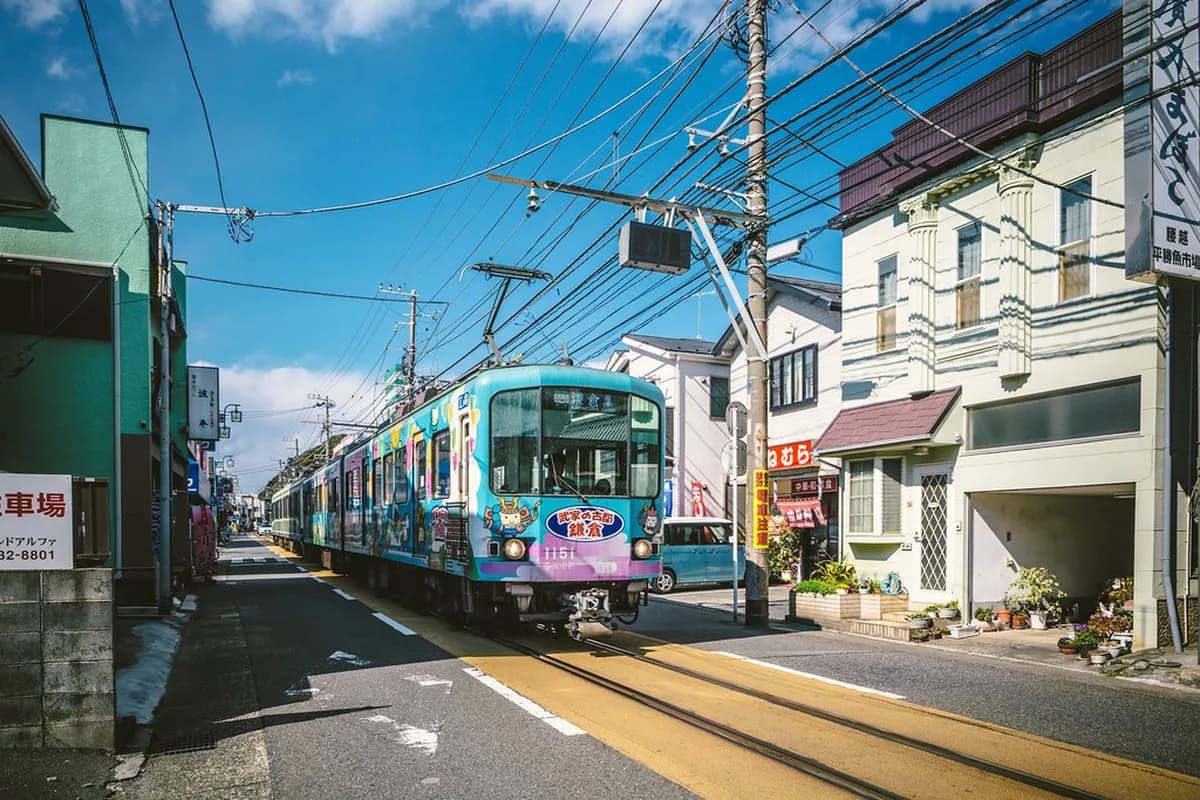
The most scenic photography angle in the entire Kamakura area is not on Enoshima itself but near Kamakurakoko-Mae Station on the Enoden line, just before you reach the island. The tram passes with the beach in the background — made famous by the anime Slam Dunk — and creates an unmistakable shot. The train runs every 15 minutes; wait on the west side of the crossing for the best light in the afternoon. Be considerate of residents who live along the track.
Follow our detailed Enoshima from Kamakura day trip guide for the full walking route, entry-fee breakdown, and the best spots for shirasu (fresh whitebait) lunch near the harbour. A set meal with shirasu-don, miso soup, and pickles typically runs ¥1,200 to ¥1,800 depending on the restaurant.
A complete Enoshima day from Kamakura requires 6–8 hours. Budget ¥360 one-way for the Escar cable car, ¥500 for the Sea Candle lighthouse observation deck, and ¥1,200–¥1,800 for shirasu-don lunch. The tram ride itself costs ¥220 each way.
Yokohama and Hakone: Extended Day Trips
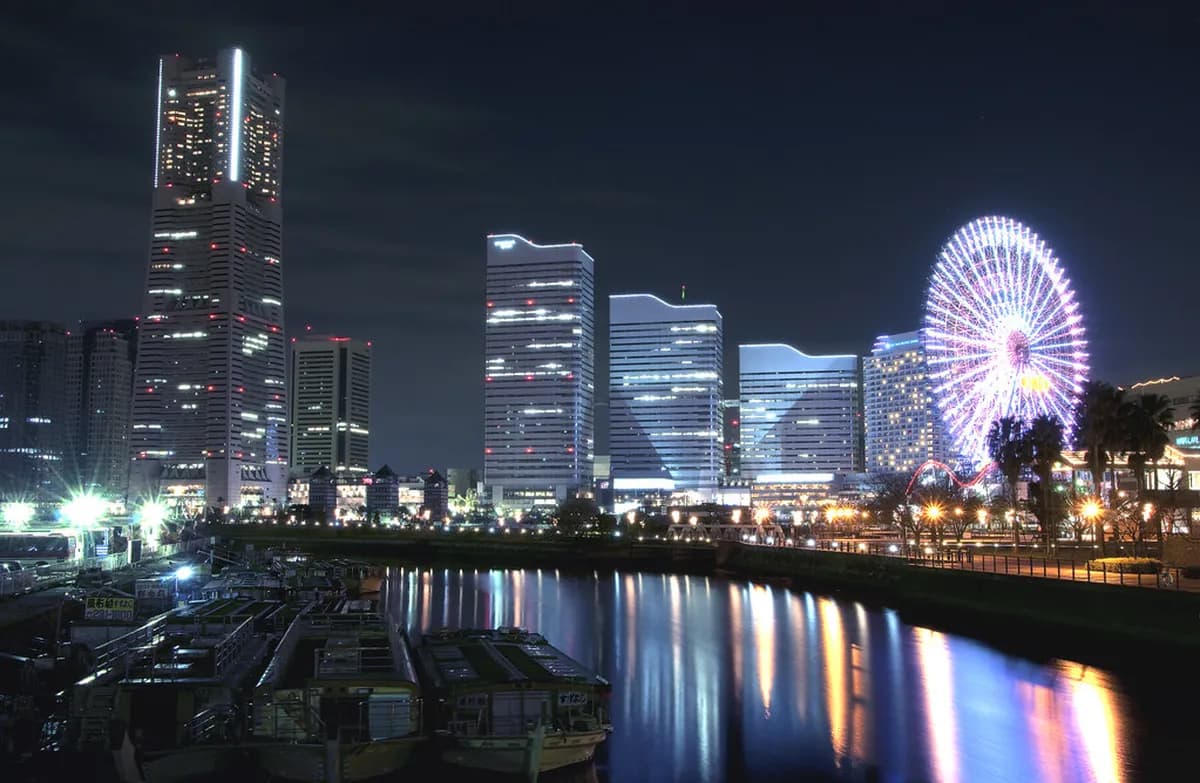
Yokohama is 30 minutes from Kamakura Station on the JR Yokosuka Line and makes a logical full-day extension. The Minato Mirai harbor district, Sankeien Garden (¥700, open 09:00–17:00), and Yokohama Chinatown — the largest in Japan — can fill an entire day comfortably. Walk from Ishikawacho Station to Chinatown in 10 minutes rather than waiting for the bus. Most Chinatown restaurants stay open until 21:00. For the complete plan, see our Yokohama day trip from Kamakura guide.
Hakone is a different kind of extension — mountain scenery, hot springs, and views of Mount Fuji rather than urban skyline. Getting there from Kamakura takes about 90 minutes: JR Yokosuka Line to Ofuna, then JR Tokaido Line to Odawara, then the Hakone Tozan Line into the mountains. Start by 07:30 to cover the main loop (Lake Ashi, the Owakudani ropeway, and the open-air sculpture museum) before early evening. The Hakone Free Pass costs ¥6,100 for two days and covers all cable cars, the lake boat, and buses within the pass zone — it is the sensible option if you plan to stay overnight.
One honest trade-off: Hakone's crowds peak on weekends and national holidays, and the Owakudani ropeway closes without notice when sulfur levels spike. For families or travelers sensitive to unpredictable closures, Yokohama is the more reliable day-trip choice. Hakone rewards those who stay overnight and explore the quieter ryokan towns of Miyanoshita or Gora.
Family-Friendly and Budget-Friendly Options
Kamakura's scale works well for families. The Enoden tram runs at ground level, has wide doors, and connects Kamakura Station to Hase, Enoshima, and Fujisawa in a single unbroken line — no transfers, no underground stairs. For families with young children, limiting Day 1 to Kotoku-in and Hase Station beach removes all the complexity of bus navigation. Yuigahama Beach (a 15-minute walk from Hase Station) has rental gear for stand-up paddleboarding in summer and a calm, wide shoreline that works for mixed-age groups.
Budget travelers can substantially cut costs by stacking the Enoden hop-on hop-off day ticket (¥800) with the free admission at Tsurugaoka Hachimangu and a packed lunch from the Komachi-dori shopping street near Kamakura Station. The street is lined with vendors selling fried croquettes, dango skewers, and taiyaki — shaped like the Great Buddha at m's terrace for ¥280 — all of which make for a cheap and satisfying lunch on the go. Total spend for a full day of temples and beach without splurging on entry to every attraction sits around ¥2,000 to ¥3,500 per person.
For a unique hands-on experience that stands apart from the standard temple circuit, consider the hanko seal-making workshop at Wabunka Lux. You carve your own personal name seal (hanko) from wood in about 90 minutes. It costs roughly ¥4,500 and requires advance booking — typically two days minimum. It is a genuinely memorable souvenir that no competitor activity can match.
A budget day in Kamakura (Enoden hop-on ticket ¥800 + free Tsurugaoka Hachimangu + packed lunch from Komachi-dori) totals around ¥2,000–¥3,500 per person. Save even more by skipping paid temple entries and exploring Yuigahama Beach and the Daibutsu Trail (free hiking).
What to Eat in Kamakura
Shirasu — tiny raw or blanched whitebait — is the defining food of the Kamakura coast. The fishing fleet operating out of Sagami Bay brings fresh shirasu into Enoshima and the nearby port towns daily from March through December. A shirasu-don (whitebait rice bowl) served at the thatched-roof restaurants along the Enoshima harbour approach typically costs ¥1,200 to ¥1,600. If you arrive during the January–February closed season, opt for kama-age shirasu (lightly parboiled) which is available year-round.
Back in Kamakura town, the Komachi-dori shopping street running north from Kamakura Station toward Tsurugaoka Hachimangu is the best single stretch for street food. Look for freshly pressed yuzu juice stands (¥400 a cup), sesame dango skewers, and the famous hato saburo — dove-shaped biscuits sold at Toshimaya Honten, a confectionery shop that has been baking them for centuries. These make practical edible souvenirs and are well-priced at around ¥1,000 for a box of eight.
For a sit-down meal with atmosphere, Café Yoridokoro in the Inamuragasaki district (five stops west of Kamakura Station on the Enoden) specialises in teishoku sets built around the day's fish. Window seats look directly over the Enoden tracks. The café opens at 07:00 and window seats require advance reservation — email or phone at least a day ahead. It closes on Tuesdays. This is the kind of place most tour groups never reach, which makes it a reliable escape from the main-street crowds.
Kamakura Festivals and Seasonal Timing
Kamakura runs on a festival calendar that rewards visitors who time their trip well. The Kamakura Matsuri runs across two weekends in April (typically the second and third), centered on Tsurugaoka Hachimangu. It includes traditional horseback archery (yabusame), parade costumes, and street stalls along the main approach. Crowds are significant but the atmosphere is irreplaceable — this is the best single weekend to visit Kamakura if you can plan around it.
The Kamakura Fireworks Festival takes place on the last Wednesday of August over Zaimokuza Beach. The display lasts about 45 minutes and draws large crowds — arrive by 17:00 to secure a spot on the beach. The last Enoden trains out of the area after the fireworks fill quickly; budget travelers should walk to Ofuna Station (about 40 minutes) for a less pressured JR connection back to Tokyo.
Other useful seasonal markers: the hydrangea bloom at Hasedera peaks from late May to mid-July, making the hill walk genuinely spectacular during that window. Autumn foliage at Engakuji and Tōkeiji temples peaks in early December — notably later than most of Japan's fall color timetable, which is a useful planning note that most travel guides miss. The beaches are officially open for swimming from July 1 to August 31, when lifeguards and beach huts operate.
Tours from Tokyo to Kamakura
If you would rather not navigate independently, guided tours from Tokyo to Kamakura are widely available and reasonably priced. The Trip To Japan full-day private tour costs around ¥7,000 per person and includes transport from Tokyo, entry to the main sights, a few anime filming-location stops, and an English-speaking guide throughout. It is the most flexible format and works well for solo travelers or small groups who want to ask specific questions. Book via this tour on Trip To Japan.
Bus tour operators such as Viator offer an air-conditioned group option combining Kamakura and Enoshima in a single day for around ¥8,000. These tours are well-suited to travelers who prefer a set schedule and guaranteed English commentary, but the pace is fixed — you cannot linger at Hokokuji's bamboo grove or take an extra hour at the beach. For a pure half-day format, Context Travel's walking tour focuses on the Great Buddha, Hasedera, and Tsurugaoka Hachimangu with an expert in Japanese history and a small group capped at ten people.
Independent travel is usually more cost-effective for two or more people and gives you full control of timing. The main advantage of a tour is the English context that makes the temples meaningful rather than just photogenic. For first-timers with limited Japan experience, a guided first day followed by independent exploration is a practical middle ground.
Getting to Kamakura
From Tokyo, Kamakura is accessible by two JR lines. The JR Yokosuka Line runs direct from Tokyo Station and Shinagawa Station to Kamakura Station in about 55 minutes for ¥950. The JR Shonan-Shinjuku Line connects Shinjuku, Shibuya, and Osaki directly to Kamakura in roughly 60 minutes for ¥950. Both lines run frequently throughout the day and are the standard choice for most visitors.
A budget option from Shibuya: take the Tokyu Toyoko Line to Yokohama Station (¥280), then transfer to the JR Yokosuka Line to Kamakura (¥330). Total fare is ¥610 one-way — a saving of about ¥340 per person compared to the direct JR route from Shibuya. It adds a five-minute platform change at Yokohama but is otherwise seamless.
Kita-Kamakura Station (one stop before Kamakura on the JR Yokosuka Line) is the better exit point if you plan to start your day at Engakuji or Tōkeiji temples in northern Kamakura and work south. Most itineraries work better entering at Kita-Kamakura and exiting from Kamakura Station in the afternoon.
Which Rail Pass Is Worth It for Kamakura?
Three passes come up repeatedly when planning Kamakura transport, and the right choice depends entirely on your itinerary. The Enoshima-Kamakura Freepass (¥1,640 from Shinjuku, ¥810 from Fujisawa) covers unlimited Odakyu Line travel between Shinjuku and Fujisawa, plus unlimited Enoden rides between Fujisawa and Kamakura. It also gives discounts at Hasedera and several Enoshima attractions. This pass is the clear winner if you are combining Enoshima and Kamakura in one day starting from Shinjuku — the math works out in your favor after two Enoden journeys and one Odakyu round-trip. Buy it online via the Odakyu pass page to avoid queues.
| Pass | Cost | Best For | Coverage |
|---|---|---|---|
| Enoshima-Kamakura Freepass | ¥1,640 (Shinjuku) | Kamakura + Enoshima in one day | Odakyu + Enoden unlimited |
| Enoden all-day ticket | ¥800 | Multiple Enoden rides in Kamakura | Enoden unlimited (15 stops) |
| Kamakura Free Environment Bill pass | ¥900 | Temple circuit without Enoshima | Enoden (to Hase) + buses |
| JR Yokosuka Line one-way | ¥950 | Tokyo to Kamakura | Single Tokyo–Kamakura journey |
The JR Pass and the Tokyo Wide Pass are a different calculation. The JR Pass covers the JR Yokosuka Line to Kamakura at no additional cost, which is useful only if you already hold one for longer Japan travel. On its own, neither the JR Pass nor the Tokyo Wide Pass pays off for a single Kamakura day trip — the ¥950 one-way ticket is simply too cheap to justify the pass cost. The Tokyo Wide Pass (¥15,000 for three days) makes sense only if you add Nikko or Kusatsu Onsen to your itinerary in the same three-day window.
The Enoden all-day hop-on hop-off ticket (¥800) is the sleeper option that most guides overlook. If you are staying in Kamakura and plan to ride the Enoden multiple times — perhaps from your accommodation to Hase, then to Kamakurakoko-Mae for photos, then on to Enoshima — this standalone ticket beats paying per-journey after your fourth or fifth ride. It does not cover the Odakyu Line, so you cannot use it to return to Shinjuku.
How to Get Around Kamakura
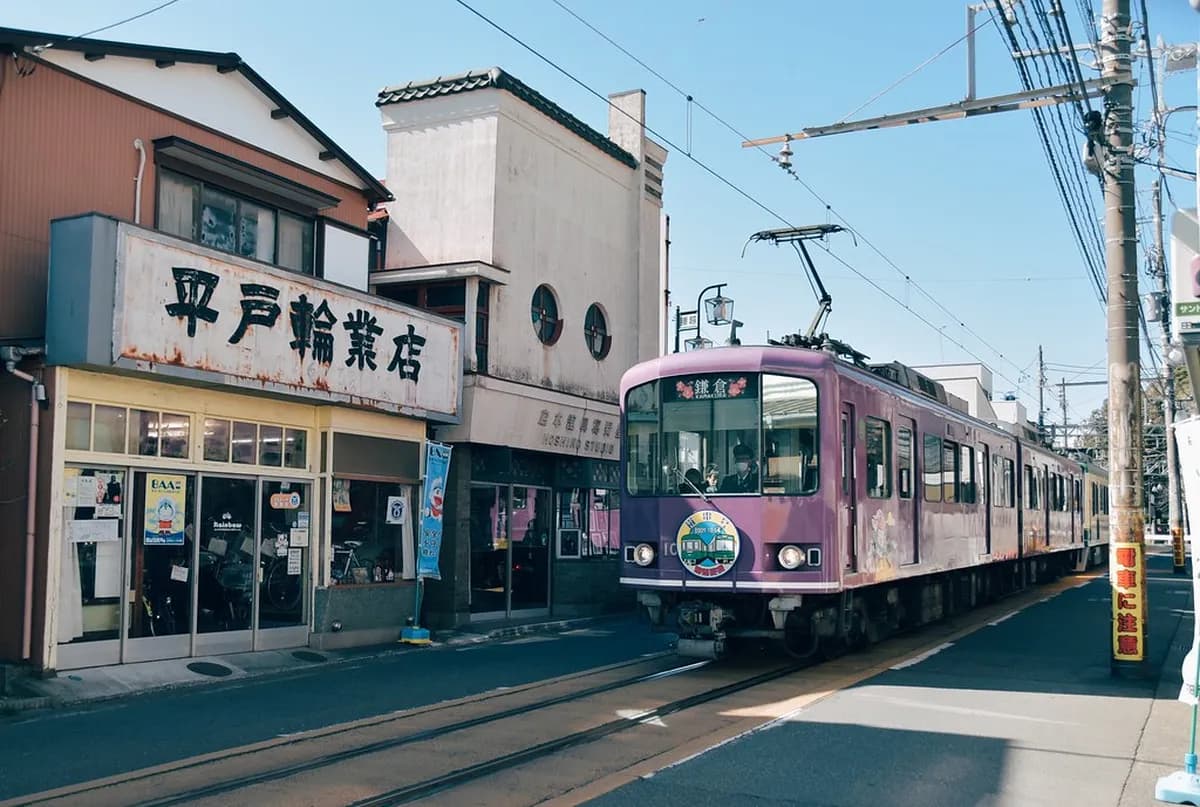
The Enoden Electric Railway is the backbone of local transport. Founded in 1900, it runs 10 kilometres from Kamakura Station to Fujisawa Station along the coast, with 15 stops. Tickets are purchased from vending machines at each station; IC cards (Suica, Pasmo) and contactless credit cards also work. Consult the full Kamakura transportation guide for the complete station-by-station breakdown.
Buses cover the northern and eastern districts that the Enoden does not reach. Board from the rear, take a numbered ticket, and pay the displayed fare in exact cash when exiting from the front. IC cards work on most routes. The Kamakura Free Environment Bill pass (¥900) bundles unlimited Enoden rides (to Hase only) with unlimited Enoden Bus and Keikyu Bus rides — useful for a day focused entirely on the temple circuit without going as far as Enoshima.
Walking is practical for most of the core sightseeing area between Kamakura Station and Hase Station — about 2 kilometres. Bicycle hire is available near the station for around ¥1,500 per day and works well for the flat coastal stretch toward Yuigahama Beach. The hiking trails connecting Engakuji in the north to Kotoku-in in the west (the Daibutsu Trail, 60–90 minutes) are the most rewarding way to link sights without using transport at all, and they pass through quiet cedar forest with almost no crowds before noon.
Accommodation in Kamakura
Staying in Kamakura rather than commuting daily from Tokyo makes a real difference. The tourist rush subsides after 17:00 when day-trippers head back to the city, and you have the temples and backstreets largely to yourself. The area nearest Kamakura Station offers the most convenient transit access; properties here suit travelers who plan to move around a lot. Check the best area to stay in Kamakura guide for neighborhood-level detail on each pocket of the city.
Kita-Kamakura is the quietest base, surrounded by the northern temple cluster. It is almost entirely residential after dark and has very few convenience stores, but it rewards travelers who want a genuinely traditional atmosphere over urban amenity. The accommodation options here lean toward smaller guesthouses and traditional inns. Book at least two months ahead for weekends during sakura season (late March to early April) and festival periods.
Budget travelers should look along the Enoden line, particularly one or two stops west of Kamakura Station toward Hase and Inamuragasaki. Guesthouses and capsule-style accommodations in this stretch are noticeably cheaper than properties in the station neighborhood while still being within walking distance of the main sights. The beach at Yuigahama is walkable from Hase Station, which makes this corridor especially practical in summer.
Keep planning your trip with our complete Kamakura attractions guide, and explore a Yokohama day trip and whether one day is enough in Kamakura next.
Frequently Asked Questions
Which day trips from Kamakura fit first-time visitors?
Enoshima Island and Yokohama are the best choices for first-timers. Both locations are accessible within 30 minutes by train. They offer a mix of history, nature, and modern city views.
How much time should you plan for a trip to Enoshima?
Plan for at least six to eight hours to see the island. This allows time for the shrines, the lighthouse, and a seafood lunch. The caves and spa require extra time.
Kamakura is a wonderful base for exploring the best of Kanagawa prefecture. Whether you have a single afternoon or several days, the combination of ancient temples, coastal scenery, accessible islands, and straightforward rail connections makes it one of the most rewarding corners of Japan to explore in 2026. Plan your transport pass in advance, arrive early at each sight, and leave at least one evening free to walk the backstreets after the crowds have gone.
Free: The Kamakura Essentials guide
Top things to do, where to stay, a perfect day plan, getting around, and the best time to go — a Kamakura mini-guide you can take offline.
You might also like


Continue reading
More guides you'll find useful