Kamakura Weather By Month: Seasonal Guide & Best Time
Plan your trip with our Kamakura weather by month guide. Includes average temperatures, rainfall data, humidity levels, and expert tips on the best time to visit.
On this page
Late spring (May to early June) and autumn (October to November) are the best times to visit Kamakura for comfortable temperatures and manageable crowds. Kamakura sits on the coast of Sagami Bay in Kanagawa Prefecture, about 50 km south of central Tokyo. That coastal position shapes everything — the Sagami Bay breeze keeps summer temperatures a degree or two lower than central Tokyo, while the same wind makes winter shoreline walks feel sharply colder than the thermometer suggests.
Planning around the best time to visit Kamakura ensures a comfortable trip. This guide breaks down each month's average temperatures, rainfall totals, sunshine hours, and humidity levels so you can match your travel dates to your priorities — whether that is cherry blossoms, hydrangeas, autumn foliage, or a clear-sky view of Mount Fuji. All data references Japan Meteorological Agency historical averages for Kamakura and nearby Yokohama Station.
Monthly Temperature in Kamakura
Kamakura experiences a humid subtropical climate (Köppen Cfa) with large seasonal swings. February is the coldest month, with daytime highs averaging 11°C / 52°F and overnight lows dropping to around 3°C / 37°F. August is the hottest, peaking at 29°C / 84°F during the day and staying above 23°C / 73°F at night. The coastal influence means hard frosts are rare and snow falls only a handful of times per decade.
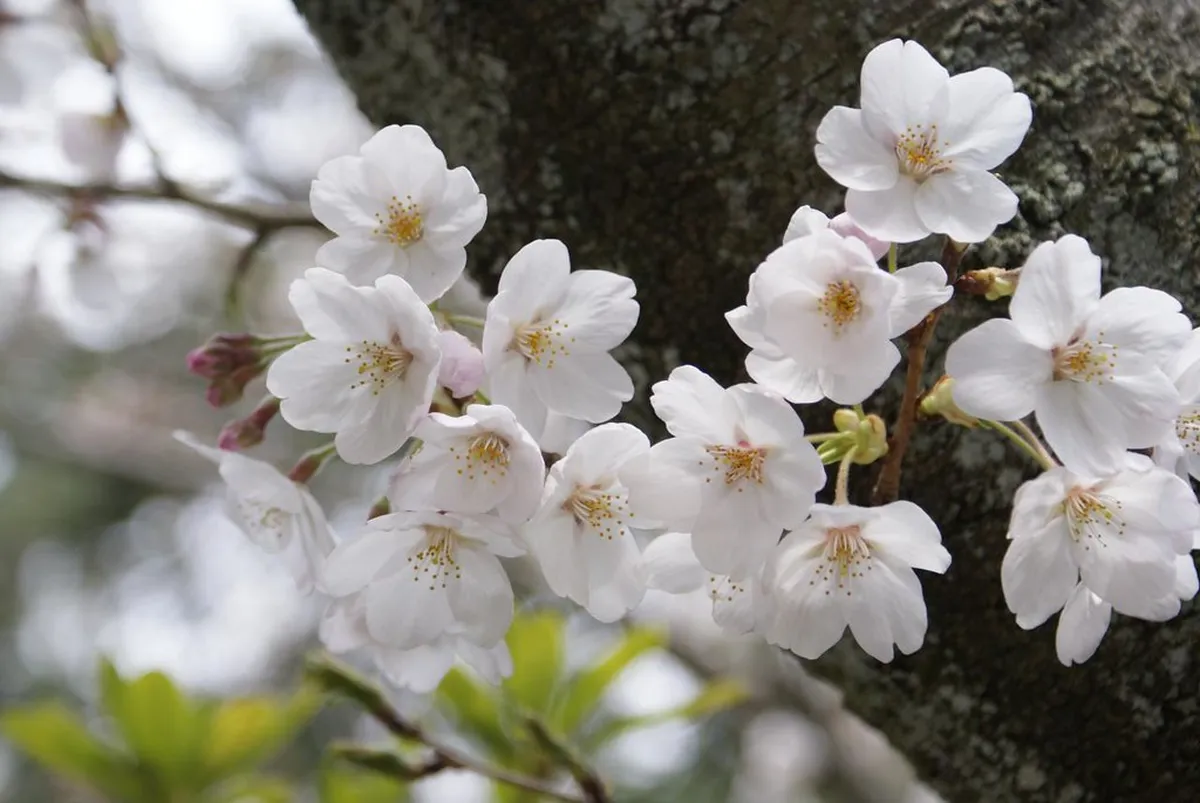
Spring warming is gradual but steady. March averages 13°C / 55°F by day, April reaches 18°C / 64°F, and May climbs to 23°C / 73°F. May is consistently the most comfortable month for walking — warm enough for a light jacket in the morning, pleasant by noon, and rarely oppressively humid before the monsoon sets in. The Kamakura cherry blossom season guide covers late March to early April, when temperatures sit around 14–18°C / 57–64°F.
Summer heat peaks across July and August. Daytime highs reach 28–29°C / 82–84°F with overnight temperatures staying at 22–25°C / 72–77°F. The ocean breeze at Yuigahama Beach typically knocks 1–2°C off what you feel compared to standing in central Kamakura city. Autumn cools steadily from September (25°C / 77°F) through November (17°C / 63°F), with December dropping to 12°C / 54°F. The Kamakura autumn leaves guide covers the peak foliage window in mid to late November.
| Month | Avg High (°C/°F) | Avg Low (°C/°F) | Feel |
|---|---|---|---|
| January | 10 / 50 | 3 / 37 | Cold, dry, clear |
| February | 11 / 52 | 3 / 37 | Coldest month |
| March | 13 / 55 | 6 / 43 | Cool, cherry buds late month |
| April | 18 / 64 | 10 / 50 | Warm, blossoms peak |
| May | 23 / 73 | 15 / 59 | Pleasant, low humidity |
| June | 26 / 79 | 19 / 66 | Warm, rainy season begins |
| July | 28 / 82 | 22 / 72 | Hot and humid |
| August | 29 / 84 | 23 / 73 | Hottest and sunniest |
| September | 25 / 77 | 19 / 66 | Hot, typhoon risk |
| October | 20 / 68 | 13 / 55 | Comfortable, foliage begins |
| November | 17 / 63 | 9 / 48 | Cool, autumn peak |
| December | 12 / 54 | 5 / 41 | Cold, clear, Mt. Fuji visible |
| Month | Temp High (°C) | Rainfall (mm) | Humidity (%) | Sunshine (hrs) |
|---|---|---|---|---|
| January | 10 | 65 | 54 | 5.5 |
| February | 11 | 75 | 56 | 5.3 |
| March | 13 | 115 | 61 | 4.5 |
| April | 18 | 130 | 65 | 5.5 |
| May | 23 | 130 | 68 | 6.0 |
| June | 26 | 185 | 78 | 4.8 |
| July | 28 | 205 | 76 | 5.8 |
| August | 29 | 155 | 74 | 6.9 |
| September | 25 | 215 | 76 | 4.4 |
| October | 20 | 231 | 71 | 4.8 |
| November | 17 | 100 | 65 | 5.2 |
| December | 12 | 78 | 59 | 5.6 |
May is the most comfortable month for outdoor exploration — warm enough for light layers in the morning but rarely oppressively humid before the monsoon. The coastal breeze at Yuigahama Beach typically knocks 1–2°C off how hot it actually feels, making summer beach days more tolerable than inland city walks.
Rainfall and Precipitation by Month
Kamakura is a wet city year-round, receiving about 1,795 mm / 71 inches of rain annually according to JMA historical records. Precipitation is spread across all twelve months, but two distinct wet peaks define the traveler's calendar: the Tsuyu rainy season in June and early July, and an autumn surge in September and October driven by typhoons and frontal systems.
The driest months are December (78 mm / 3.1 in over roughly 10 rainy days) and January (60–70 mm). Winter precipitation is typically light, falling as steady drizzle rather than downpours. February through April see moderate rainfall of 100–130 mm per month. May is relatively dry at around 130 mm, making it the last comfortable window before the monsoon front arrives.
June and July bring the heaviest sustained rainfall of the year. June averages around 185 mm, rising to 200–210 mm in July. September and October are the wettest months overall — October averages 231 mm across 17 rainy days, the highest single-month total of the year. If rain does not deter you, mid-June is the prime window for the Kamakura hydrangea season guide; the wet atmosphere at Meigetsu-in Temple creates a misty, deeply atmospheric look that dry days simply cannot replicate.
| Month | Avg Rainfall (mm) | Rainy Days | Risk |
|---|---|---|---|
| January | 65 | 8 | Low |
| February | 75 | 9 | Low |
| March | 115 | 12 | Moderate |
| April | 130 | 11 | Moderate |
| May | 130 | 11 | Moderate |
| June | 185 | 14 | High (Tsuyu) |
| July | 205 | 13 | High (Tsuyu end) |
| August | 155 | 10 | Moderate |
| September | 215 | 14 | High (typhoons) |
| October | 231 | 17 | Highest (typhoons) |
| November | 100 | 10 | Low–Moderate |
| December | 78 | 10 | Low |
Tsuyu vs. Typhoon Season: What Travelers Confuse
Many visitors lump all of Kamakura's rainy months together as a single wet season, but the June–July Tsuyu and the September–October typhoon window are very different in character. Tsuyu (梅雨) is a stationary frontal system that settles over Japan from roughly 8 June to 20 July in the Kanto region. Rain falls daily but usually as persistent drizzle or light showers, rarely as violent storms. Visibility stays good, trains run normally, and temples remain open. The biggest inconvenience is carrying an umbrella every day for six weeks.
Typhoons are a different threat entirely. Japan's typhoon season runs from June through October, with peak activity in September and early October. A direct-hit typhoon can bring 100–200 mm of rain in 24 hours, gusting winds above 50 m/s at the coast, and closures of outdoor sites, coastal trails, and ferry services including the Enoshima route. The risk of a direct hit on any given travel week is low — roughly 2–4 typhoons pass near the Kanto coast each year — but September and October carry meaningfully higher risk than other months. Check the Japan Meteorological Agency climate data 48–72 hours before any coastal day trip in those months.
The practical takeaway: June and July (Tsuyu) are manageable and worth visiting for the hydrangeas. September and early October carry genuine disruption risk for outdoor-heavy itineraries. Late October through November, once the typhoon season fades, is excellent — cooler, less crowded than spring, and increasingly colourful with early foliage.
September and October bring typhoon risk. A direct-hit typhoon can deliver 100–200 mm of rain in 24 hours with gusts above 50 m/s at the coast, closing temples, hiking trails, and ferries including the Enoshima route. Check the Japan Meteorological Agency forecast 48–72 hours before any coastal day trip in these months.
Sunshine Hours and Daylight in Kamakura
August is the sunniest month in Kamakura, averaging 6.9 hours of sunshine per day. July is close behind despite being a monsoon month, because the Tsuyu front typically retreats by mid-July and clear Pacific air moves in. September is the weakest sunshine month, averaging only 4.4 hours daily as rain clouds dominate the post-monsoon transition.
Winter sunshine is plentiful and high quality. December through February average 5–6 hours of direct sun per day, and the low-humidity atmosphere makes those hours feel especially bright. Clear winter mornings at the Great Buddha are strikingly lit, and Yuigahama Beach in January offers long shadows and blue skies without a crowd in sight. Spring sunshine builds steadily from March (4.5 hours) through May (6.0 hours).
For photography, the best natural light comes in late autumn and winter when the sun angle is low and the air is dust-free. Sunrise over Sagami Bay from the beach occurs around 06:45 in mid-December and around 04:30 in mid-June — useful for planning golden-hour temple shots. Mount Fuji visibility peaks in winter, with February offering the clearest skies. The Kamakura day trip itinerary from Tokyo works best on a clear weekday in October, November, or late January when both light and crowd conditions are ideal.
| Month | Avg Daily Sunshine (hrs) | Daylight (hrs) |
|---|---|---|
| January | 5.5 | 10.0 |
| February | 5.3 | 10.8 |
| March | 4.5 | 11.8 |
| April | 5.5 | 13.0 |
| May | 6.0 | 13.8 |
| June | 4.8 | 14.2 |
| July | 5.8 | 14.0 |
| August | 6.9 | 13.2 |
| September | 4.4 | 12.2 |
| October | 4.8 | 11.2 |
| November | 5.2 | 10.2 |
| December | 5.6 | 9.6 |
Humidity Levels Throughout the Year
Kamakura's coastal position on Sagami Bay keeps relative humidity high for most of the year. June is the most humid month, with average relative humidity reaching 78%. January is the driest, dropping to around 54%. In practical terms, this means summer in Kamakura feels significantly stickier than the air temperature alone would suggest — a 29°C / 84°F day at 75% humidity feels closer to 35°C / 95°F in perceived heat.
The combination of high temperature and high humidity in July and August is the main reason most experienced Japan travelers avoid Kamakura in peak summer unless they specifically want beach time at Yuigahama. Temple hiking trails become sweaty work, and stone steps get slippery. Carry a small towel, a handheld fan, and a bottle of water for any midday outdoor activity from July through early September.
Winter humidity, while lower at 54–60%, comes with a different problem: the Sagami Bay wind. On clear January and February days, the sea breeze can make the waterfront feel 4–5°C colder than inland spots like the Tsurugaoka Hachimangu shrine precinct. A windproof layer is essential at the beach in winter, even on sunny days. The Kamakura hiking trails — particularly the Tenen Hiking Course — are sheltered by forest cover and feel noticeably warmer than the shore.
| Month | Avg Relative Humidity (%) | Comfort Level |
|---|---|---|
| January | 54 | Comfortable (wind chill at coast) |
| February | 56 | Comfortable |
| March | 61 | Comfortable |
| April | 65 | Good |
| May | 68 | Good |
| June | 78 | Humid, rain |
| July | 76 | Very humid, hot |
| August | 74 | Very humid, hottest |
| September | 76 | Very humid, stormy risk |
| October | 71 | Moderate |
| November | 65 | Good |
| December | 59 | Comfortable, dry |
Best Time to Visit Kamakura for Sightseeing
There is no single best month — the right choice depends on what you want to see and do. Below are the optimal windows by traveler type, based on temperature, rainfall, humidity, and event calendars for 2026.
For temple and shrine exploration, late April through early May and late October through mid-November are the peak windows. Temperatures sit between 17–23°C / 63–73°F, humidity is manageable, and rainfall is moderate. These months align with cherry blossoms and autumn foliage respectively, which means crowds are higher and accommodation prices peak — book at least 6–8 weeks in advance for those specific weeks.
For beach activities, mid-July through August is the only practical window. Yuigahama and Zaimokuza beaches set up full umi-no-ie (beach hut) infrastructure — changing facilities, showers, food stalls, and sun shade rental — from late July through late August. Outside this window the beaches are open but essentially facility-free. For Mount Fuji views from Yuigahama Beach or the Inamuragasaki headland, December and January are the clear winners: humidity is lowest, the air is transparent, and visibility on still mornings regularly extends to Fuji's snow-capped summit 90 km to the northwest. For hiking the Genji-yama or Tenen course, late October to late November and mid-March to mid-May offer the best grip, coolest air, and least slippery trails.
| Goal | Best Months | Avoid |
|---|---|---|
| Cherry blossoms | Late March – early April | Late April (petals fallen) |
| Hydrangeas at Meigetsu-in | Mid-June – early July | August (finished) |
| Beach swimming | Late July – August | June–July (Tsuyu, no facilities) |
| Autumn foliage | Mid-Nov – early December | October (early, green) |
| Mount Fuji views | December – February | June–September (haze/clouds) |
| Temple hiking | April–May, Oct–Nov | July–September (heat/humidity) |
| Budget travel | January–February, June | Golden Week (May 3–6) |
Seasonal Packing Guide for Kamakura
Kamakura's coastal microclimate means standard Japan packing lists often miss two specific needs: wind protection at the shore and footwear for slippery stone temple paths. Most of the city's famous sites — Kotoku-in (Great Buddha), Engaku-ji, the Daibutsu Hiking Trail — involve uneven stone steps that become slick in rain or heavy dew. Rubber-soled shoes with grip matter year-round, not just in wet months.
In spring (March–May), bring a light packable rain jacket you can stow in a daypack. Mornings can be 8–12°C / 46–54°F and warm to 20°C+ by noon — layering is the only practical approach. A light scarf handles the coastal wind on April evenings near the beach. In summer (June–September), prioritize moisture-wicking fabrics, a compact umbrella that can handle both rain and sun, SPF 50+ sunscreen for beach sections, and a portable electrolyte pack or sports drink for long temple hikes in 75% humidity. Avoid dark colors in August — they absorb heat fast.
Autumn (October–November) requires the same layering approach as spring but skewed warmer into early October and colder into late November. November evenings drop to 9°C / 48°F, so a mid-weight fleece or down vest pays off. Winter (December–February) demands a windproof outer layer specifically for coast and beach sections. The Kamakura hiking trails referenced in the Kamakura hiking trails and station exit guide are sheltered enough that a light down jacket is fine inland, but you will feel the difference immediately when you descend to Yuigahama or Inamuragasaki. Thin thermal base layers and gloves are worth the bag space for December and January.
- All seasons: rubber-soled shoes with grip for temple stone steps
- Spring and autumn: packable jacket, light scarf, small umbrella
- Summer: moisture-wicking clothing, compact umbrella, SPF 50+, electrolyte drink
- Winter: windproof shell specifically for coastal sections, gloves, thin thermal base layer
Keep planning your trip with our complete Kamakura attractions guide, and explore the best time to visit Kamakura and whether one day is enough in Kamakura next.
Frequently Asked Questions
Does it snow in Kamakura during the winter?
Snow is very rare in Kamakura due to the coastal climate. You might see a light dusting once every few years. Most winter days are dry, sunny, and clear.
Is June a bad time to visit because of the rain?
June is actually a beautiful time to visit for flower lovers. The rain is usually light and brings the famous hydrangeas into full bloom. Just bring a good umbrella.
When can I see Mount Fuji from Kamakura?
The best visibility is from December to February. The cold, dry air creates the clearest skies. Head to the beach at sunset for the best views.
Kamakura offers a genuinely different experience in every season. The right month depends on whether you prioritize flowers, foliage, beaches, hiking, or simply clear skies and a clear view of Fuji. Winter is consistently underrated — quiet, cheap, and visually striking on a clear January morning. Whatever month you choose, pack for the coast's wind and the temples' stone steps, and you will be comfortable regardless of the season.
Free: The Kamakura Essentials guide
Top things to do, where to stay, a perfect day plan, getting around, and the best time to go — a Kamakura mini-guide you can take offline.
You might also like

Continue reading
More guides you'll find useful