11 Best Rainy Day Activities in Sapporo (2026)
Don't let the rain stop you. Discover the 11 best rainy day activities in Sapporo, from the Beer Museum to underground shopping and interactive sports.
On this page
Sapporo handles bad weather better than almost any Japanese city its size. An underground pedestrian network, dozens of climate-controlled museums, a brand-new downtown aquarium, and historic breweries all sit within a few subway stops of each other. Whether you have one wet afternoon or a full week of overcast skies, the options here are genuinely excellent. This guide covers the indoor spots worth your time in 2026 — along with a few overlooked gems that most visitors miss entirely.
See the Sapporo Weather By Month: A Complete Seasonal Guide guide before you pack: summer brings surprise downpours while winter delivers heavy snow. Either way the strategy is the same — lean into the city's underground and indoor infrastructure. Entry fees are noted in JPY; opening hours are given in 24h format. All venues listed below are reachable by the city's three subway lines.
Museums and Cultural Attractions
Sapporo's museum scene is anchored by two must-see facilities that genuinely earn several hours of your time. The Hokkaido Museum in Nopporo Forest Park covers the island's natural history, Ainu culture, and the settler era across five well-signposted galleries. Admission is 600 JPY and it opens 09:30–16:30 (closed Monday). Allow at least two hours; English captions are thorough throughout. For deeper context, consult the Hokkaido Museum Wikipedia entry.
The Sapporo Olympic Museum at the base of the Okurayama Ski Jump offers one of the most hands-on experiences in the city. Virtual ski jump and bobsled simulators — the same equipment used for athlete training — are included in the 600 JPY ticket. Hours run 09:30–17:00 year-round. It gets busy after lunch, so arrive early to beat the queue at the simulators.
For contemporary art, the Hokkaido Museum of Modern Art (Hokkaido Kindai Bijutsukan) in the Chuo Ward rotates exhibitions of Hokkaido-based and international artists. Permanent collection entry is 510 JPY; special exhibitions cost extra. The building itself is architecturally interesting — a good hour-filler before or after lunch at a nearby depachika food hall.
AOAO Sapporo and the Sunpiazza Aquarium
AOAO Sapporo, which opened in August 2023 inside the Loft building on Tanukikoji's south side, is the city's most talked-about new indoor attraction. The five-floor urban aquarium keeps roughly 100 species in dimly lit, design-forward tanks — more art installation than standard fish hall. Adult tickets cost 2,400 JPY (online pre-booking saves 200 JPY) and the venue stays open until 21:00, making it one of the few indoor attractions suited to evening visits. The rooftop penguin area and the living-moss corridor are the standout zones.
The older Sunpiazza Aquarium in the Shin-Sapporo area is a more budget-friendly option at roughly 1,000 JPY. It features penguins and spotted seals and connects directly to the Sunpiazza shopping mall, so you can combine it with lunch or grocery shopping. It opens 10:00–18:30. Sunpiazza suits families with young children who need shorter loops; AOAO is the stronger choice for adults and older kids who want something visually distinct.
If you are choosing between the two on a single rainy day, AOAO's central location (accessible via Odori Station or the Chi-Ka-Ho walkway) makes the logistics easier. Sunpiazza requires a transfer to the Tozai Line and a short walk, adding 25 minutes each way to your day.
Sapporo Beer Museum and Shiroi Koibito Park
The Sapporo Beer Museum in the Higashi district occupies a spectacular 19th-century red-brick building — the main hall alone justifies the visit. Entry to the museum section is free; a guided premium tour is 1,000 JPY. The Star Hall serves exclusive tasting sets: the three-beer set for 800 JPY includes Hokkaido-only Sapporo Classic, which is not exported outside the island. The museum runs 11:00–18:00 and is closed on Mondays. Combine it with the adjacent Beer Garden restaurant for a full afternoon.
Shiroi Koibito Park in the Nishi Ward is the theme-park version of the famous butter cookie factory. The 800 JPY entry covers the factory viewing windows, a vintage toy museum, and seasonal indoor dioramas. Cookie-decoration workshops (book ahead, ~1,000 JPY extra) run on a timed schedule. The whole complex is enclosed and stays open 10:00–18:00. It is one of the few spots in Sapporo that works well for both children and adults simultaneously — kids go for the chocolate tasting room, adults for the factory viewing and the attached garden cafe.
Both venues are slightly removed from the city center. The Beer Museum is accessible via Bus Center-Mae Station (a five-minute walk), while Shiroi Koibito Park requires the Nishi 28-chome tram stop or a taxi. Factor in travel time when planning your rainy-day itinerary: doing both in one day is possible but leaves little buffer.
The Chi-Ka-Ho Underground Walkway and Tanukikoji Arcade
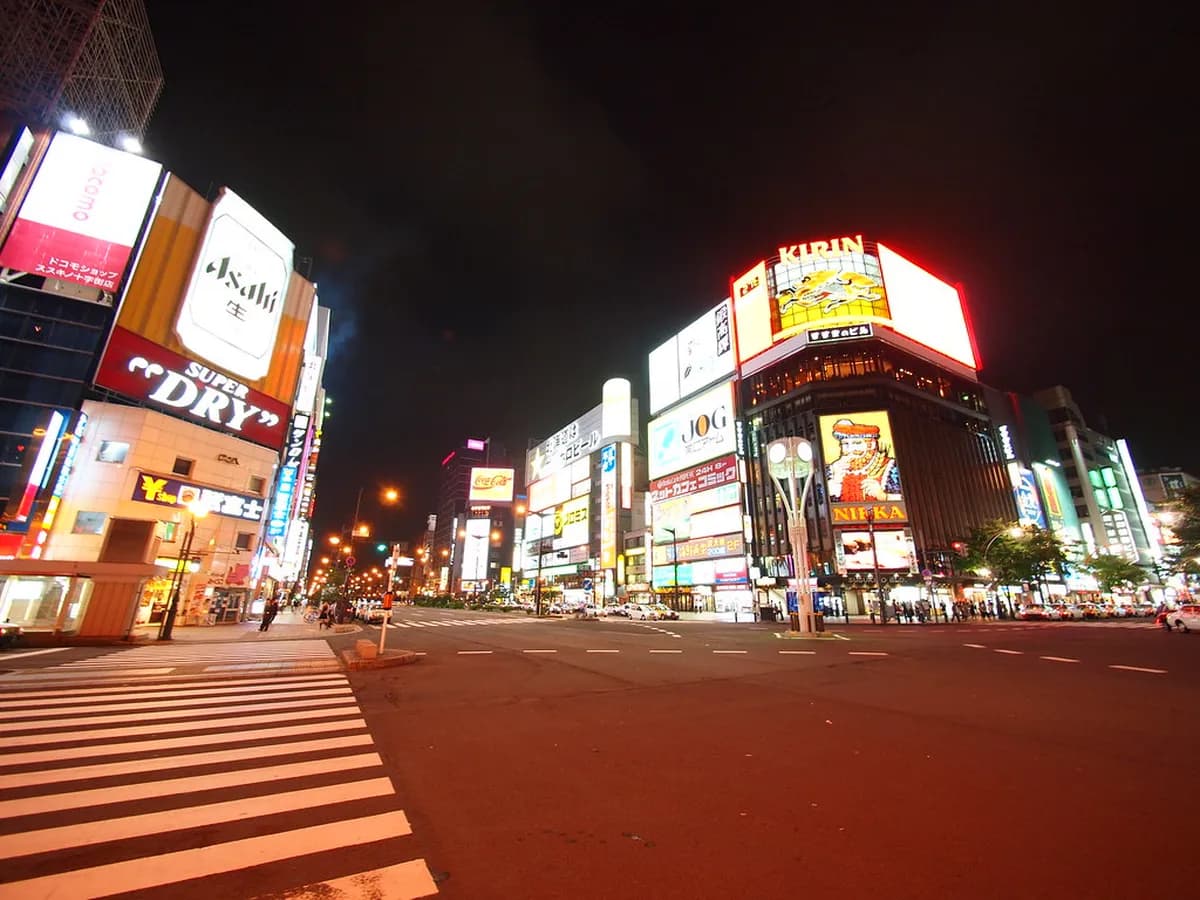
The Chi-Ka-Ho is a 1.9-kilometer pedestrian tunnel running from Sapporo Station south through Odori to the Susukino entertainment district. It is the backbone of the city's all-weather navigation system — wide, climate-regulated, and lined with cafes, art installations, and seating alcoves. Digital signage throughout the route marks exits toward our Sapporo attractions guide on the surface. Busking zones near Odori Station often feature live jazz or acoustic sets in the evenings. The tunnel operates in line with subway hours, roughly 06:00–00:00.
Tanukikoji Shopping Arcade runs parallel to the Chi-Ka-Ho above ground, stretching seven covered blocks through the Chuo Ward. Its glass-and-steel roof keeps shoppers dry even in heavy rain. You will find traditional tea shops, 100-yen stores, Don Quijote, and independent ramen counters side by side across the seven blocks. The small Tanuki raccoon-dog shrine in Block 5 is a quick photo stop. Most shops open by 10:00 and stay open until 20:00 or later.
Together, these two routes let you move between Sapporo Station and Susukino entirely undercover, picking up the department store depachika food halls (Daimaru, Mitsukoshi, Stellar Place) along the way. This underground-to-arcade loop is genuinely the most useful structural advantage Sapporo has over other Japanese cities on a wet day. See the Sapporo Subway Guide: 10 Tips for Navigating the City for the exact exit numbers that connect these routes.
Onsen and Sento for Rainy Days
A rainy afternoon in Sapporo is a near-perfect excuse to spend two or three hours in a traditional bath. The closest full onsen resort is Jozankei, a hot-spring village roughly 30 km south of the city center. Direct buses run from Sapporo Station every 30–60 minutes (about 900 JPY one-way, 70 minutes). Day-use rates at hotels like Hoheikyo Onsen and Jozankei Daiichi Hotel Suizantei run from 1,200 to 2,500 JPY for public bath access without an overnight stay. The journey there is itself scenic even in rain — the river valley road turns misty and atmospheric in wet weather.
Within the city, several urban sento (public bathhouses) offer a more local experience at a fraction of the cost. Sapporo Bathhouse (also known as Norbesa Rotenburo) in the Susukino district has a rooftop open-air bath on a Ferris wheel building — odd but genuinely fun. Standard sento admission across the city runs around 490 JPY. Unlike the tourist-facing onsen resorts, the neighborhood sento are cash-only and tended to by older locals who take the bathing etiquette seriously. Bring your own towel or rent one for 100 JPY.
One practical note: most onsen and sento prohibit visible tattoos. If you have tattoos, check the individual facility's policy before making the trip. A handful of Jozankei hotels quietly accommodate tattooed guests in private bath arrangements — calling ahead saves a wasted journey.
Hokkaido University Greenhouse: An Overlooked Indoor Escape
The Hokkaido University Botanical Garden (北海道大学植物園) is five minutes on foot from Sapporo Station and sits on a 13-hectare campus that most tourists walk past without knowing it exists. The garden is typically associated with spring cherry blossoms, but the greenhouse building is open year-round and provides genuine shelter from rain. Inside are tropical and subtropical plant collections maintained by the university's agriculture faculty since the Meiji era. Admission is 420 JPY; the greenhouse section is included.
The Ainu cultural artifacts displayed in the on-site museum building are among the best in the city — comparable in quality to the larger Hokkaido Museum but with a fraction of the visitors. On a rainy weekday you may have entire rooms to yourself. The greenhouse is open 09:00–16:00 (last entry 15:30), closed on Mondays and from November through March. In spring and summer it is one of the quietest, most atmospheric indoor escapes within walking distance of the station — and almost no SERP result for rainy-day Sapporo mentions it.
Round One and JR Tower T38 for Active and Panoramic Options
Round One Spo-Cha in the Susukino area is a multi-floor complex that combines bowling, batting cages, table tennis, arcade games, karaoke, and a mechanical bull into one flat-rate pass. A three-hour pass costs about 2,500 JPY; the venue is open 24 hours. It is best for groups or active travelers who need to burn energy during a stormy afternoon. Wear comfortable sneakers — you will cover a surprising amount of ground between floors.
The JR Tower Observatory T38 sits 160 meters above Sapporo Station on the 38th floor of the city's tallest building. Entry is 740 JPY and hours run 10:00–22:00. On a clear evening after rain the views across the low Hokkaido skyline are genuinely striking — the mountain ring that encircles the city becomes visible as fog lifts. Even in heavy rain the cloud formations and city-light reflections make for interesting photography. The men's restroom has a floor-to-ceiling glass wall facing the city, which has become its own minor attraction.
If you want a quieter alternative to T38, the free observation area inside the Sapporo JR Tower Stellar Place shopping complex (on a lower floor) provides similar central-city views with no admission fee. It is less dramatic but useful if you are already in the building browsing the food floors.
New Chitose Airport as an Intentional Destination
New Chitose Airport's domestic terminal is worth the 35-minute train ride from Sapporo Station on a rain-soaked day. The Smile Road shopping zone houses Royce' Chocolate World (watch the production line, buy factory-outlet priced bars), Doraemon Sky Park (for families with children under 10), and a dedicated Hokkaido ramen street with six competing shops. The floor also has a Sanrio character shop and a large Japanese sweets hall. All of it is free to access — you do not need a boarding pass to enter the domestic terminal retail zone.
The top floor of the domestic terminal contains Shintoku no Yu, a natural hot spring using genuine onsen water piped into the airport. A two-hour soak costs around 1,500 JPY. Between the food, shopping, and the onsen, you can easily spend four or five hours here without running out of things to do. The return train to Sapporo Station departs every 15–30 minutes and costs 1,150 JPY.
Practical Logistics for Indoor Days in Sapporo
Transportation is straightforward. The city's three subway lines reach nearly every venue on this list. On weekends, the Donichika one-day pass costs 520 JPY for unlimited rides — buy it from any subway ticket machine before tapping through. On weekdays, single fares range from 210 to 320 JPY depending on distance. Check the Sapporo Subway Day Pass: 10 Things to Know for 2026 guide for which ticket suits your itinerary.
Coin lockers at Sapporo Station fill by 11:00 on busy days. Odori and Susukino stations have smaller locker banks that stay available longer. Most major museums provide free or 100-JPY returnable lockers for coats. If you are carrying luggage, the tourist information center at Sapporo Station can arrange same-day baggage forwarding to your next hotel for around 1,500 JPY per bag.
The basement food halls (depachika) in Daimaru and Stellar Place are the most practical lunch stops on a wet day — high quality, no reservations, and entirely undercover via the Chi-Ka-Ho. For sit-down dinner, the best restaurants in Sapporo cluster in Susukino, most of them accessible from the southern end of the underground walkway. Reservations for dinner in Susukino ramen shops are not usually required, but popular spots like Ramen Alley fill up after 18:30.
For the full city overview, see our complete Sapporo attractions guide. For related Sapporo guides, see our Sapporo Hidden Gems and Local Travel Tips and 12 Best Free Things to Do in Sapporo.
Frequently Asked Questions
What is the best indoor activity in Sapporo for families?
Shiroi Koibito Park is the top choice for families. It features a chocolate factory tour, cookie-making workshops, and an indoor toy museum. The interactive dioramas keep children engaged for several hours while staying completely dry.
Can you walk underground from Sapporo Station to Susukino?
Yes, the Chi-Ka-Ho underground walkway connects these two major hubs. It is a 1.9-kilometer path lined with shops and cafes. This tunnel allows you to avoid rain, snow, and traffic while crossing the city center.
Is the Sapporo Beer Museum free to enter?
Entry to the Sapporo Beer Museum is free for all visitors. However, if you wish to participate in a guided tour or sample beers in the Star Hall, there is an additional fee. Tasting sets typically cost around 800 JPY.
Sapporo is one of the few cities where a rainy day can actually improve your itinerary. The underground walkway alone changes the math — once you are in the Chi-Ka-Ho you can drift between department stores, museums, and restaurants without ever checking the sky. Add in AOAO's evening hours, the Jozankei onsen buses, and the airport's full day of indoor entertainment and you have more options than most visitors manage in a clear-sky week.
Keep this list on your phone for our Sapporo things-to-do guide when the forecast turns grey. The Hokkaido University greenhouse in particular rewards the traveler who wanders off the standard circuit — and it is almost always empty.
Free: The Sapporo Essentials guide
Top things to do, where to stay, a perfect day plan, getting around, and the best time to go — a Sapporo mini-guide you can take offline.
You might also like


Continue reading
More guides you'll find useful