10 Best Things to Do in Kanazawa with Kids: A Family Travel Guide (2026)
Plan the perfect trip to Kanazawa with kids. Discover top attractions like Kenrokuen, interactive museums, gold leaf workshops, and practical family travel tips.
On this page
Kanazawa sits quietly in Ishikawa Prefecture, three hours from Tokyo by Hokuriku Shinkansen, and it rewards families who make the detour. Unlike Kyoto, crowds here are manageable, prices are lower, and the mix of samurai streets, interactive art, and world-class seafood markets keeps both toddlers and teenagers genuinely engaged. Two to three days is the sweet spot for a family visit — enough time to avoid rushing without exhausting your kids.
This guide covers the ten best things to do in Kanazawa with kids in 2026: where to go, what to budget, how to move around, and which spots work best for different ages. We've also included a stroller-versus-carrier verdict for each major area, since Kanazawa's terrain is more varied than it looks on a map.
Must-See Classics: Kenrokuen Garden and Kanazawa Castle Park
Kenrokuen is one of Japan's three great landscape gardens and the natural anchor of any Kanazawa itinerary. Opened to the public in 1871, it was designed by the ruling Maeda clan around six guiding principles — spaciousness, seclusion, artifice, antiquity, water, and views — and the garden delivers all six across its 11 hectares. Hours are 07:00–18:00 from 1 March to 15 October and 08:00–17:00 for the rest of the year; admission is ¥320 for adults and free for children under 18 (since 2020, Ishikawa Prefecture made entry free for all visitors aged 17 and under). Spring cherry blossoms and autumn foliage are peak seasons, but the winter snow-roped pine trees are equally stunning and the crowds are far thinner.
Kanazawa Castle Park shares a gate with Kenrokuen and is free to enter the grounds. The stone walls, rebuilt turrets, and wide lawns give kids room to run while adults absorb the history of the Maeda clan, who ruled here through the entire Edo Period (1603–1868) without major conflict. The Gojukken Nagaya storehouse and Hishi Yagura turrets cost ¥320 to enter — worth it for the view from the top. Reconstruction of the original Ninomaru Palace is ongoing in 2026 and visible from the grounds, which actually makes for an interesting building-history conversation with older children. Combined, Kenrokuen and the castle park fill a comfortable half-day.
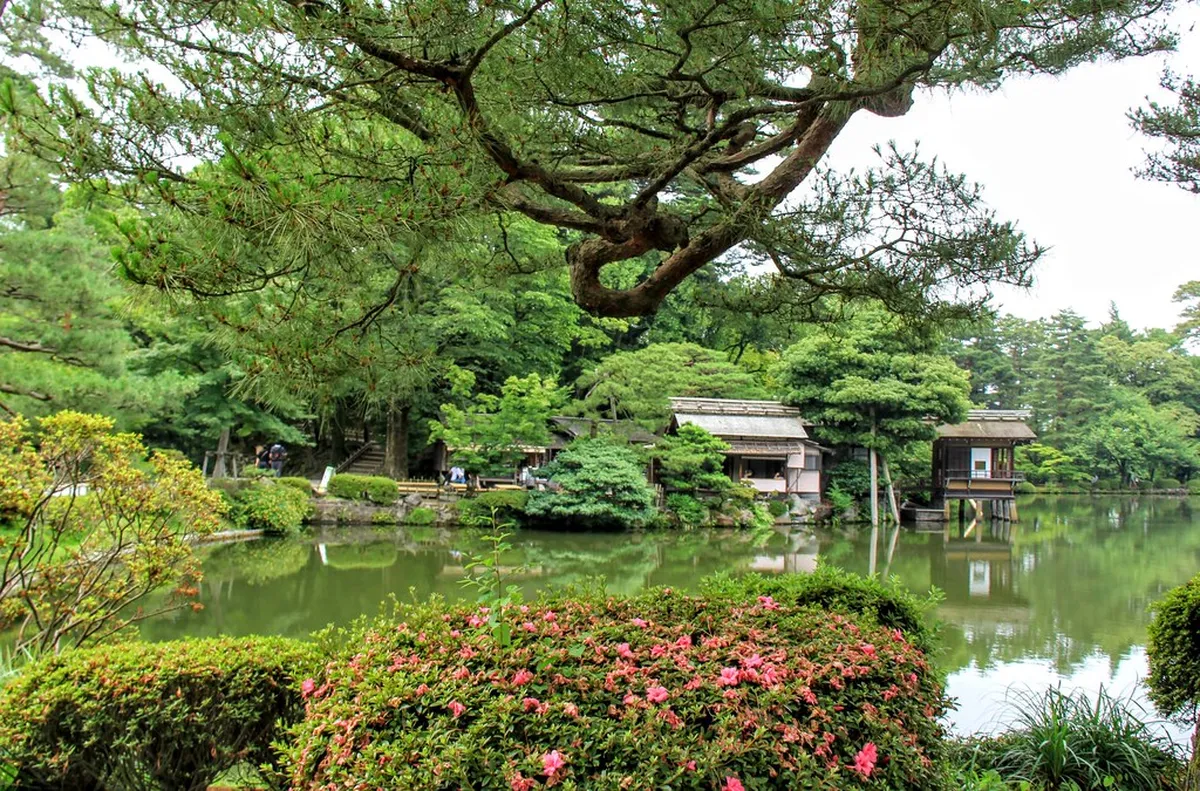
Stroller verdict: Kenrokuen's paths are a mix of gravel and stone — manageable with a robust all-terrain stroller but tiring to push. A carrier is more practical for toddlers. The castle park is largely paved and stroller-friendly throughout.
Interactive Art: 21st Century Museum of Contemporary Art
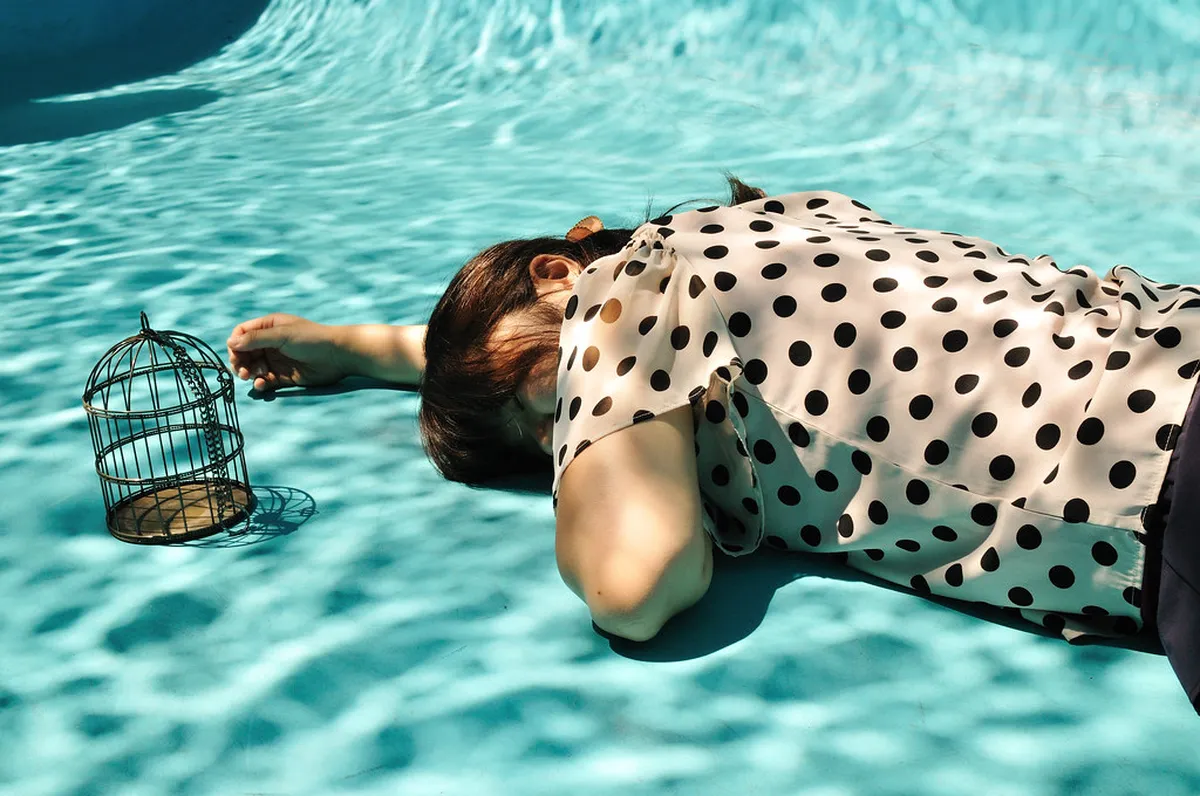
The 21st Century Museum is the most visited museum in Kanazawa and the single best indoor stop for families. Its circular glass building sits next to Kenrokuen, and the free-access zones — open 09:00–22:00 daily — contain outdoor sculpture installations that toddlers and younger kids can interact with freely. The paid exhibition wing (10:00–18:00, until 20:00 on Fridays and Saturdays, closed Mondays) costs around ¥1,200 for adults and includes the museum's headline work: Leandro Erlich's "The Swimming Pool." From below, visitors appear to be standing underwater while others walk above on the pool's surface — the resulting photos are genuinely memorable and kids immediately want to experience both sides.
Beyond the Swimming Pool, the museum runs rotating workshops specifically designed for children, including drawing, printmaking, and craft sessions tied to current exhibitions. Check the museum's English calendar before arrival. Even without booking a workshop, the permanent free-access courtyard with its oversize geometric forms and open space holds younger children's attention for 30–45 minutes at no cost. This makes the museum a reliable stop even if your kids are too young or too restless for ticketed gallery spaces.
Stroller verdict: Fully paved, wide corridors, and lifts throughout. One of the most stroller-friendly venues in the city.
Hands-on History: Ishikawa Prefecture Museum of History
Set in a red-brick Meiji-era building within the Kenrokuen Cultural Zone, the Ishikawa Prefecture Museum of History does something most history museums fail to do: it lets children touch things. The dedicated hands-on interactivity hall on the ground floor has replica samurai armor and traditional Kaga-region kimonos in multiple sizes that kids can put on for photos. The costumes are sturdy and staff are accustomed to wriggling three-year-olds — no need to feel self-conscious. Admission is around ¥300 for adults; children under 18 are free.
Upstairs, displays cover the Maeda clan's rule and Ishikawa's craft traditions with good English labeling. Older children (8+) who have already visited Kenrokuen and the castle park find that the museum stitches the historical narrative together. Budget around 60–90 minutes. The museum is closed on Thursdays and open 09:00–17:00 on all other days.
Samurai and Ninja Fun: Nagamachi District and Samurai Yakata
The Nagamachi District is Kanazawa's best-preserved samurai quarter, a ten-minute walk from the castle park. Earthen walls, narrow lanes, and drainage channels running beside the path give it an atmosphere that no open-air museum can replicate. The Nomura Samurai Family Residence is the main ticketed stop: ¥550 for adults, with a children's rate, open 08:30–17:30 (April–October) and 08:30–16:30 (November–March). The house's compact garden was once ranked among Japan's top three by the Journal of Japanese Gardening and is genuinely beautiful, though small children may be more interested in the koi pond than the landscape design.
For a more explicitly kid-focused experience, Samurai Yakata (a short walk from Nagamachi) runs interactive samurai and ninja lessons where children don armor and learn basic sword forms from costumed instructors. Sessions run roughly 45 minutes and are conducted in English-friendly mime with visual cues — language is not a barrier for primary-school-age kids. It is one of the few Kanazawa activities where the educational content and the entertainment value land simultaneously. Book ahead online, especially in school-holiday periods.
Myoryuji Temple, better known as the Ninja Temple, offers a different flavour: hidden staircases, secret rooms, and escape-room-style architecture. Tours are Japanese only (¥1,200 adults, ¥800 children) and run by reservation. It works best for children aged 10 and up who can follow a guide without understanding every word.
Stroller verdict: Nagamachi's earthen lanes are flat but can be narrow. A compact stroller navigates fine; wide travel systems are awkward. Carrier recommended for families with infants.
Foodie Families: Exploring Omicho Market
Omicho Market is Kanazawa's covered central market and the most sensory-rich 45 minutes you can spend in the city. Over 170 stalls sell fresh seafood from the Sea of Japan — yellowtail and shrimp year-round, crab from November — alongside local produce, pickles, and prepared foods. The covered layout means the market works in any weather, which is useful given Kanazawa's reputation for rain.
For families, the most practical strategy is to arrive around 10:00–11:00, when vendors are at full display and before the lunch rush fills the market's second-floor restaurants. Kids who are reluctant seafood eaters usually warm up to the grilled scallop stalls near the main entrance, which sell single pieces for ¥200–¥400. The Omicho Ichibakan building adjacent to the market has sit-down restaurants with English menus and picture displays at the entrance — straightforward for families managing picky eaters. Budget ¥500–¥2,000 per person for snacks or a casual meal. Most shops open 09:00 and close around 17:00; Wednesdays see the fewest vendors open.
The Gourmet ticket KANAZAWA BIMI is worth knowing about for dinner: pre-purchased in ¥1,000–¥10,000 denominations at the tourist information center near Kanazawa Station, the vouchers are redeemable at select restaurants across the city and simplify the "where to eat tonight" decision considerably.
Cultural Crafts: Higashi-Chaya District and Gold Leaf Workshops
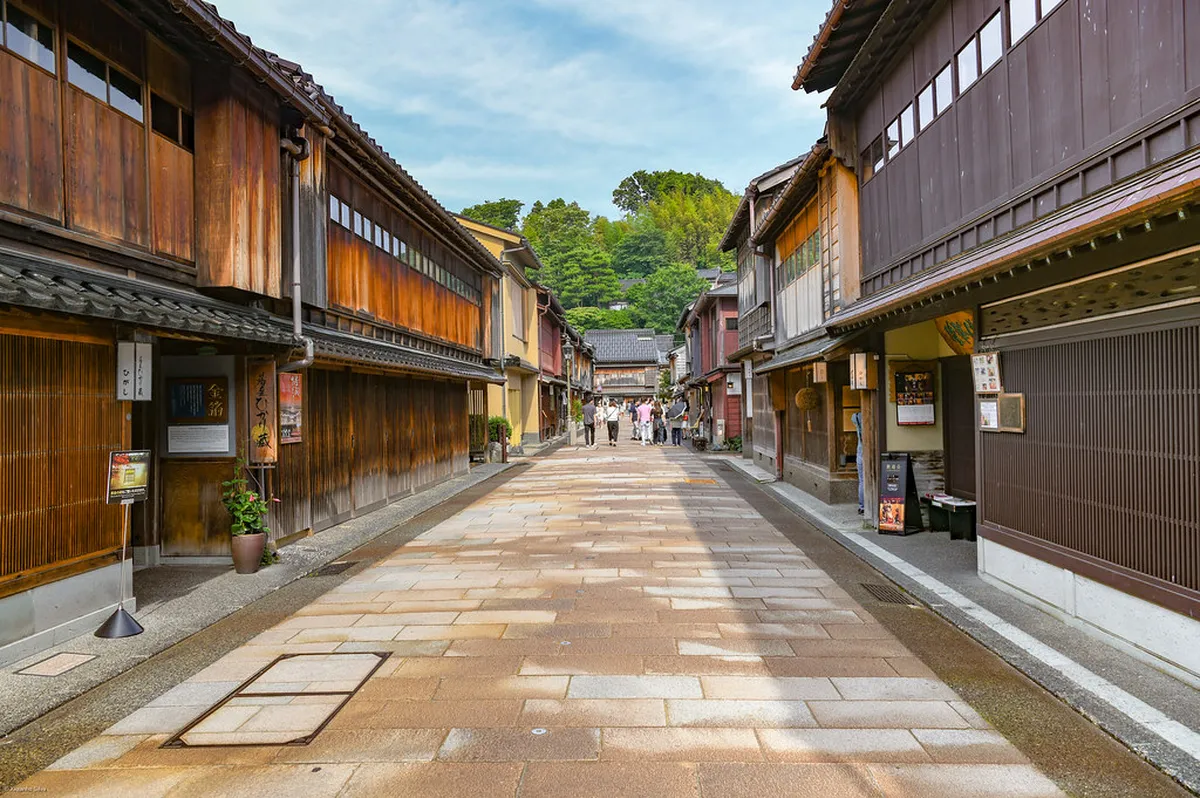
The Higashi Chaya District is Kanazawa's largest geisha quarter, a ten-minute walk or five-minute bus ride from Omicho Market. The latticework wooden facades and two-story teahouses are preserved almost unchanged from the Edo Period; the atmosphere is strong even for a quick 30-minute family stroll. Kaikaro Teahouse opens to the public during the day and has tatami rooms decorated with gold leaf and a cafe serving both wagashi (traditional sweets) and the city's famous gold leaf soft-serve ice cream — one of those reliable crowd-pleasers for all ages. Shima Teahouse, designated an Important Cultural Asset, gives a closer look at the rooms and furnishings of a working Edo-era chaya.
Gold leaf workshops are scattered across the Higashi Chaya area and elsewhere in the city. Kanazawa produces approximately 99% of all gold leaf made in Japan, and the hands-on workshops are genuinely well-run. Most sessions run 60–90 minutes and cost ¥1,500–¥3,000 per person. Here is a practical comparison for families:
- Items decorated: small plates, hand mirrors, chopsticks, and postcards are common. Postcards and chopsticks work better for younger children (ages 5–8) since the fine motor demand is lower and the project finishes quickly.
- Age suitability: most workshops accept children from age 5 or 6 with a supervising adult; a few accept ages 3+ for simpler foil-pressing activities.
- Duration: 60-minute sessions are enough for one item; 90-minute sessions allow decorating two pieces or more complex stencil work, better for ages 9 and up.
- Cost range: ¥1,500 for basic items (postcard, small dish), ¥2,500–¥3,000 for lacquerware mirrors or decorative plates.
Book workshops at least a day ahead during school holidays and in autumn (October–November). The Ways to Enjoy a Kanazawa Gold Leaf Experience guide on this site covers specific shop recommendations and booking steps.
Stroller verdict: Higashi Chaya's main street is paved but narrow; side alleys have cobblestone sections. A stroller works on the main drag; carriers are easier for exploring the alleys and entering teahouses where you remove footwear.
Family-Friendly Dining: Best Restaurants and Cafes
Kanazawa's dining scene is genuinely family-accommodating at most price points. Chain restaurants near the station — including GYUKATSU KYOTO KATSGYU KANAZAWA (breaded beef cutlet, very popular with older kids) and KUSHIKATSU TANAKA KANAZAWA BUNKYO (fried skewers, casual and fun) — post picture menus and are well set up for families unfamiliar with Japanese ordering conventions. Both have English menus available or QR code translation. Kanazawa Curry is another local specialty worth trying with children: a thick, dark-brown sauce over a pork or chicken cutlet and shredded cabbage, served in dedicated curry restaurants near Korinbo shopping district. It is filling, widely liked by kids, and usually under ¥1,200 per person.
For something quieter, the cafes inside the Higashi Chaya District are a good midday break option. Kaikaro serves tea and wagashi in a tatami setting; Kanson-an adjacent to Shima Teahouse does the same. If the group needs a more conventional sit-down meal near the Kenrokuen area, the Kenrokuetei restaurant inside the garden serves a Japanese-style breakfast (reservations required) and lighter snack options through the day. Vegetarian and vegan options are limited in traditional Kanazawa cuisine — miso soup typically contains fish stock — so bring a Japanese dietary card if needed. The Omicho Ichibakan building has a few stalls that can modify dishes on request.
Beyond the City: Day Trips to Fukui and Hakusan
The Fukui Prefectural Dinosaur Museum is the strongest one-day excursion from Kanazawa for families and is genuinely world-class in scope. The museum holds over 40 assembled skeletons including a near-complete T. rex and multiple sauropods, plus hands-on fossil preparation labs where visitors (and kids) can observe real fossils being cleaned under microscopes. Adult admission is ¥730; high school and university students ¥410; junior high school and under are free. It opens 09:00–17:00 and closes on the 2nd and 4th Wednesday of each month. Getting there: JR Hokuriku Line from Kanazawa to Fukui (about 45 minutes), then local Echizen Railway to Katsuyama Station (about 60 minutes), then a short bus or taxi to the museum. Total one-way travel is around 1 hour 45 minutes from Kanazawa — manageable for a full-day excursion. Direct buses from Kanazawa Station also run seasonally in 2026; check Fukui Prefecture's tourism board for current schedules.
Closer to the city, Hakusan National Park offers mountain scenery accessible without renting a car via the Hakusan Shirakawa-Go White Road (open July to early November). The White Road itself requires a vehicle, but the lower gorge areas near Tedori River are reachable by bus from Kanazawa and provide riverside walks and waterfalls that work well with kids who need to burn energy after museum-heavy days. This is a better fit for families with school-age children than toddlers, due to uneven terrain.
Where to Stay: Top Family-Friendly Hotels in Kanazawa
Most families do best staying in the Kanazawa Station area or the Korinbo/Omicho zone, both on the Kanazawa Loop Bus route and within walking distance of the main attractions. The station area has the widest selection, from budget business hotels to mid-range chains, and is easiest for luggage management arriving by Shinkansen. The Korinbo area puts you slightly closer to Kenrokuen and the museum cluster, which saves Loop Bus fare if you plan to spend most of your time there.
Hotel Resol Trinity Kanazawa is a well-reviewed mid-range option near the station, with family rooms and a central location that makes an early morning Kenrokuen visit straightforward. Mitsui Garden Hotel Kanazawa is in a similar tier and also near the station with reliable English-speaking staff. For families wanting a traditional experience, ryokan in the Kaga Onsen area (40 minutes by train) are an option if your itinerary includes a hot spring night — many have dedicated family bathing times and serve multi-course kaiseki dinners that older children find memorable, though the format requires patience from younger ones. Book accommodation 4–8 weeks in advance for school holiday periods; Kanazawa has limited family-room inventory compared to Kyoto or Tokyo.
Logistics: Planning a Smooth Kanazawa Family Itinerary
Getting around Kanazawa with children is easier than its relatively small tourism infrastructure might suggest. The Kanazawa Loop Bus (Kenrokuen Route and Hashiba Left-Rotate Route) connects all major family attractions — Kanazawa Station, Omicho Market, Kenrokuen, 21st Century Museum, Higashi Chaya, and Nagamachi — on a single fixed route. A day pass costs ¥600 per adult; children under 12 ride free with a fare-paying adult. Taxis are metered and straightforward for families with tired toddlers or heavy shopping; a typical cross-city fare is ¥700–¥1,200. The station area also has rental bikes via the Machi-Nori system, but these are practical only for families with children old enough to ride independently.
Here is the stroller-versus-carrier breakdown for Kanazawa's main family venues — the single most common practical question from parents planning the trip:
- Kenrokuen Garden: Gravel paths throughout. Carrier strongly recommended for children under 3. A robust all-terrain stroller is manageable but tiring to push over the larger gravel sections near the central pond. Leave a standard umbrella stroller at the entrance lockers.
- Kanazawa Castle Park: Paved and flat. Standard stroller works fine.
- 21st Century Museum: Flat, wide, paved. Fully stroller-friendly with lifts to all levels.
- Omicho Market: Covered, flat concrete floors. Stroller fine during off-peak hours; narrow during lunch rush. Folding a compact stroller for busy aisles is practical.
- Higashi Chaya District (main street): Paved main street, stroller manageable. Side alleys have uneven cobblestones — carrier recommended when exploring off the main drag or entering teahouses (shoes-off entry makes stroller management awkward).
- Nagamachi District: Flat earthen lanes, slightly narrow. Compact stroller navigates fine; wide travel systems are awkward.
| Attraction | Best age fit | Notes |
|---|---|---|
| 21st Century Museum (free zone) | All ages | Open until 22:00; outdoor installations, no ticket needed; lifts throughout |
| Kanazawa Castle Park | All ages | Free to enter grounds; wide lawns for running; turrets ¥320 extra |
| Kenrokuen Garden | 3+ | Gravel paths; carrier best under 3; free for under-18s since 2020 |
| Gold Leaf Workshop (Higashi Chaya) | 5+ | Foil-pressing option available for ages 3+; 60–90 min; ¥1,500–¥3,000 |
| Samurai Yakata (armor + sword lesson) | 6+ | English-friendly mime instruction; ~45 min; book ahead in holidays |
| Omicho Market | All ages | Arrive 10:00–11:00; grilled scallops ¥200–¥400 each; covered all-weather |
| Fukui Dinosaur Museum (day trip) | 4+ | World-class; 40+ skeletons; free for under-junior-high; 1h 45min from Kanazawa |
| Ninja Temple (Myoryuji) | 10+ | Japanese-only tours; hidden rooms; reservation required; ¥800 children |
Kanazawa averages 170+ rainy days per year, more than Tokyo or Kyoto. Always build a rainy day plan into your itinerary. The 21st Century Museum, Ishikawa Prefecture Museum of History, and the covered Omicho Market are the strongest wet-weather options; the museum cluster (21st Century Museum, DT Suzuki Museum, Ishikawa Prefectural Museum of Art, and National Crafts Museum) can absorb a full rainy day. The Kanazawa Station tourist information center loans free umbrellas — a useful service to know about.
A tea ceremony in Kanazawa (recommended for ages 7+) is a strong rainy-afternoon activity that most children find calmer and more manageable than expected; Gyokusen-en Garden's Saisetsu-tei tearoom is one of the oldest in the city and runs English-assisted sessions. For logistics on the Fukui day trip, buy Shinkansen and local rail tickets the morning of departure at Kanazawa Station's JR Ticket Office — no advance booking required for the Fukui route outside of Golden Week.
Kanazawa with Kids by Age: Toddlers, Primary School and Teens
The sights above work for most families, but the best mix changes with your children's ages. Use this as a filter when you build a two- or three-day plan.
Toddlers and babies (0-4)
- Prioritise: the free-access courtyard at the 21st Century Museum, the wide paved grounds of Kanazawa Castle Park, and the costume corner at the Ishikawa Prefecture Museum of History.
- Carrier over stroller: take a carrier for Kenrokuen's gravel paths and Nagamachi's narrow lanes. Keep the stroller for the castle park and the museum.
- Pace: plan one main stop per morning and one per afternoon. Leave the early afternoon free for naps.
Primary school (5-11)
- Prioritise: Leandro Erlich's "The Swimming Pool", the Samurai Yakata lessons, and grilled scallops at Omicho Market.
- Make it a game: let children spot the Maeda clan crest on gates and roof tiles at the castle and in Nagamachi. It keeps them engaged between the headline stops.
- Gold leaf treat: the gold leaf soft-serve in Higashi Chaya is an easy reward for finishing a longer walking day.
Teenagers (12+)
- Prioritise: Myoryuji Temple (the Ninja Temple), the museum's rotating contemporary exhibitions, and a self-guided food crawl at Omicho with a set budget per person.
- Give them a role: asking a teenager to handle the Gourmet ticket KANAZAWA BIMI vouchers or the bus navigation usually helps.
If you are weighing Kanazawa against a bigger-name stop, our Kyoto with kids guide shows how the two cities differ in crowds and pace. For a wider route across the country, see the Japan with kids family guide.
Frequently Asked Questions
Which Kanazawa activities are best for toddlers?
For toddlers, Kenrokuen Garden and Kanazawa Castle Park offer open spaces for running and exploring safely. The 21st Century Museum of Contemporary Art has free outdoor installations that are very engaging for little ones. Omicho Market is also a sensory experience with plenty of snacks to try.
How many days do you need in Kanazawa with kids?
We recommend a minimum of two to three days to experience Kanazawa with kids at a comfortable pace. This allows time for major attractions like Kenrokuen and the 21st Century Museum, plus a hands-on activity or a day trip. Rushing can lead to tired children and less enjoyment.
Is Kanazawa stroller-friendly?
Kanazawa is moderately stroller-friendly in many areas, particularly around the city center and main roads. However, some attractions like Kenrokuen Garden have gravel paths, and the Chaya districts feature cobblestones, which can be challenging. A baby carrier is often a better option for these specific areas.
What are the best day trips from Kanazawa for families?
The Fukui Prefectural Dinosaur Museum is by far the best day trip from Kanazawa for families, offering a world-class experience for dinosaur enthusiasts. Other options include exploring the traditional villages around Hakusan for nature and cultural immersion, though these require more travel time. Always check transport options in advance.
Kanazawa truly stands out as a fantastic destination for families traveling in Japan. Its unique blend of history, art, and natural beauty provides a rich tapestry of experiences for children and adults alike. By focusing on interactive activities and planning for a relaxed pace, you're set for an incredible adventure.
Remember to embrace the unexpected, enjoy the local cuisine, and create those special family memories. Whether you're exploring a samurai residence or decorating with gold leaf, Kanazawa with kids promises an enriching and fun-filled journey. We hope this guide helps you craft the perfect family itinerary.
Free: The Kanazawa Essentials guide
Top things to do, where to stay, a perfect day plan, getting around, and the best time to go — a Kanazawa mini-guide you can take offline.
You might also like


Continue reading
More guides you'll find useful