Free Things To Do In Nikko Travel Guide
Plan free things to do in nikko with top picks, neighborhood context, timing tips, and practical booking advice for a smoother trip.
On this page
Nikko offers incredible mountain scenery and ancient history without breaking your travel bank.
You can explore misty forests and sacred landmarks while keeping your yen for delicious local snacks.
Many visitors assume this UNESCO World Heritage city is expensive, but many wonders cost nothing at all.
This guide highlights the best free things to do in nikko for a perfect budget-friendly trip.
List of things to do in Nikko
Nikko is famous for its ornate shrines, but a surprising number of the city's best experiences cost nothing at all. The town divides naturally into two zones: the lower shrine district, walkable from both train stations, and the Okunikko plateau up at 1,270 m elevation, which requires a bus or car but opens up free waterfalls, marshlands, and lake views. Knowing which zone each attraction sits in saves a lot of backtracking and wasted bus fare.
In the lower district, the Shinkyo Bridge viewpoint, the outer grounds of Toshogu Shrine, the outer approach to Taiyuin Temple, Futarasan Shrine (free to enter the grounds), and the Kanmangafuchi Abyss riverside walk are all free. In Okunikko, the upper observation deck at Kegon Falls, the full Senjogahara Marshland boardwalk, the shores of Lake Chuzenji, the Hangetsuyama hiking trail, Lake Yunoko, and the viewpoints at both Yudaki and Ryuzu Falls cost nothing. Check our Nikko Travel Guide: The Ultimate Trip Planner for a full orientation to both zones.
The free highlights across Nikko include:
- Kanmangafuchi Abyss riverside walk with Jizo statues
- Shinkyo Bridge viewpoint from the modern footbridge
- Outer grounds of Toshogu Shrine including the Five-Story Pagoda
- Approach path and outer gates of Taiyuin Temple
- Futarasan Shrine grounds (main hall entry JPY 200–300, grounds free)
- Senjogahara Marshland wooden boardwalk trail
- Lake Chuzenji shoreline and Hangetsuyama Observatory hike
- Kegon Falls upper observation platform
- Ryuzu Falls and Yudaki Falls viewpoints
- Lake Yunoko walking trail
- Italian and British Embassy Villas exterior grounds
Shinkyo Bridge
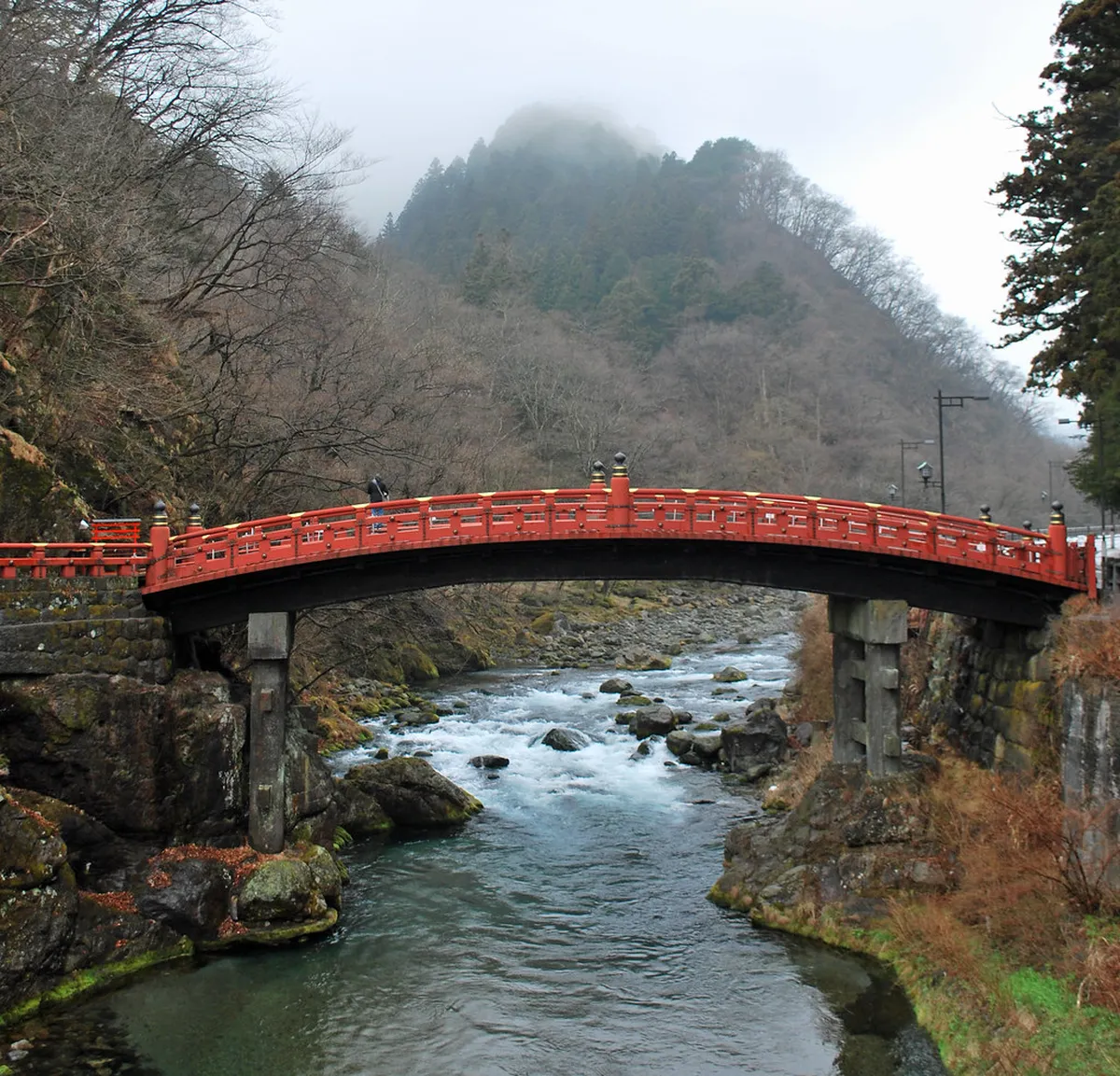
The Shinkyo Bridge is the most iconic symbol of the city and marks the entrance to the shrines. While there is a fee of JPY 300 to actually walk across the bridge, viewing it from the road is completely free. You can get the best photos from the modern concrete bridge located just a few meters away. This perspective allows you to capture the red lacquered bridge against the blue Daiya River and the green cedar canopy above.
Legend says the bridge was formed by two giant snakes to help the monk Shodo Shonin cross the rushing water in 766 CE. You can read the historical plaques nearby to learn more about this sacred site. Many visitors find that seeing the bridge from the outside is completely satisfying for their itinerary. It remains one of the top Nikko Temples and Shrines: The Ultimate Visitor Guide landmarks for budget travelers.
Early morning is the best time to visit if you want to avoid the crowds of tour buses. The soft morning light makes the vermilion lacquer glow beautifully. You might even see local residents performing small rituals at the nearby shrine entrance. It is a quick but essential stop on any walking tour of the town.
Taiyuin Temple
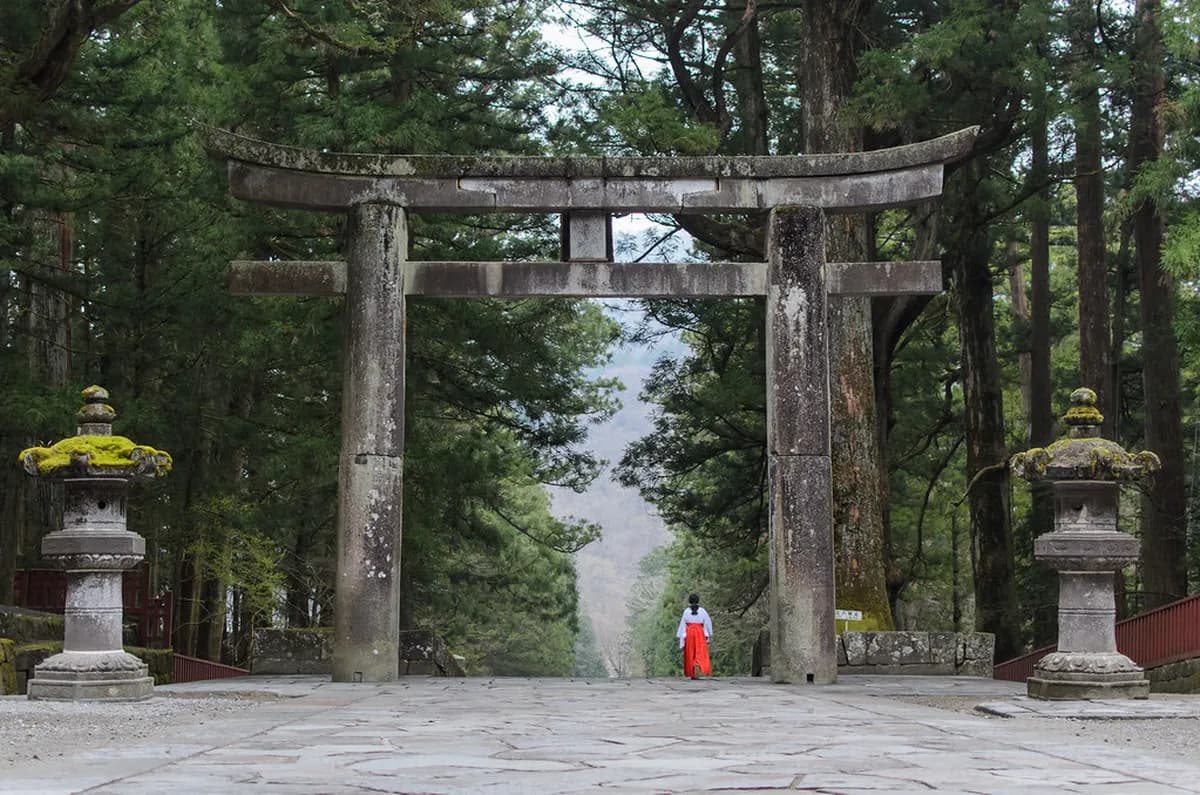
Taiyuin is the mausoleum of Tokugawa Iemitsu, the third Tokugawa Shogun and grandson of Ieyasu. Although the inner halls require a ticket (JPY 500 in 2026), the entire approach through the cedar forest is free and deeply atmospheric. You can admire the massive Niomon Gate and the dozens of stone lanterns that line the stone-paved path uphill. The towering cedars create a sense of quiet that is markedly calmer than the crowded Toshogu compound nearby.
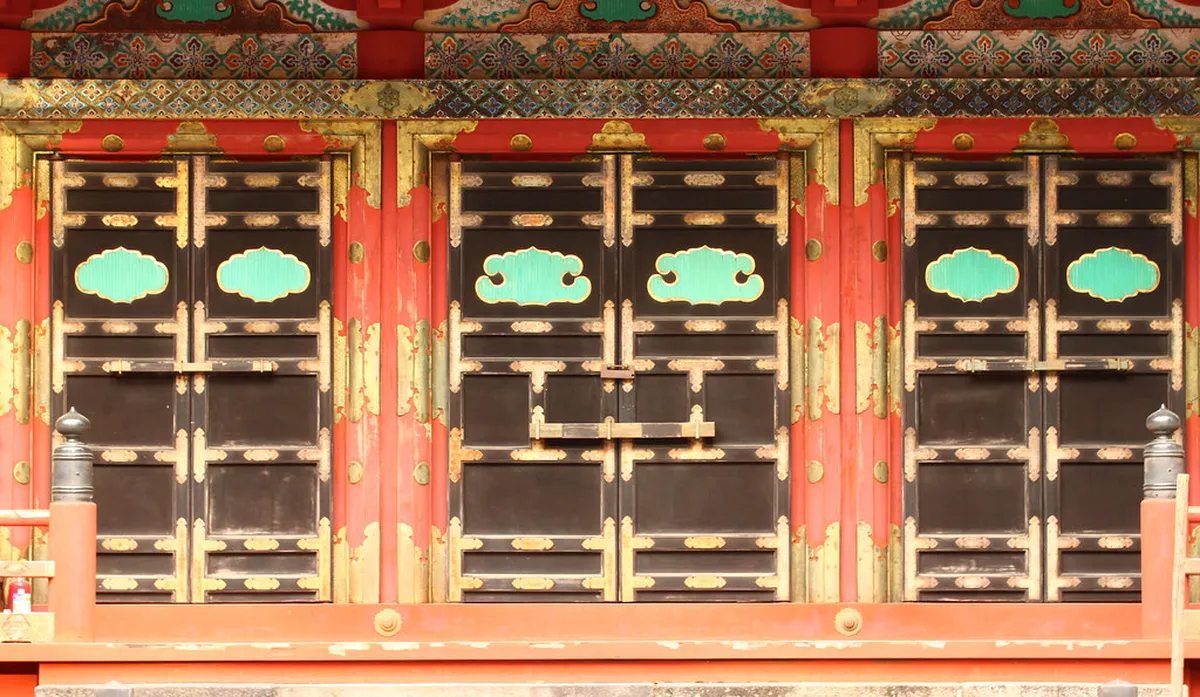
Walking the outer perimeter lets you see the distinctive black, red, and gold gates that make Taiyuin architecturally distinct from Toshogu. The contrast is deliberate: Iemitsu ordered his mausoleum to be subdued compared to his grandfather's shrine. Even from the public approach, the scale of the gates is impressive. This area rewards visitors who take the longer walk from the main shrine cluster.
Take your time on the small paths branching off the main approach road. You will find ancient stone markers and moss-covered lanterns tucked between the trees. These details provide a deeper connection to the Tokugawa family's centuries of rule. It is a perfect stop for those who prefer a slower pace over the selfie stampede at Toshogu's main gate.
Toshogu Shrine
Toshogu is Japan's most lavishly decorated shrine and a must-see for any visitor. The full complex entry is JPY 1,600 in 2026 (JPY 2,400 with the Treasury), but the outer areas are free to explore. You can stand right in front of the magnificent Five-Story Pagoda without paying a single yen. This towering structure is covered in colorful carvings representing the zodiac animals and is visible from the approach road.
The massive Omotemon Gate at the entrance is another impressive free landmark to observe up close. You can walk through the wide gravel paths outside the ticket barrier and feel the grandeur of the Edo period. The surrounding forest is part of the Nikko National Park Travel Guide: Shrines, Nature & Logistics experience and is free. Many people find the majestic atmosphere of the outer grounds just as rewarding as the interior.
The iconic "See no evil, speak no evil, hear no evil" monkey carvings on the Shinkyusha stable are visible on the left side of the approach, within the free zone. Keep an eye out for the free information boards explaining the history of the shrine and the thousands of craftsmen who built it over two years in the 1630s. Visiting the outer grounds is the most efficient way to absorb the highlights on a tight budget. Arrive before 09:00 if possible — by midday the queues at the ticket office are substantial.
Nikko Futarasan Shrine
Futarasan Shrine sits in the same cedar-forested cluster as Toshogu and Taiyuin but draws far fewer visitors. The shrine grounds themselves are free to enter, making it one of the best no-cost stops in the lower district. Founded in 782 by the Buddhist monk Shodo Shonin, Futarasan predates Toshogu by over 800 years and is dedicated to the deities of three sacred mountains: Mount Nantai, Mount Nyoho, and Mount Taro.
The approach from Toshogu takes about five minutes through a corridor of cedar trees. The shrine's aesthetic is classic Shinto red lacquer rather than Toshogu's gold and white excess, which makes it feel more serene and historically grounded. Look for the small rabbit statues scattered around the compound — the rabbit is the shrine's symbol, and you will find them on ema wooden plaques and decorative elements throughout.
Most tour groups bypass Futarasan entirely, so the atmosphere is reliably calm even on busy weekends. A small inner hall charges JPY 200–300 to enter, but the courtyard, main approach, and surrounding paths are all free. This shrine is part of the same UNESCO World Heritage ensemble as Toshogu and deserves more time than the average visitor gives it.
Kegon Falls - Seeing the Multiple Levels of Kegon Falls
Kegon Falls drops 97 meters and is ranked as one of Japan's three most beautiful waterfalls. Most tourists pay JPY 540 for the elevator to the lower observation deck, and that lower view is genuinely spectacular. However, the upper observation platform right next to the bus stop is completely free and gives you the full-length view of the falls plunging into the valley. For many visitors, the free upper deck is enough.
For a different and also free perspective, walk a short distance to the Akechidaira Ropeway Observation Deck area — from certain angles along the lake road you can see the falls head-on, with Lake Chuzenji behind it, which makes the waterfall look like the lake's overflow tap. The mist from the falls is refreshing in summer heat. In winter, Kegon partially freezes and the upper platform view becomes dramatic in a completely different way.
If you have more energy, walk toward Lake Chuzenji to see where the water originates. The shoreline path offers several free benches with unobstructed mountain views. The lake sits at 1,269 m elevation with Mount Nantai (2,486 m) rising directly behind it — the visual scale is hard to convey in photos. Nature provides the best free entertainment in this part of the country.
Lake Chuzenji and the Hangetsuyama Hike
Lake Chuzenji is Japan's highest natural lake at 1,270 m elevation, and the shoreline is entirely free to walk. The lake's scale surprises most first-time visitors — it stretches 10 km in circumference with Mount Nantai dominating the northern shore. You can spend an hour just walking the accessible south shore path between the bus stop and the waterfall viewing area without spending anything.
The Hangetsuyama hiking trail is one of Nikko's best free activities and is consistently underrated. The trailhead is accessible by bus from Chuzenji Onsen stop, and the gate opens at 07:00. From the upper parking area at roughly 1,600 m, it is about a 1 km walk with 120 m elevation gain to the observatory. On clear days you can see Mount Fuji on the southern horizon. The whole out-and-back takes 45–60 minutes and costs nothing.
The Nikko Itinerary: 1-Day, 2-Day & 3-Day Plans (2026 Guide) covers the best bus combination to see both Kegon Falls and Hangetsuyama in a single Okunikko half-day. The trail passes through dense forest with bear sighting warnings posted — carry a bear bell or make noise on the trail. The effort-to-reward ratio on this hike is among the best in all of Tochigi Prefecture.
Senjogahara Marshlands
The Senjogahara Marshlands cover 400 hectares of highland bog at 1,400 m elevation and are one of the finest free nature walks in the Kanto region. The wooden boardwalk trail runs 8 km one-way between Akanuma and Yudaki Falls, with the most scenic middle section taking about 90 minutes. You enter the marshlands from the Akanuma Nature Information Center bus stop — the Akanuma Nature Information Center is a useful free resource for current trail conditions.
The landscape changes dramatically by season: cotton grass blooms in early summer, the plateau turns golden in October, and the first snow arrives by late November. Mountain views across the open marshland reach all the way to Shirane-san on clear days. The flat boardwalk is accessible to most fitness levels, though the surface can be slippery after rain — sturdy shoes are recommended.
Most visitors to Nikko never make it to Senjogahara, which means the trail is reliably quiet even during autumn peak weekends. The combination of Senjogahara and nearby Ryuzu Falls makes for a full free afternoon in Okunikko. Bring layers — the plateau runs 5–8°C cooler than the town below even in summer.
Lake Yunoko and Yudaki Falls
Yudaki Falls is a different kind of waterfall from Kegon — rather than a single plunging drop, it cascades wide across 25 m of rock face over a 75 m descent, resembling a white ski slope more than a vertical waterfall. The lower viewing area is free and the perspective from the base is genuinely powerful. Getting to the upper view involves a short but tiring climb that most visitors find less rewarding than the base view.
Lake Yunoko is the source of Yudaki Falls and sits just above it, reachable by a short uphill path. The lake formed when lava from Mount Mitsudake dammed the Yukawa River, and the volcanic origin gives the water a faint sulfur smell — you will notice it immediately but adjust within minutes. The lake path loops around in about an hour and is entirely free. On weekdays, the area feels almost wilderness-quiet compared to the busy Lake Chuzenji resort strip below.
A pro-level Nikko route connects Yudaki Falls to Ryuzu Falls through the Senjogahara boardwalk — roughly 5.5 km on flat wooden walkways with views across the plateau. Tackling this full stretch means you walk from one free waterfall to another through one of Japan's finest highland wetlands, spending nothing on entry fees the entire way. Allow 2.5 hours for the full walk one-way and arrange return bus transport from Ryuzu Falls in advance.
Kanmangafuchi Abyss
The Kanmangafuchi Abyss is a gorge formed by a volcanic eruption of Mount Nantai, and the riverside path lined with dozens of moss-covered Jizo statues is one of Nikko's most atmospheric free walks. The statues, known as the Bake Jizo or "Phantom Jizo," are said to be uncountable — according to legend, they change number each time you count them. The walk takes about 20–30 minutes at a relaxed pace and the path is flat and well-maintained.
The abyss sits about 20 minutes on foot from the town center near the Tamozawa Imperial Villa. It is a peaceful escape from the shrine crowds and works well as a late-afternoon addition after the main Toshogu circuit. The sound of the Daiya River rushing through the gorge below adds to the atmosphere, especially after rain when the mist settles in the gorge.
Budget travelers who want a genuine local experience rather than the UNESCO shrine circuit often rate Kanmangafuchi as their favorite Nikko memory. There are no ticket booths, no queues, and no tour groups herding through on a schedule. It is simply a forest path, a river, and hundreds of ancient stone figures wearing weathered red bibs.
What Actually Costs Money in Nikko (2026 Prices)
One of the most common mistakes first-time visitors make is assuming everything inside the shrine zone costs money, or conversely, assuming everything is free until they hit a ticket barrier. Here is a clear breakdown of 2026 entry fees to help you budget accurately before you go.
The genuinely free attractions with no ticket barrier: Shinkyo Bridge viewpoint (from the road), outer grounds of Toshogu including the Five-Story Pagoda, Futarasan Shrine grounds (inner hall is extra), full approach and outer gates of Taiyuin, Kanmangafuchi Abyss, Kegon Falls upper platform, the entire Okunikko natural area including Senjogahara Marshlands, Hangetsuyama hike, Lake Chuzenji shoreline, Lake Yunoko, Yudaki Falls, and Ryuzu Falls. The Italian and British Embassy Villas at Lake Chuzenji charge JPY 150 each to enter the buildings, but the exterior grounds and lake frontage are free.
Paid attractions and their 2026 fees: Toshogu Shrine inner complex JPY 1,600, or JPY 2,400 combined with the Treasure Museum. Taiyuin inner mausoleum JPY 500. Rinnoji Sanbutsudo (Three Buddha Hall) JPY 400. Walking across Shinkyo Bridge JPY 300. Kegon Falls lower elevator observation deck JPY 540. Nikko Tamozawa Imperial Villa Memorial Park JPY 550. The combined Nikko World Heritage pass covering Toshogu, Rinnoji, and Futarasan inner areas costs JPY 2,500 and saves money if you plan to pay for at least three sites. If you are only doing free activities, you can realistically spend a full day in Nikko without paying a single entry fee.
My top tips for visiting Nikko and Nikko National Park
Planning your visit carefully can save a significant amount of money and stress. Always check the map of Nikko's public transportation routes before you arrive. Walking between the town and the main shrine area is easy and takes about twenty minutes from either station. This saves the bus fare and lets you discover small shops and hidden shrines along the route.
Consider using the Flyer of Free Guided Tour 2026 (PDF) to find volunteer guides. These local volunteers offer free tours of the main shrine areas and share stories that audio guides never capture. Always verify current schedules on the official tourism website. The free tour typically covers the Toshogu outer grounds and Shinkyo Bridge and runs on weekends from approximately 10:00.
Arriving by 08:30 at the shrine district is the single best move you can make. By 10:00 the tour buses arrive, queues at the Toshogu ticket office build fast, and the narrow approach paths become genuinely congested. The Okunikko area — Kegon Falls, the marshlands, the lake — is quieter and can be visited after 11:00 without the same crowd pressure. Bring your own lunch or snacks: picnic spots near Lake Chuzenji are spectacular and free.
Where to Stay Near Nikko's Free Attractions
Staying in Nikko itself rather than making a day trip from Tokyo dramatically changes how much you can see without spending on transport. The two main train stations, Tobu-Nikko and JR Nikko, sit about 15 minutes' walk apart and within easy walking distance of the shrine district. Accommodation near the stations means you can be at Shinkyo Bridge by 08:00 before the first bus tours arrive, which is a significant advantage.
The Fairfield by Marriott Nikko is a modern western-style hotel with a free parking lot and comfortable rooms, and it is located close enough to the shrine zone to walk. It is not the cheapest option but offers reliable quality. Budget travelers who want traditional accommodation should look at small guesthouses and ryokan along the main road between the stations, some of which offer simple breakfast and helpful staff who know the local bus schedules.
For a full picture of the accommodation options across price points, check our guide on Where to Stay in Nikko: 6 Best Areas and Lodging Guide. One budget hack that the stress-free Nikko approach recommends: staying in Utsunomiya (40 minutes by local JR train, accommodation often under ¥4,000 per person) and catching the first morning train to Nikko before the crowds. The off-peak trains are uncrowded and you gain the same early-morning timing advantage without paying Nikko resort prices.
Is Nikko Japan worth visiting?
Nikko is absolutely worth visiting for its unique combination of world-class architecture and pristine mountain nature. It provides a perfect contrast to the busy streets of Tokyo and Osaka. You can experience centuries of history while standing in a cedar forest that has been sacred for over 1,200 years. The density of genuinely free activities makes it accessible to any budget.
Even a single day covers the main free highlights if you plan the route well. A well-structured Nikko Itinerary: 1-Day, 2-Day & 3-Day Plans (2026 Guide) can take you from the Shinkyo Bridge at dawn to the Senjogahara Marshlands by afternoon without feeling rushed. The seasonal changes — spring cherry blossoms on the Nikko-Kaido road, summer cool air on the plateau, and autumn leaves from late October — give returning visitors a completely different experience each time.
For those who enjoy hiking, the trails in Nikko National Park are among the best accessible from Tokyo. Hangetsuyama, the Senjogahara loop, and the connecting trail from Yudaki to Ryuzu Falls cover everything from a 45-minute stroll to a full-day mountain traverse. The air is clean, the scenery is consistently striking, and the ratio of free-to-paid experiences is exceptionally generous compared to other major Japanese heritage destinations.
Is Nikko line covered by JR Pass?
Yes, the JR Nikko Line is fully covered by the Japan Rail Pass. You can take a Shinkansen from Tokyo to Utsunomiya and then transfer to the local JR Nikko Line. This journey takes about two hours total and is very convenient for pass holders. Check the official guide on how to get to Nikko with the JR Pass for step-by-step routing.
The local JR train arrives at Nikko Station, which is a beautiful Meiji-era wooden building worth seeing in its own right. From here, you can start your walking tour or catch a bus to the shrine district or higher elevations. The JR Pass does not cover the local Tobu buses within the city or up to Okunikko. You will need to pay for those separately — a day bus pass for Okunikko costs around JPY 1,000–1,300.
If you do not have a JR Pass, the Tobu Railway from Asakusa Station is often the cheaper and more direct option. The Tobu Spacia X limited express reaches Tobu-Nikko Station in about 1 hour 45 minutes and the ticket includes the reserved seat without an extra surcharge. Learning all the options in our guide on How To Get To Nikko From Tokyo: 10 Essential Travel Tips will help you choose the right combination for your budget and schedule.
Frequently Asked Questions
Which free things to do in nikko options fit first-time visitors?
First-time visitors should focus on the Shinkyo Bridge viewing and the outer grounds of Toshogu Shrine. These iconic spots provide a great introduction to the city's history. Walking through the Kanmangafuchi Abyss is also a top recommendation for its unique atmosphere. Check our Nikko On A Budget Travel Guide guide for more tips.
How to get to Nikko from Tokyo on a budget?
The most affordable way is usually the Tobu Railway from Asakusa Station using a local or rapid train. If you have a JR Pass, the Shinkansen to Utsunomiya is the fastest covered route. Always compare the total cost of transport and local bus passes before deciding.
Is Nikko walkable for budget travelers?
Yes, the main shrine area is very walkable from the train stations and takes about 20-30 minutes. However, reaching the waterfalls and Lake Chuzenji requires a bus or a very long uphill hike. Most budget travelers walk in town and use a bus pass for the higher areas.
What is the main attraction of Nikko?
The Toshogu Shrine is the primary cultural attraction due to its incredible gold-leaf decorations and historical importance. For nature lovers, Kegon Falls and Lake Chuzenji are the most famous landmarks. Both areas offer significant free viewing opportunities for those who plan ahead.
How much time should you plan for free things to do in nikko?
You should plan at least one full day to see the main free highlights in both the town and the lake area. If you enjoy hiking the marshlands, two days will allow for a much more relaxed pace. Many visitors find that a day trip from Tokyo is enough for the main shrines.
Nikko is a rare destination where you can see world-class sights without spending a fortune.
By focusing on free nature trails and the outer grounds of historic shrines, you can have a rich experience.
Use this guide to plan your budget-friendly adventure and enjoy the majestic beauty of the Japanese mountains.
Start your journey today and discover why this city remains a favorite for travelers from around the world.
Free: The Nikko Essentials guide
Top things to do, where to stay, a perfect day plan, getting around, and the best time to go — a Nikko mini-guide you can take offline.
You might also like


Continue reading
More guides you'll find useful